Norwegian Veterinary Institute, Ullevålsveien 68, P,O,Box 750, Sentrum 0106, Oslo, Norway.
Parasit Vectors. 2014 Jan 8;7:11. doi: 10.1186/1756-3305-7-11.
Global environmental change is causing spatial and temporal shifts in the distribution of species and the associated diseases of humans, domesticated animals and wildlife. In the on-going debate on the influence of climate change on vectors and vector-borne diseases, there is a lack of a comprehensive interdisciplinary multi-factorial approach utilizing high quality spatial and temporal data.
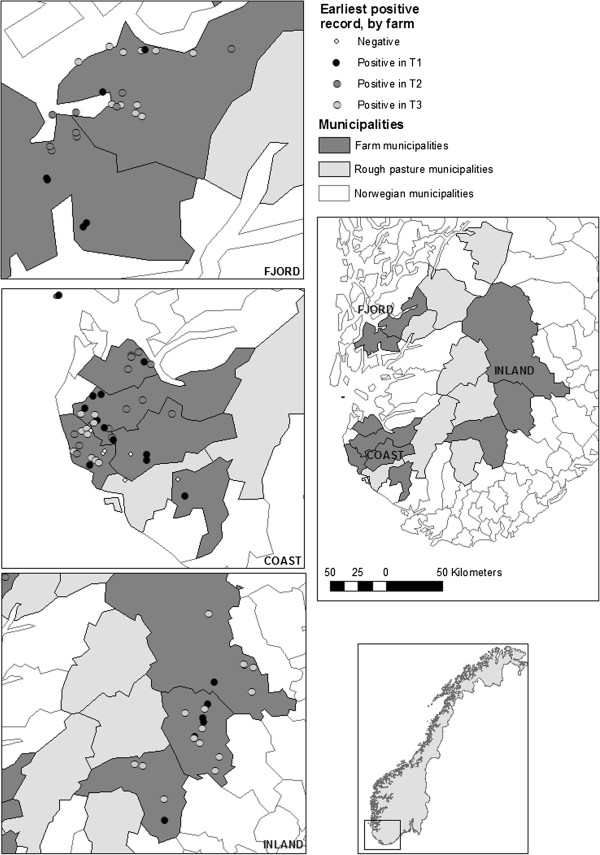
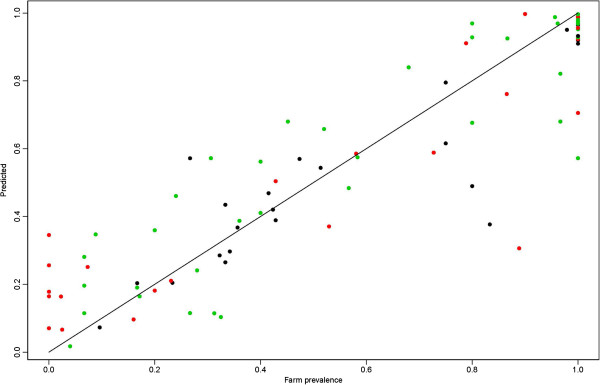
We explored biotic and abiotic factors associated with the latitudinal and altitudinal shifts in the distribution of Ixodes ricinus observed during the last three decades in Norway using antibodies against Anaplasma phagocytophilum in sheep as indicators for tick presence. Samples obtained from 2963 sheep from 90 farms in 3 ecologically different districts during 1978 - 2008 were analysed. We modelled the presence of antibodies against A. phagocytophilum to climatic-, environmental and demographic variables, and abundance of wild cervids and domestic animals, using mixed effect logistic regressions.
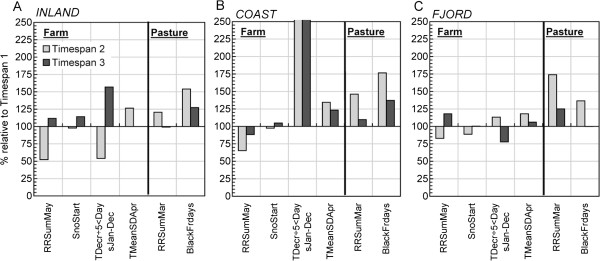
Significant predictors were large diurnal fluctuations in ground surface temperature, spring precipitation, duration of snow cover, abundance of red deer and farm animals and bush encroachment/ecotones. The length of the growth season, mean temperature and the abundance of roe deer were not significant in the model.
Our results highlight the need to consider climatic variables year-round to disentangle important seasonal variation, climatic threshold changes, climate variability and to consider the broader environmental change, including abiotic and biotic factors. The results offer novel insight in how tick and tick-borne disease distribution might be modified by future climate and environmental change.
全球环境变化正在导致物种的分布以及人类、家畜和野生动物相关疾病的时空转移。在关于气候变化对病媒和虫媒病影响的持续争论中,缺乏一种利用高质量时空数据的综合跨学科多因素方法。
我们利用绵羊抗嗜吞噬细胞无形体抗体作为指示物,探索了与过去三十年在挪威观察到的硬蜱分布的纬度和海拔转移相关的生物和非生物因素。我们分析了 1978 年至 2008 年期间在 3 个生态区的 90 个农场的 2963 只绵羊的样本。我们使用混合效应逻辑回归模型,将抗嗜吞噬细胞无形体抗体的存在与气候、环境和人口变量以及野生鹿和家畜的丰度联系起来。
显著的预测因子是地面温度的昼夜大波动、春季降水、积雪持续时间、赤鹿和农场动物的丰度以及灌木侵入/生态过渡带。生长季节的长度、平均温度和马鹿的丰度在模型中并不显著。
我们的研究结果强调需要全年考虑气候变量,以理清重要的季节性变化、气候阈值变化、气候变异性,并考虑更广泛的环境变化,包括生物和非生物因素。这些结果为未来气候和环境变化如何改变蜱和蜱传病的分布提供了新的见解。