Division of Molecular Genetics, The Netherlands Cancer Institute, Amsterdam, The Netherlands.
EMBO Mol Med. 2014 Feb;6(2):212-25. doi: 10.1002/emmm.201303297. Epub 2014 Jan 8.
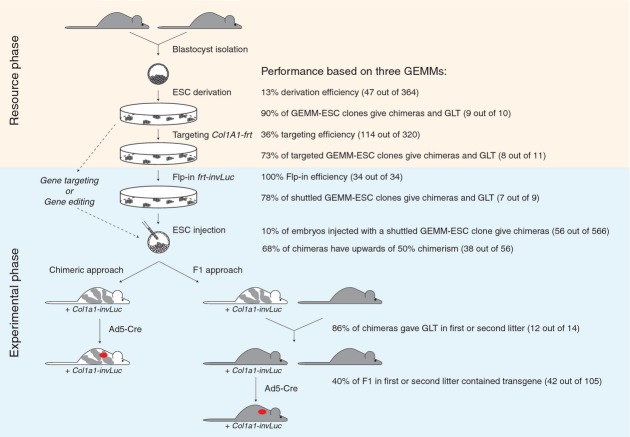
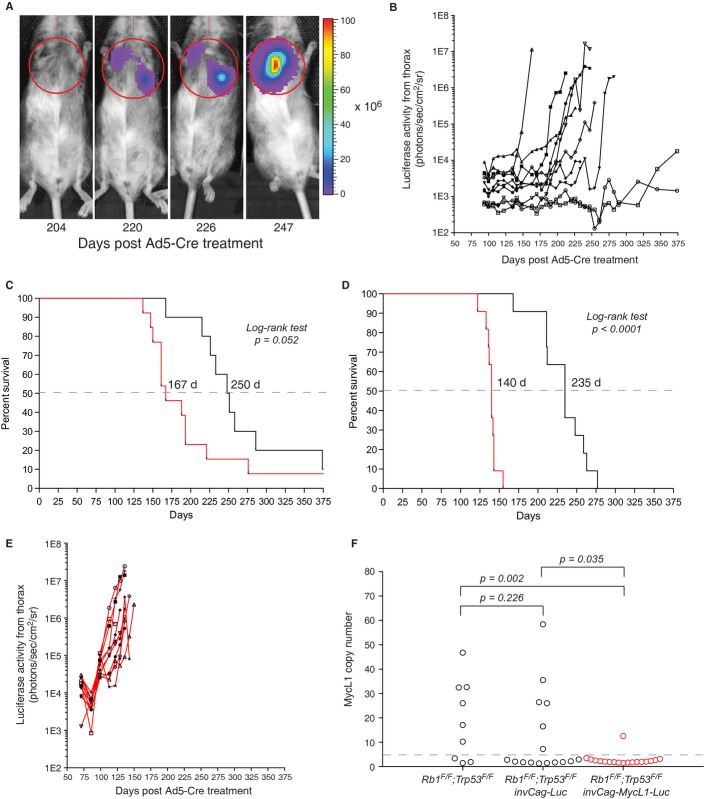
Human cancers modeled in Genetically Engineered Mouse Models (GEMMs) can provide important mechanistic insights into the molecular basis of tumor development and enable testing of new intervention strategies. The inherent complexity of these models, with often multiple modified tumor suppressor genes and oncogenes, has hampered their use as preclinical models for validating cancer genes and drug targets. In our newly developed approach for the fast generation of tumor cohorts we have overcome this obstacle, as exemplified for three GEMMs; two lung cancer models and one mesothelioma model. Three elements are central for this system; (i) The efficient derivation of authentic Embryonic Stem Cells (ESCs) from established GEMMs, (ii) the routine introduction of transgenes of choice in these GEMM-ESCs by Flp recombinase-mediated integration and (iii) the direct use of the chimeric animals in tumor cohorts. By applying stringent quality controls, the GEMM-ESC approach proofs to be a reliable and effective method to speed up cancer gene assessment and target validation. As proof-of-principle, we demonstrate that MycL1 is a key driver gene in Small Cell Lung Cancer.
在基因工程小鼠模型 (GEMM) 中建模的人类癌症可以为肿瘤发展的分子基础提供重要的机制见解,并能够测试新的干预策略。这些模型的固有复杂性,通常具有多个修饰的肿瘤抑制基因和癌基因,阻碍了它们作为验证癌症基因和药物靶点的临床前模型的使用。在我们新开发的快速生成肿瘤队列的方法中,我们克服了这一障碍,例如三个 GEMM;两个肺癌模型和一个间皮瘤模型。该系统的三个要素是核心;(i)从已建立的 GEMM 中高效衍生出真正的胚胎干细胞 (ESC),(ii)通过 Flp 重组酶介导的整合常规引入这些 GEMM-ESC 中的转基因,以及(iii)直接在嵌合动物中使用肿瘤队列。通过应用严格的质量控制,GEMM-ESC 方法被证明是一种可靠且有效的方法,可以加快癌症基因评估和目标验证。作为原理验证,我们证明 MycL1 是小细胞肺癌的关键驱动基因。