Division of Molecular Genetics, Netherlands Cancer Institute, Amsterdam, The Netherlands.
Bioessays. 2011 Sep;33(9):701-10. doi: 10.1002/bies.201100018. Epub 2011 Jul 7.
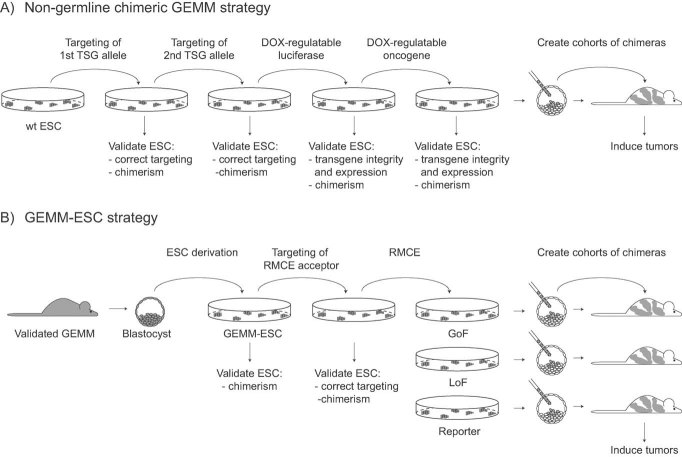
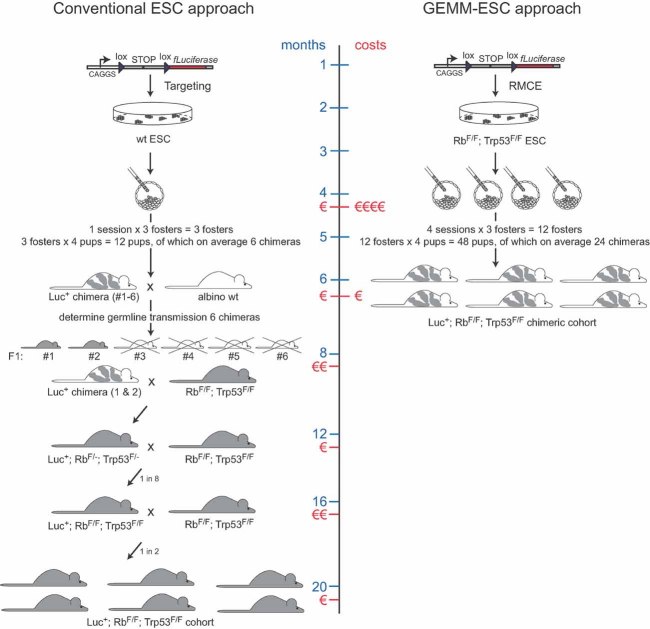
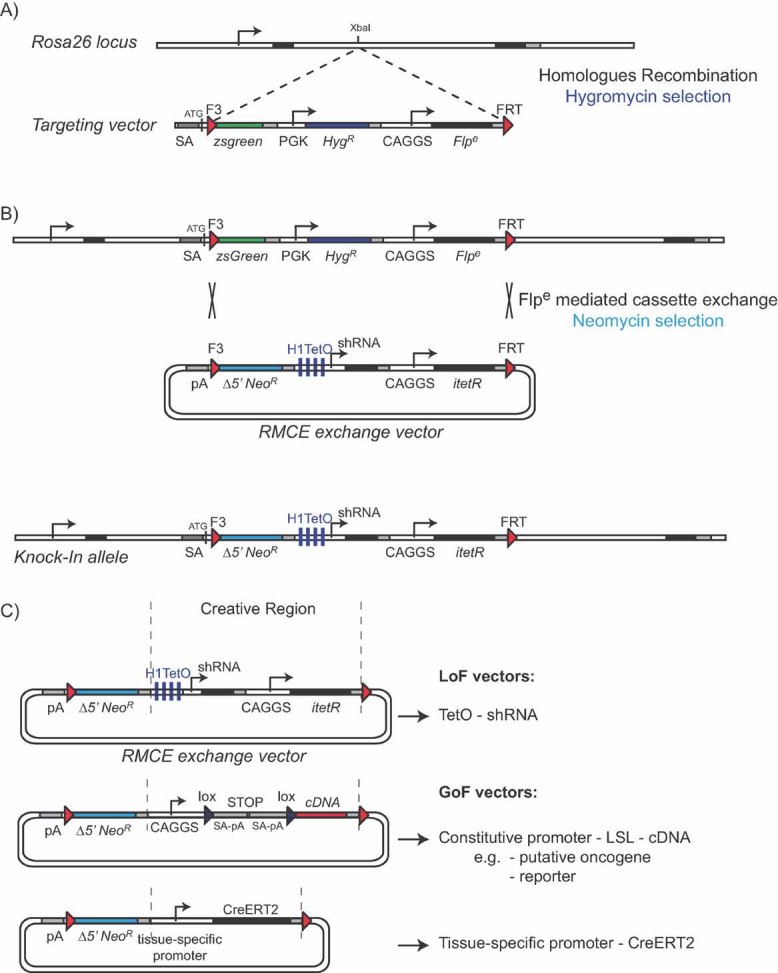
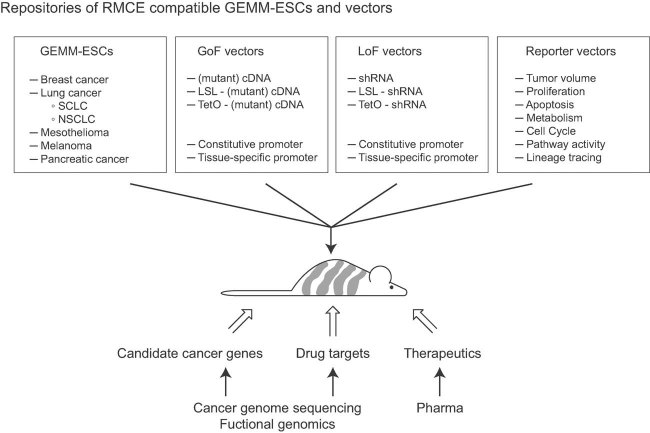
Recent technological advances have opened the door for the fast and cost-effective generation of genetically engineered mouse models (GEMMs) to study cancer. We describe here a conceptually novel approach for the generation of chimeric GEMMs based on the controlled introduction of various genetic elements in embryonic stem cells (ESCs) that are derived from existing mouse strains with a predisposition for cancer. The isolation of GEMM-derived ESC lines is greatly facilitated by the availability of the newly defined culture media containing inhibitors that effectively preserve ESC pluripotency. The feasibility of the GEMM-ESC approach is discussed in light of current literature and placed into the context of existing models. This approach will allow for fast and flexible validation of candidate cancer genes and drug targets and will result in a repository of GEMM-ESC lines and corresponding vector collections that enable easy distribution and use of preclinical models to the wider scientific community.
最近的技术进步为快速、经济有效地生成用于癌症研究的基因工程小鼠模型(GEMMs)开辟了道路。我们在这里描述了一种基于在胚胎干细胞(ESCs)中引入各种遗传元件的新概念方法,该方法可用于生成嵌合 GEMMs,这些 ESCs 来自具有癌症易感性的现有小鼠品系。新定义的含有抑制剂的培养基的可用性极大地促进了 GEMM 衍生 ESC 系的分离,该抑制剂可有效地保持 ESC 的多能性。根据当前文献讨论了 GEMM-ESC 方法的可行性,并将其置于现有模型的背景下。这种方法将允许快速灵活地验证候选癌症基因和药物靶点,并将生成 GEMM-ESC 系和相应载体库,从而使临床前模型能够轻松分发给更广泛的科学界并供其使用。