Bayer Pharma AG, Global Drug Discovery, Wuppertal, Germany.
Cancer Med. 2013 Oct;2(5):611-24. doi: 10.1002/cam4.112. Epub 2013 Aug 20.
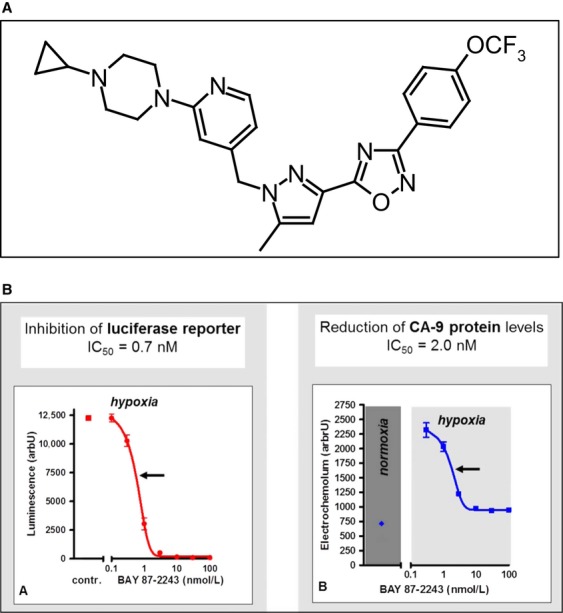
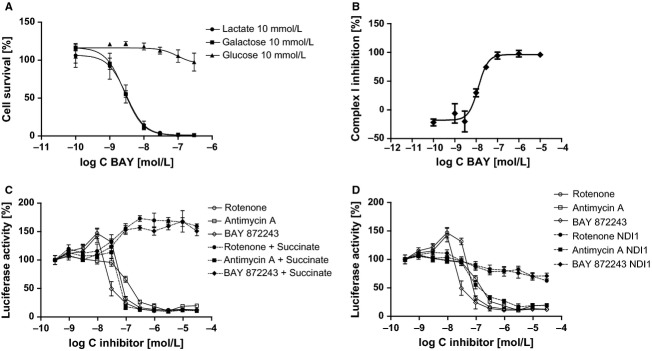
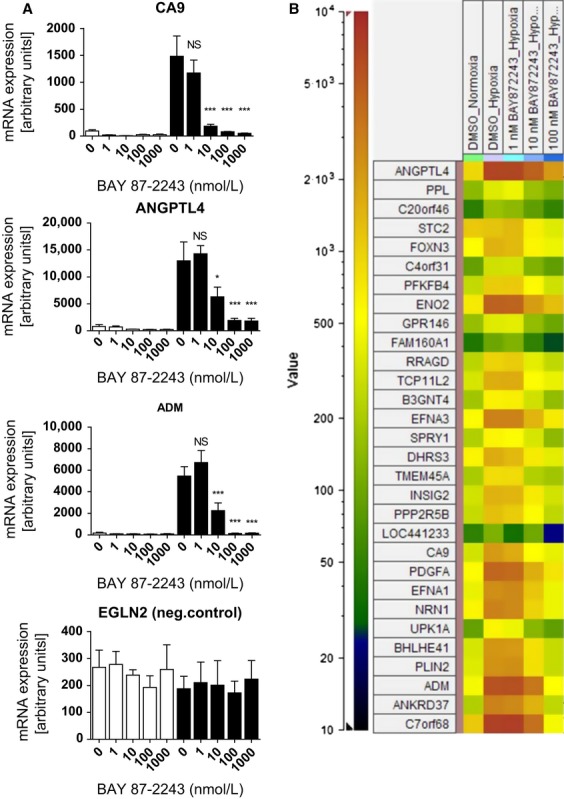
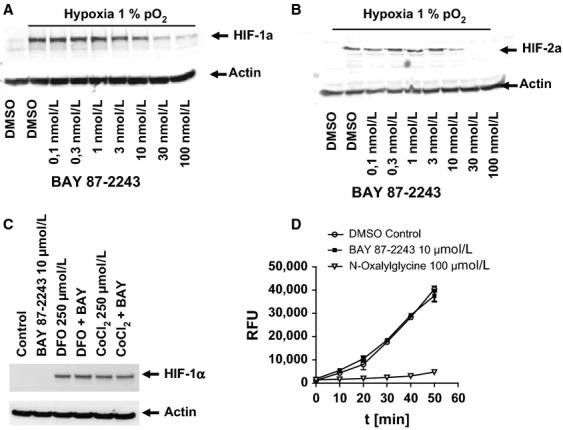
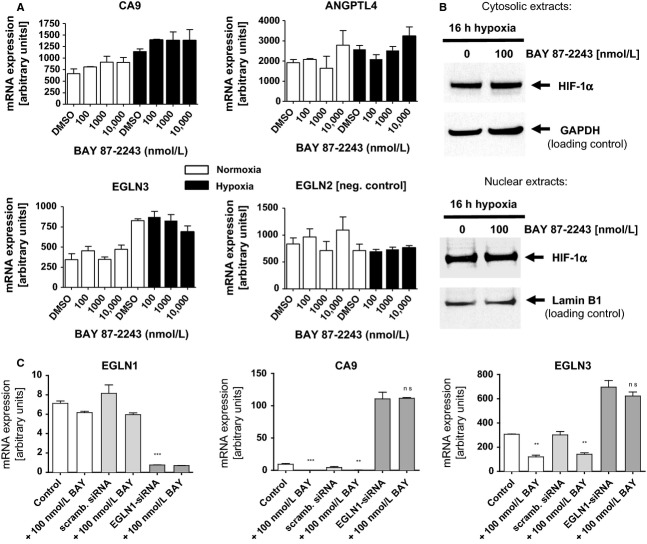
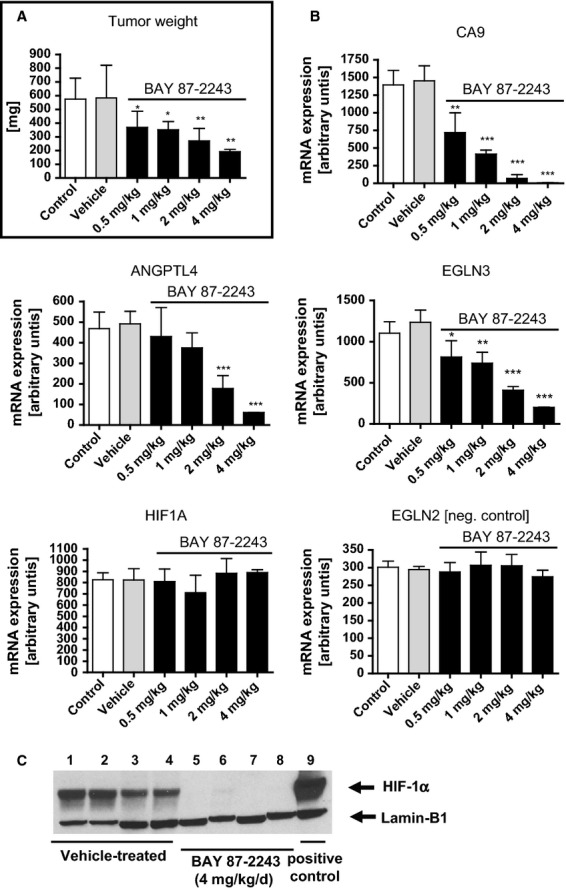
The activation of the transcription factor hypoxia-inducible factor-1 (HIF-1) plays an essential role in tumor development, tumor progression, and resistance to chemo- and radiotherapy. In order to identify compounds targeting the HIF pathway, a small molecule library was screened using a luciferase-driven HIF-1 reporter cell line under hypoxia. The high-throughput screening led to the identification of a class of aminoalkyl-substituted compounds that inhibited hypoxia-induced HIF-1 target gene expression in human lung cancer cell lines at low nanomolar concentrations. Lead structure BAY 87-2243 was found to inhibit HIF-1α and HIF-2α protein accumulation under hypoxic conditions in non-small cell lung cancer (NSCLC) cell line H460 but had no effect on HIF-1α protein levels induced by the hypoxia mimetics desferrioxamine or cobalt chloride. BAY 87-2243 had no effect on HIF target gene expression levels in RCC4 cells lacking Von Hippel-Lindau (VHL) activity nor did the compound affect the activity of HIF prolyl hydroxylase-2. Antitumor activity of BAY 87-2243, suppression of HIF-1α protein levels, and reduction of HIF-1 target gene expression in vivo were demonstrated in a H460 xenograft model. BAY 87-2243 did not inhibit cell proliferation under standard conditions. However under glucose depletion, a condition favoring mitochondrial ATP generation as energy source, BAY 87-2243 inhibited cell proliferation in the nanomolar range. Further experiments revealed that BAY 87-2243 inhibits mitochondrial complex I activity but has no effect on complex III activity. Interference with mitochondrial function to reduce hypoxia-induced HIF-1 activity in tumors might be an interesting therapeutic approach to overcome chemo- and radiotherapy-resistance of hypoxic tumors.
转录因子缺氧诱导因子-1(HIF-1)的激活在肿瘤的发展、进展和对化疗和放疗的抵抗中起着至关重要的作用。为了鉴定针对 HIF 通路的化合物,我们使用缺氧条件下的荧光素酶驱动的 HIF-1 报告细胞系筛选了小分子文库。高通量筛选导致鉴定出一类氨基烷基取代的化合物,这些化合物以低纳摩尔浓度抑制人肺癌细胞系中缺氧诱导的 HIF-1 靶基因表达。先导结构物 BAY 87-2243 被发现可抑制非小细胞肺癌(NSCLC)细胞系 H460 中缺氧条件下的 HIF-1α 和 HIF-2α 蛋白积累,但对缺氧模拟物去铁胺或氯化钴诱导的 HIF-1α 蛋白水平没有影响。BAY 87-2243 对缺乏 Von Hippel-Lindau(VHL)活性的 RCC4 细胞中的 HIF 靶基因表达水平没有影响,也不影响 HIF 脯氨酰羟化酶-2 的活性。在 H460 异种移植模型中,BAY 87-2243 的抗肿瘤活性、HIF-1α 蛋白水平的抑制以及 HIF-1 靶基因表达的降低得到了证明。BAY 87-2243 在标准条件下不抑制细胞增殖。然而,在葡萄糖耗竭的情况下,有利于作为能量来源的线粒体 ATP 生成的条件下,BAY 87-2243 以纳摩尔范围抑制细胞增殖。进一步的实验表明,BAY 87-2243 抑制线粒体复合物 I 的活性,但对复合物 III 的活性没有影响。干扰线粒体功能以降低肿瘤中缺氧诱导的 HIF-1 活性可能是一种有前途的治疗方法,可克服缺氧肿瘤的化疗和放疗耐药性。