Department of Biology and Environmental Protection, Poznan University of Medical Sciences, Rokietnicka 8, 60-806, Poznań, Poland,
Environ Monit Assess. 2014 May;186(5):3199-212. doi: 10.1007/s10661-013-3610-8. Epub 2014 Jan 10.
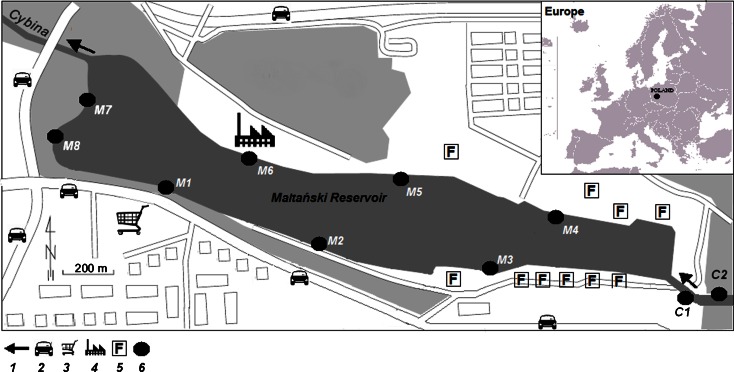
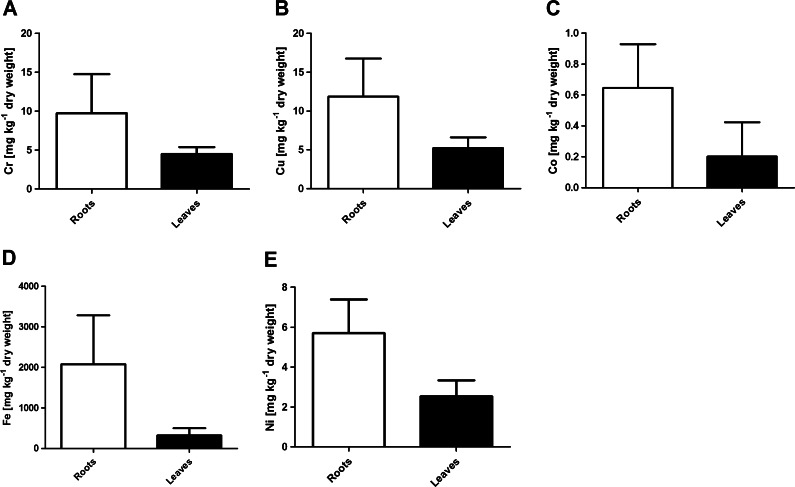
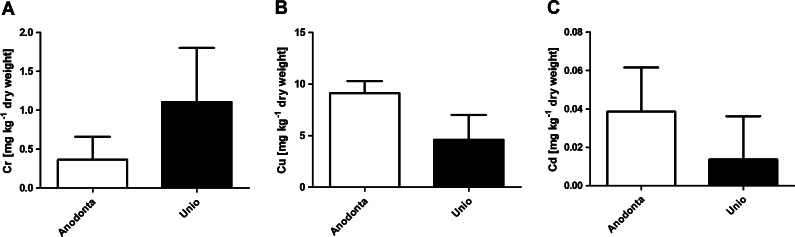
Urbanization can considerably affect water reservoirs by, inter alia, input, and accumulation of contaminants including metals. Located in the course of River Cybina, Maltański Reservoir (Western Poland) is an artificial shallow water body built for recreation and sport purposes which undergoes restoration treatment (drainage) every 4 years. In the present study, we demonstrate an accumulation of nine metals (Cd, Co, Cr, Cu, Fe, Mn, Ni, Pb, Zn) in water, sediment, three bivalve species (Anodonta anatina, Anodonta cygnea, Unio tumidus), and macrophyte Phragmites australis collected before complete drainage in November 2012. The mean concentrations of metals in the sediment, bivalves, and P. australis (roots and leaves) decreased in the following order: Fe > Mn > Zn > Cu > Cr > Ni > Pb > Co > Cd. A considerably higher bioconcentration of metals was observed in samples collected from the western and southern sites which undergo a higher degree of human impact. Sediments were found to be a better indicator of metal contamination than water samples. Interspecific differences in levels of metal accumulation were found between investigated unionids. U. tumidus accumulated higher levels of Cr, positively correlated with ambient concentrations, predisposing this species as a potential bioindicator of this metal in aquatic environments. On the other hand, species of Anodonta genus demonstrated higher accumulation of Cu and Cd. Positive correlations were found between Pb content in the sediments and tissues of all three bivalve species. In P. australis, metals were largely retained in roots except for Cd and Pb for which higher concentrations were found in leaves suggesting additional absorption of these metals from aerial sources. P. australis and bivalve from the Maltański Reservoir may be a potential source of toxic metals for animals feeding upon them and contribute to further contamination in the food chain.
城市化会通过输入和积累污染物(包括金属)等方式对水库产生重大影响。位于 Cybina 河沿岸的马耳他尼水库(波兰西部)是一个为娱乐和体育目的而建造的人工浅水水体,每 4 年进行一次恢复处理(排水)。在本研究中,我们展示了 2012 年 11 月完全排水前在水中、沉积物、三种双壳类动物(Anodonta anatina、Anodonta cygnea、Unio tumidus)和水生植物芦苇(Phragmites australis)中积累的九种金属(Cd、Co、Cr、Cu、Fe、Mn、Ni、Pb、Zn)。沉积物、双壳类动物和 P. australis(根和叶)中金属的平均浓度按以下顺序降低:Fe>Mn>Zn>Cu>Cr>Ni>Pb>Co>Cd。在受人类影响较大的西部和南部地区采集的样本中,金属的生物浓缩作用明显更高。与水样相比,沉积物是金属污染的更好指示物。在所研究的联合类动物中,发现了金属积累水平的种间差异。U. tumidus 积累了更高水平的 Cr,与环境浓度呈正相关,使该物种成为水生环境中该金属的潜在生物指标。另一方面,Anodonta 属的物种表现出更高的 Cu 和 Cd 积累。在所有三种双壳类动物的沉积物和组织中都发现 Pb 含量之间存在正相关。在 P. australis 中,金属主要储存在根部,除了 Cd 和 Pb,它们在叶片中发现了更高的浓度,这表明这些金属从空气中吸收了更多。马耳他尼水库中的 P. australis 和双壳类动物可能是动物食用的有毒金属的潜在来源,并可能对食物链中的进一步污染做出贡献。