Departament de Pedagogia i Psicologia, Facultat de Ciències de l'Educació, Universitat de Lleida Lleida, Spain ; Laboratorio de Investigación-UGC de Salud Mental, Instituto de Investigación Biomédica de Málaga, Universidad de Málaga, Hospital Regional Universitario de Málaga Málaga, Spain.
Laboratorio de Investigación-UGC de Salud Mental, Instituto de Investigación Biomédica de Málaga, Universidad de Málaga, Hospital Regional Universitario de Málaga Málaga, Spain.
Front Integr Neurosci. 2014 Jan 8;7:106. doi: 10.3389/fnint.2013.00106. eCollection 2014.
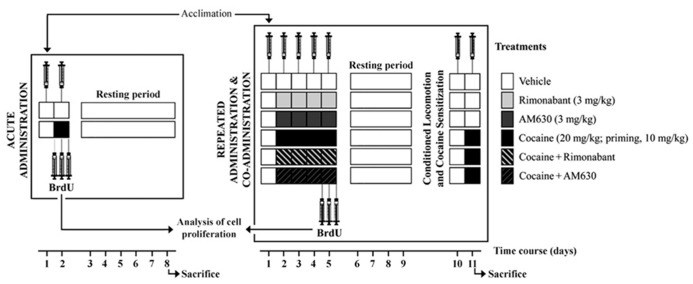
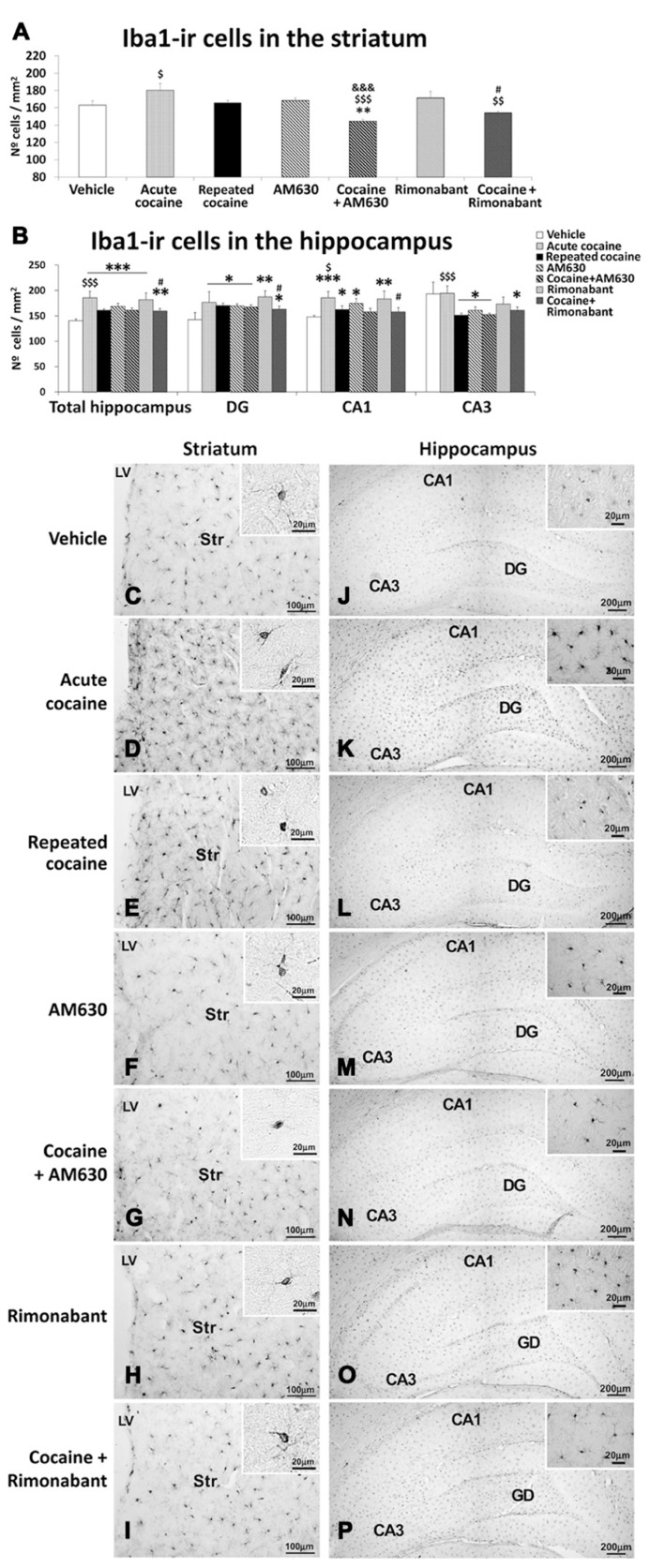
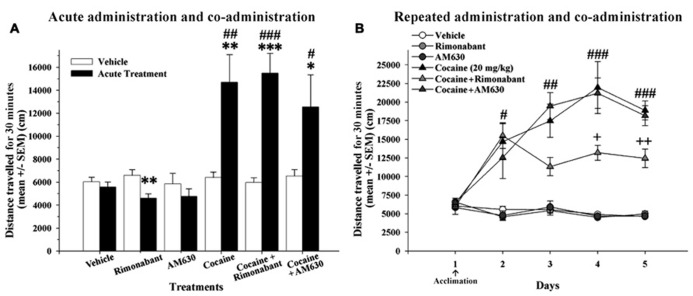
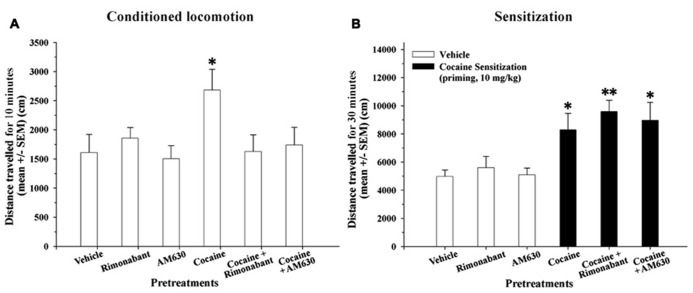
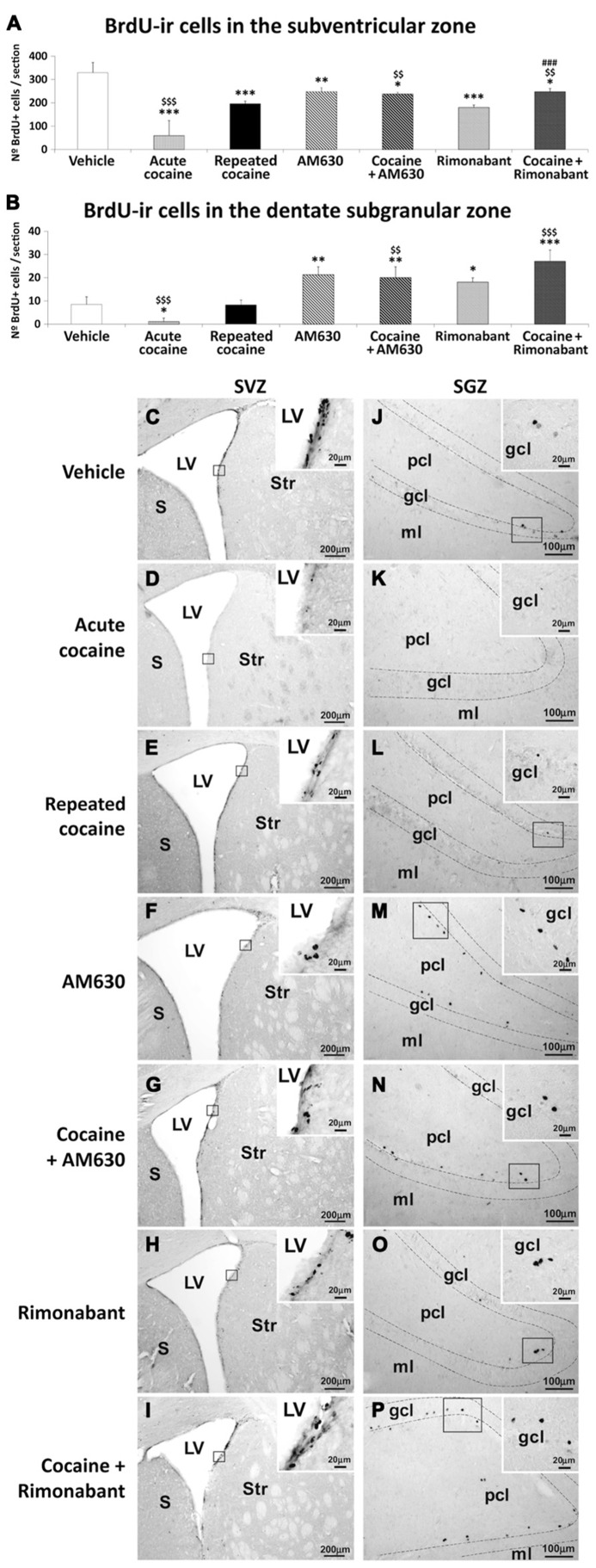
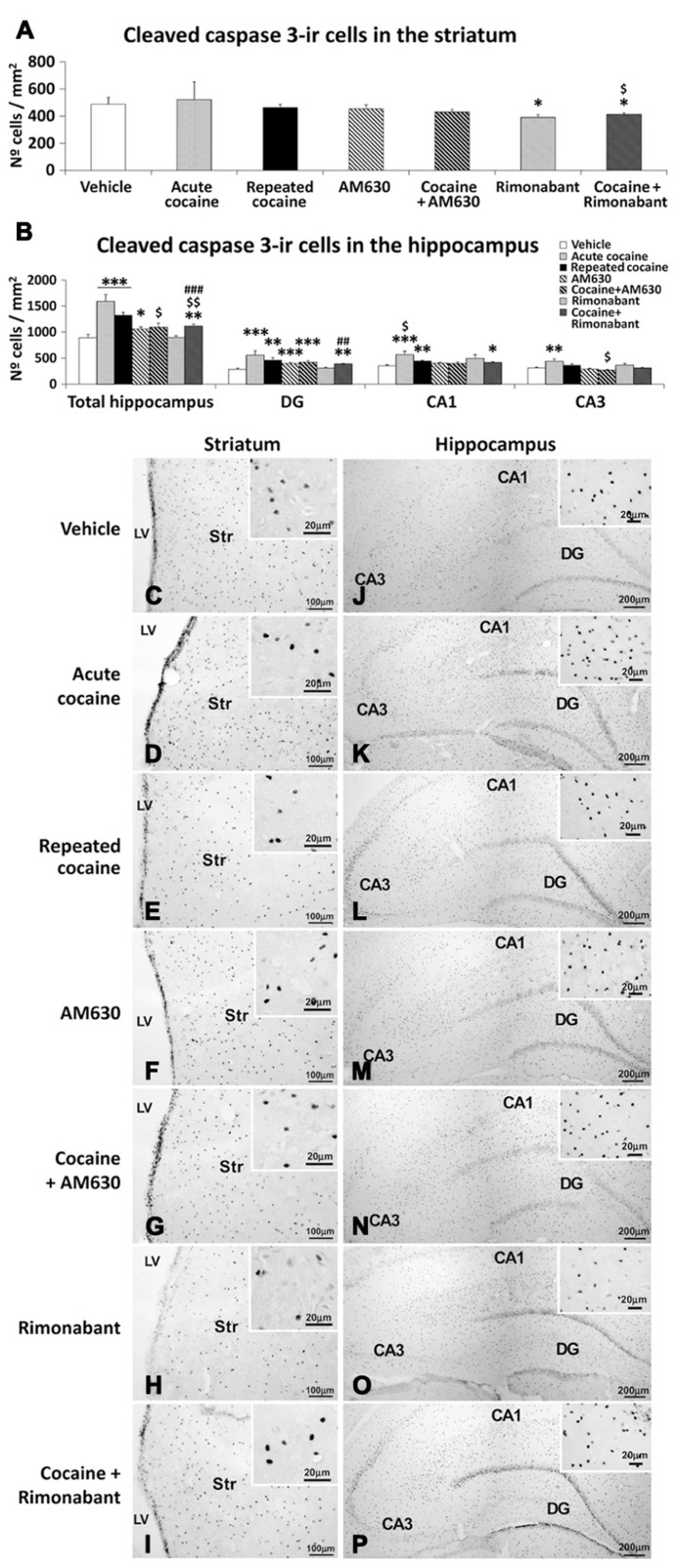
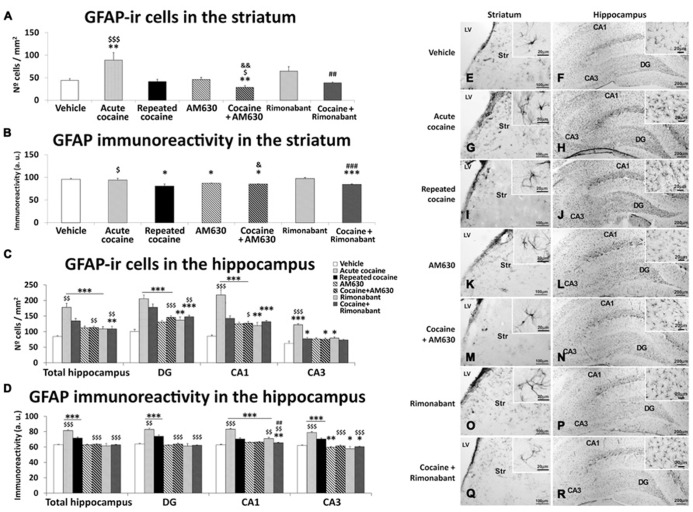
Addiction to major drugs of abuse, such as cocaine, has recently been linked to alterations in adult neurogenesis in the hippocampus. The endogenous cannabinoid system modulates this proliferative response as demonstrated by the finding that pharmacological activation/blockade of cannabinoid CB1 and CB2 receptors not only modulates neurogenesis but also modulates cell death in the brain. In the present study, we evaluated whether the endogenous cannabinoid system affects cocaine-induced alterations in cell proliferation. To this end, we examined whether pharmacological blockade of either CB1 (Rimonabant, 3 mg/kg) or CB2 receptors (AM630, 3 mg/kg) would affect cell proliferation [the cells were labeled with 5-bromo-2'-deoxyuridine (BrdU)] in the subventricular zone (SVZ) of the lateral ventricle and the dentate subgranular zone (SGZ). Additionally, we measured cell apoptosis (as monitored by the expression of cleaved caspase-3) and glial activation [by analyzing the expression of glial fibrillary acidic protein (GFAP) and Iba-1] in the striatum and hippocampus during acute and repeated (4 days) cocaine administration (20 mg/kg). The results showed that acute cocaine exposure decreased the number of BrdU-immunoreactive (ir) cells in the SVZ and SGZ. In contrast, repeated cocaine exposure reduced the number of BrdU-ir cells only in the SVZ. Both acute and repeated cocaine exposure increased the number of cleaved caspase-3-, GFAP- and Iba1-ir cells in the hippocampus, and this effect was counteracted by AM630 or Rimonabant, which increased the number of BrdU-, GFAP-, and Iba1-ir cells in the hippocampus. These results indicate that the changes in neurogenic, apoptotic and gliotic processes that were produced by repeated cocaine administration were normalized by pharmacological blockade of CB1 and CB2. The restorative effects of cannabinoid receptor blockade on hippocampal cell proliferation were associated with the prevention of the induction of conditioned locomotion but not with the prevention of cocaine-induced sensitization.
对主要滥用药物(如可卡因)的成瘾最近与海马体中的成年神经发生改变有关。内源性大麻素系统调节这种增殖反应,因为发现药理学激活/阻断大麻素 CB1 和 CB2 受体不仅调节神经发生,而且还调节大脑中的细胞死亡。在本研究中,我们评估了内源性大麻素系统是否会影响可卡因引起的细胞增殖改变。为此,我们检查了药理学阻断 CB1(利莫那班,3mg/kg)或 CB2 受体(AM630,3mg/kg)是否会影响侧脑室室下区(SVZ)和齿状回颗粒下区(SGZ)中的细胞增殖[细胞用 5-溴-2'-脱氧尿苷(BrdU)标记]。此外,我们在急性和重复(4 天)可卡因给药(20mg/kg)期间测量纹状体和海马中的细胞凋亡(通过检测 cleaved caspase-3 的表达来监测)和神经胶质激活[通过分析胶质纤维酸性蛋白(GFAP)和 Iba-1 的表达]。结果表明,急性可卡因暴露减少了 SVZ 和 SGZ 中 BrdU-免疫反应性(ir)细胞的数量。相反,重复可卡因暴露仅减少了 SVZ 中 BrdU-ir 细胞的数量。急性和重复可卡因暴露均增加了海马中 cleaved caspase-3-、GFAP-和 Iba1-ir 细胞的数量,而 AM630 或利莫那班的作用相反,增加了海马中 BrdU-、GFAP-和 Iba1-ir 细胞的数量。这些结果表明,重复可卡因给药引起的神经发生、凋亡和神经胶质过程的变化通过 CB1 和 CB2 的药理学阻断得到了正常化。大麻素受体阻断对海马细胞增殖的恢复作用与预防条件性运动的诱导有关,但与预防可卡因引起的敏化无关。