Greenberg Gian D, Laman-Maharg Abigail, Campi Katharine L, Voigt Heather, Orr Veronica N, Schaal Leslie, Trainor Brian C
Neuroscience Graduate Group, University of California Davis, CA, USA ; Department of Psychology, University of California Davis, CA, USA ; Center for Neuroscience, University of California Davis, CA, USA.
Neuroscience Graduate Group, University of California Davis, CA, USA ; Center for Neuroscience, University of California Davis, CA, USA.
Front Behav Neurosci. 2014 Jan 9;7:223. doi: 10.3389/fnbeh.2013.00223. eCollection 2013.
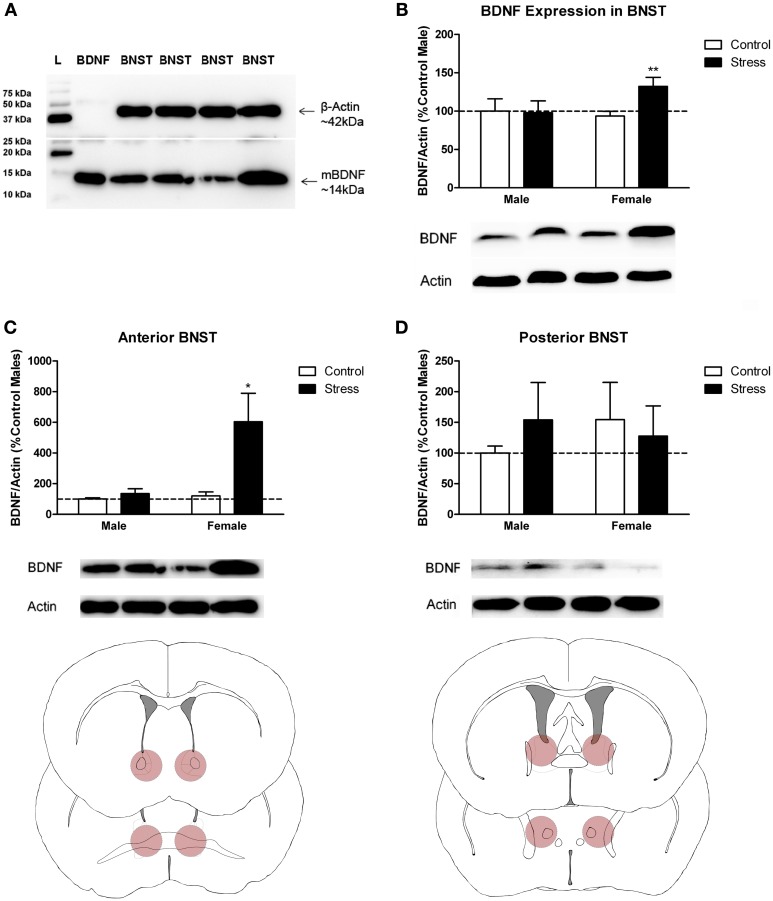
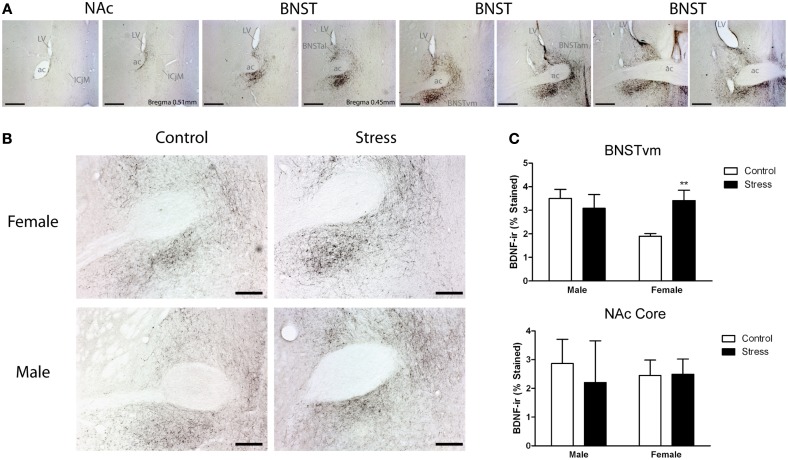
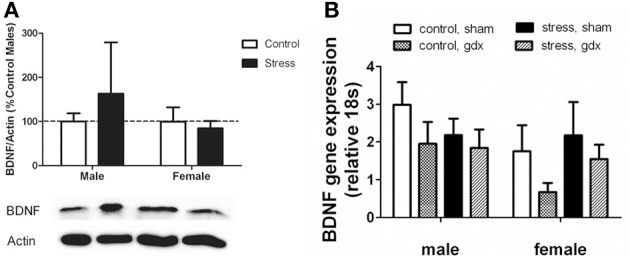
Depression and anxiety disorders are more common in women than men, and little is known about the neurobiological mechanisms that contribute to this disparity. Recent data suggest that stress-induced changes in neurotrophins have opposing effects on behavior by acting in different brain networks. Social defeat has been an important approach for understanding neurotrophin action, but low female aggression levels in rats and mice have limited the application of these methods primarily to males. We examined the effects of social defeat in monogamous California mice (Peromyscus californicus), a species in which both males and females defend territories. We demonstrate that defeat stress increases mature brain-derived neurotrophic factor (BDNF) protein but not mRNA in the bed nucleus of the stria terminalis (BNST) in females but not males. Changes in BDNF protein were limited to anterior subregions of the BNST, and there were no changes in the adjacent nucleus accumbens (NAc). The effects of defeat on social withdrawal behavior and BDNF were reversed by chronic, low doses of the antidepressant sertraline. However, higher doses of sertraline restored social withdrawal and elevated BDNF levels. Acute treatment with a low dose of sertraline failed to reverse the effects of defeat. Infusions of the selective tyrosine-related kinase B receptor (TrkB) antagonist ANA-12 into the anterior BNST specifically increased social interaction in stressed females but had no effect on behavior in females naïve to defeat. These results suggest that stress-induced increases in BDNF in the anterior BNST contribute to the exaggerated social withdrawal phenotype observed in females.
抑郁症和焦虑症在女性中比男性更常见,而导致这种差异的神经生物学机制却鲜为人知。最近的数据表明,应激诱导的神经营养因子变化通过在不同的脑网络中起作用,对行为产生相反的影响。社会挫败一直是理解神经营养因子作用的重要方法,但大鼠和小鼠中雌性攻击水平较低,限制了这些方法主要应用于雄性。我们研究了社会挫败对一夫一妻制的加利福尼亚小鼠(加州林鼠)的影响,该物种的雄性和雌性都会保卫领地。我们证明,挫败应激会增加雌性终纹床核(BNST)中成熟脑源性神经营养因子(BDNF)蛋白的含量,但不会增加其mRNA的含量,而雄性则不然。BDNF蛋白的变化仅限于BNST的前亚区,相邻的伏隔核(NAc)没有变化。慢性低剂量抗抑郁药舍曲林可逆转挫败对社交退缩行为和BDNF的影响。然而,更高剂量的舍曲林可恢复社交退缩并提高BDNF水平。低剂量舍曲林的急性治疗未能逆转挫败的影响。向前BNST注射选择性酪氨酸相关激酶B受体(TrkB)拮抗剂ANA-12可特异性增加应激雌性的社交互动,但对未经历过挫败的雌性行为没有影响。这些结果表明,应激诱导的前BNST中BDNF的增加导致了雌性中观察到的过度社交退缩表型。