Ricci Luca, Formica Domenico, Sparaci Laura, Lasorsa Francesca Romana, Taffoni Fabrizio, Tamilia Eleonora, Guglielmelli Eugenio
Laboratory of Biomedical Robotics and Biomicrosystems, Universit'a Campus Bio-Medico di Roma, Via A' lvaro del Portillo 21, Rome 00128, Italy.
Sensors (Basel). 2014 Jan 9;14(1):1057-72. doi: 10.3390/s140101057.
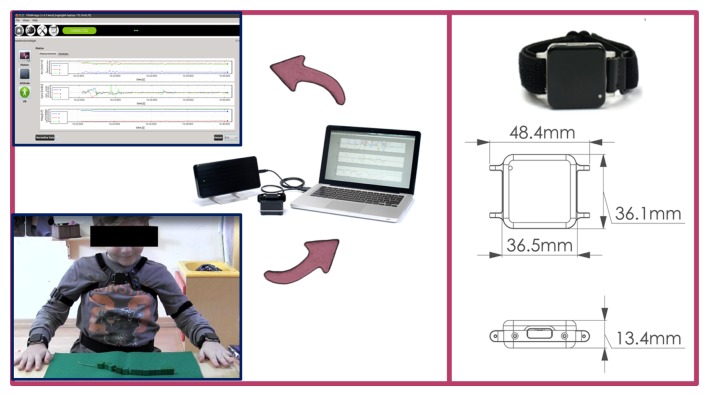
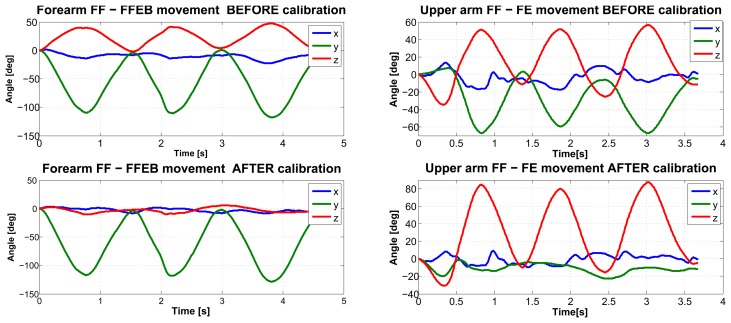
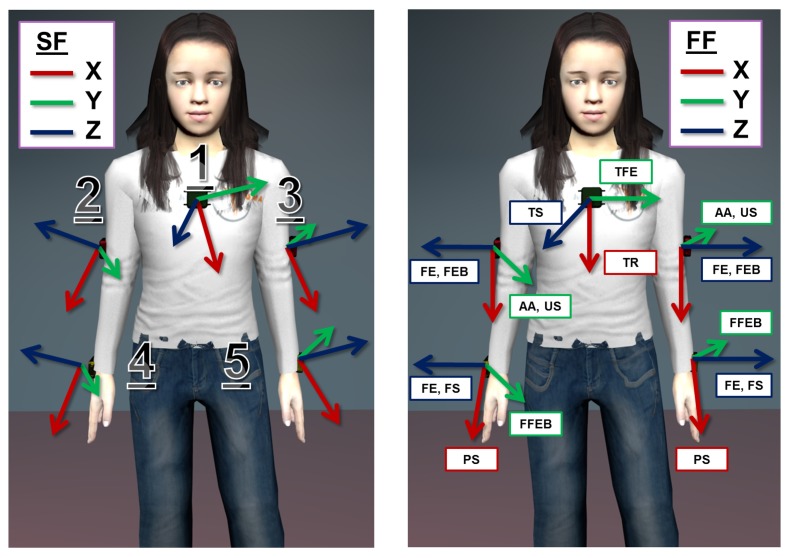
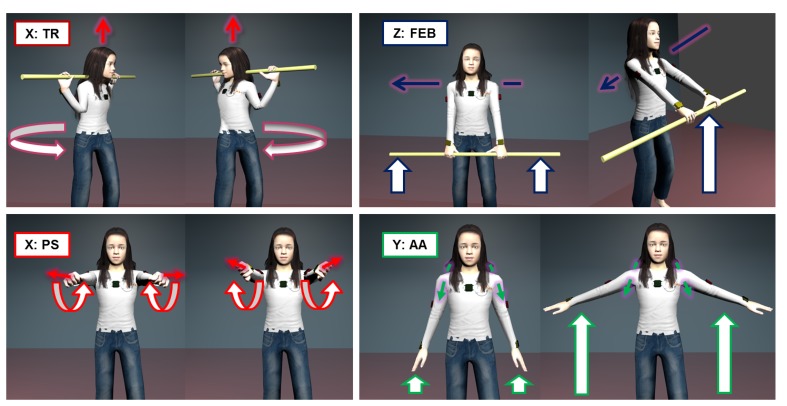
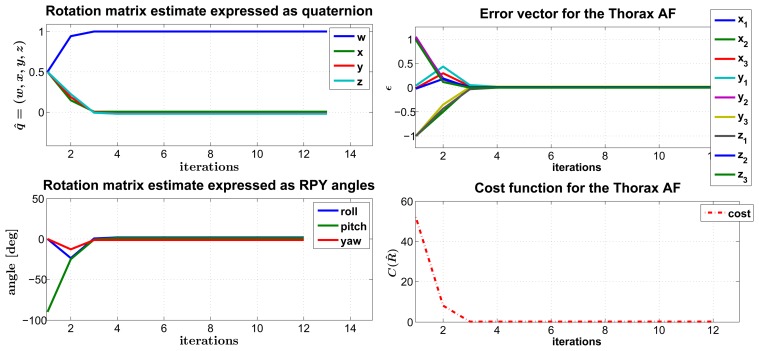
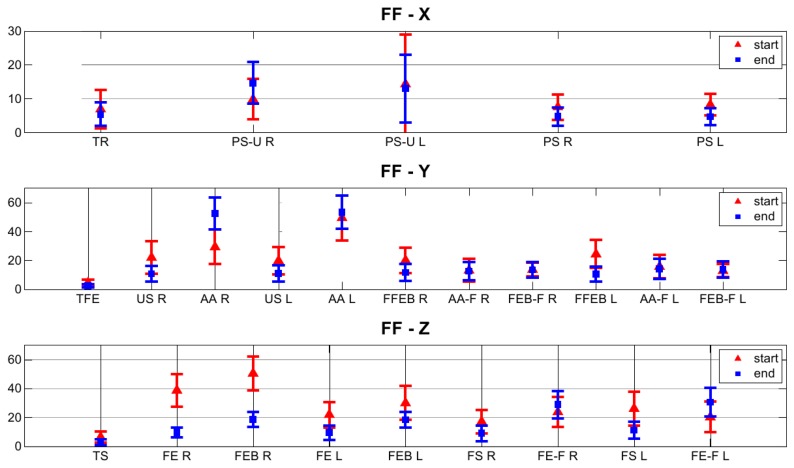
Recent advances in wearable sensor technologies for motion capture have produced devices, mainly based on magneto and inertial measurement units (M-IMU), that are now suitable for out-of-the-lab use with children. In fact, the reduced size, weight and the wireless connectivity meet the requirement of minimum obtrusivity and give scientists the possibility to analyze children's motion in daily life contexts. Typical use of magneto and inertial measurement units (M-IMU) motion capture systems is based on attaching a sensing unit to each body segment of interest. The correct use of this setup requires a specific calibration methodology that allows mapping measurements from the sensors' frames of reference into useful kinematic information in the human limbs' frames of reference. The present work addresses this specific issue, presenting a calibration protocol to capture the kinematics of the upper limbs and thorax in typically developing (TD) children. The proposed method allows the construction, on each body segment, of a meaningful system of coordinates that are representative of real physiological motions and that are referred to as functional frames (FFs). We will also present a novel cost function for the Levenberg-Marquardt algorithm, to retrieve the rotation matrices between each sensor frame (SF) and the corresponding FF. Reported results on a group of 40 children suggest that the method is repeatable and reliable, opening the way to the extensive use of this technology for out-of-the-lab motion capture in children.
用于运动捕捉的可穿戴传感器技术最近取得的进展产生了主要基于磁和惯性测量单元(M-IMU)的设备,这些设备现在适合在实验室外供儿童使用。事实上,尺寸减小、重量减轻以及无线连接满足了最小干扰的要求,并使科学家有可能在日常生活环境中分析儿童的运动。磁和惯性测量单元(M-IMU)运动捕捉系统的典型用法是将传感单元连接到每个感兴趣的身体部位。正确使用此设置需要特定的校准方法,该方法允许将传感器参考系中的测量值映射到人类肢体参考系中的有用运动学信息。本研究解决了这个特定问题,提出了一种校准协议,用于捕捉典型发育(TD)儿童上肢和胸部的运动学。所提出的方法允许在每个身体部位构建一个有意义的坐标系系统,该系统代表实际生理运动,称为功能框架(FF)。我们还将为Levenberg-Marquardt算法提出一种新颖的代价函数,以检索每个传感器框架(SF)与相应FF之间的旋转矩阵。对一组40名儿童的报告结果表明,该方法具有可重复性和可靠性,为在实验室外对儿童进行运动捕捉广泛使用这项技术开辟了道路。