Matsuda-Lennikov Mami, Suizu Futoshi, Hirata Noriyuki, Hashimoto Manabu, Kimura Kohki, Nagamine Tadashi, Fujioka Yoichiro, Ohba Yusuke, Iwanaga Toshihiko, Noguchi Masayuki
Division of Cancer Biology, Institute for Genetic Medicine, Hokkaido University, Kita-ku, Sapporo, Japan.
Laboratory of Pathophysiology and Signal Transduction, Hokkaido University Graduate School of Medicine, Kita-ku, Sapporo, Japan.
PLoS One. 2014 Jan 8;9(1):e79795. doi: 10.1371/journal.pone.0079795. eCollection 2014.
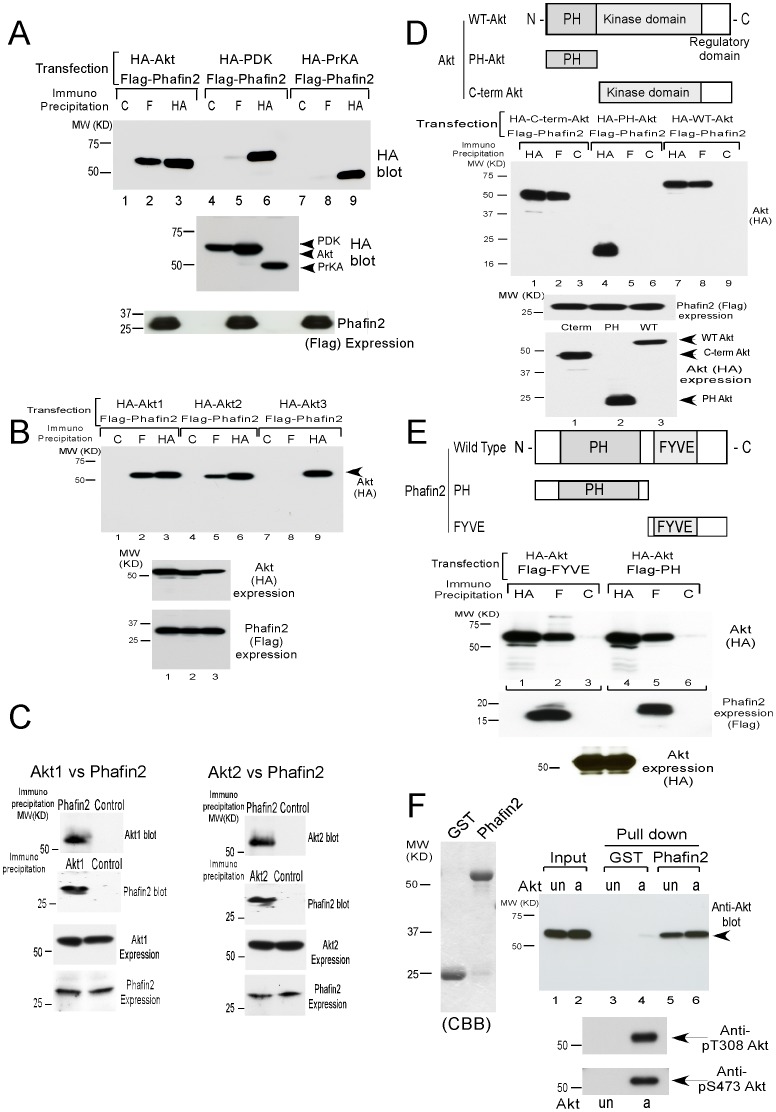
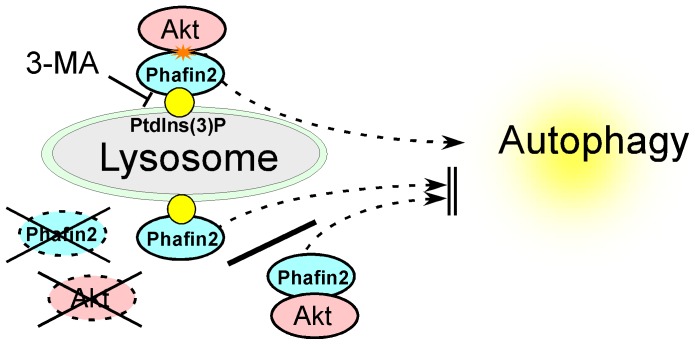
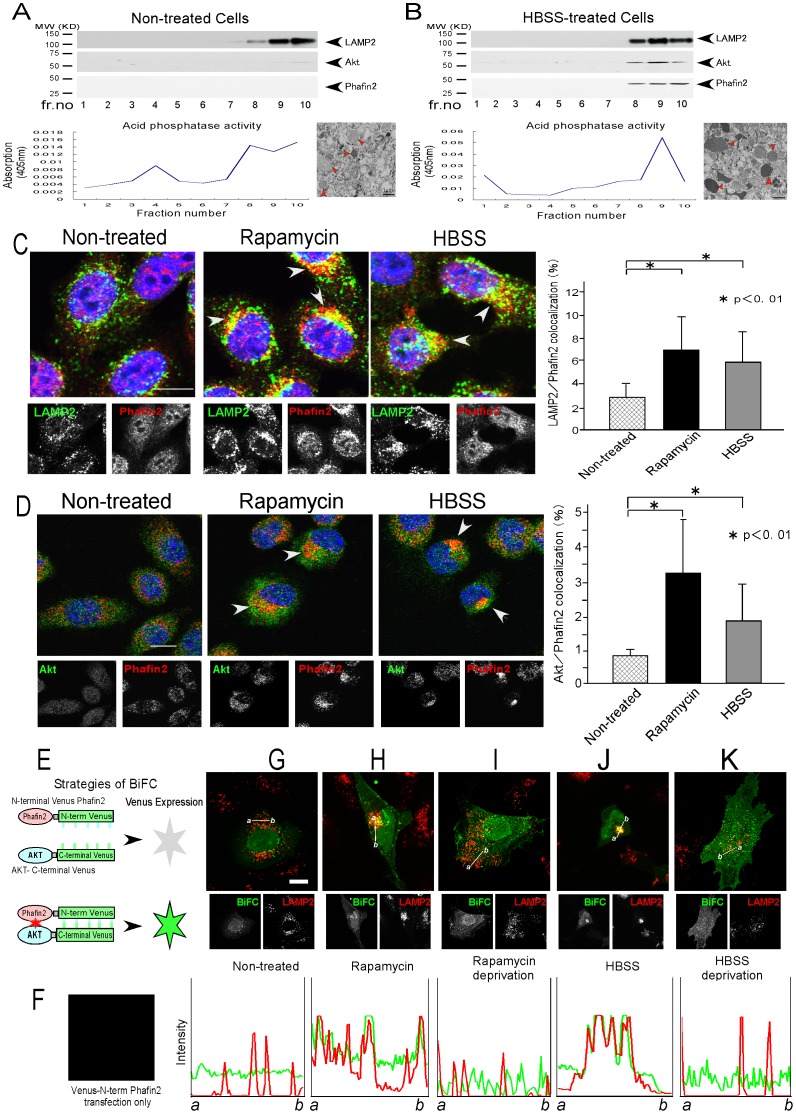
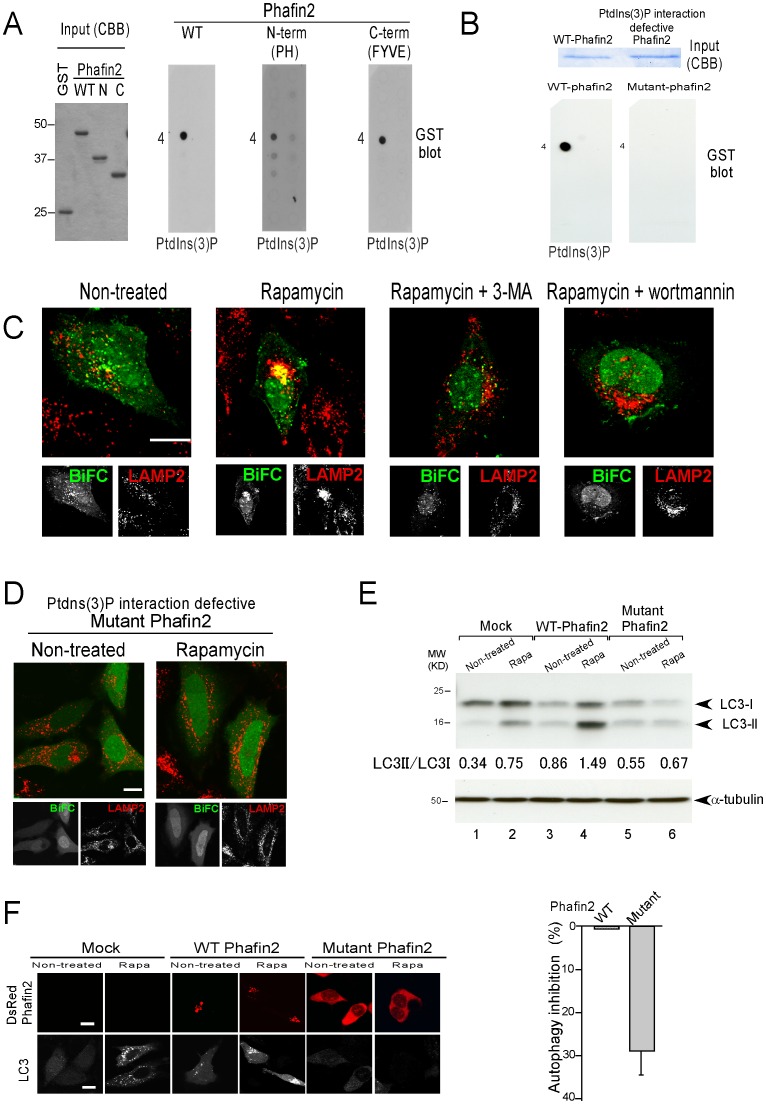
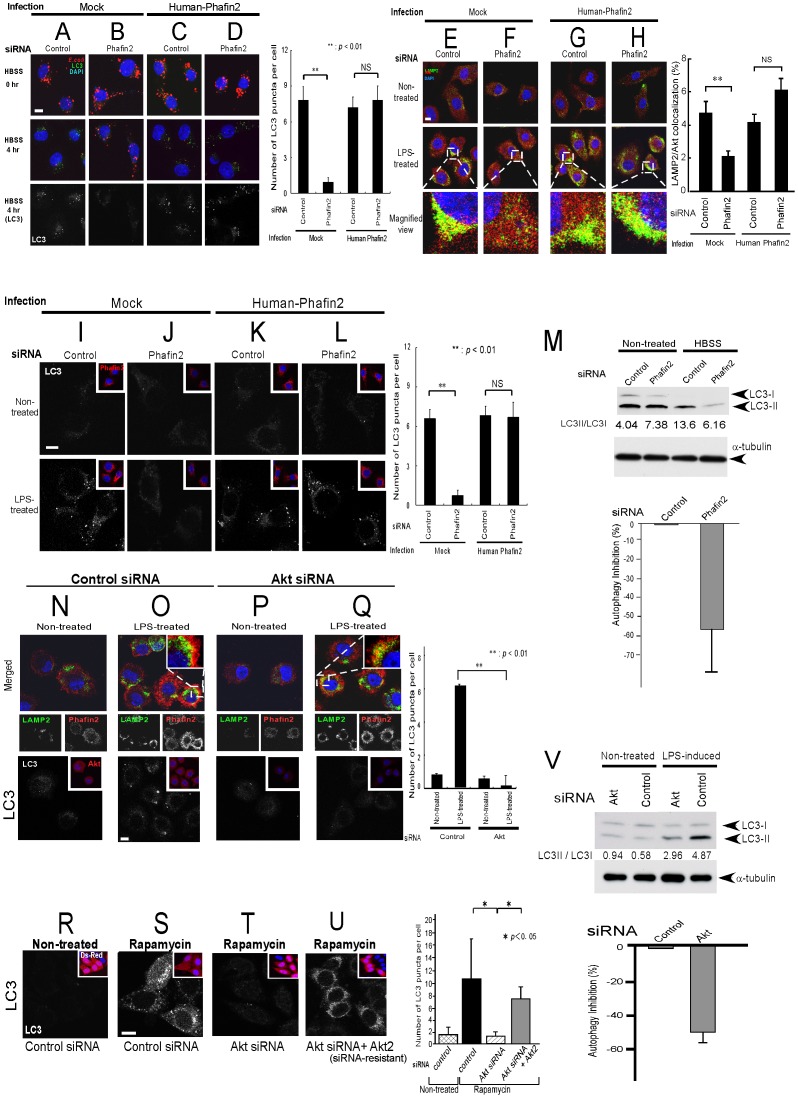
Autophagy is an evolutionarily conserved mechanism for the gross disposal of intracellular proteins in mammalian cells and dysfunction in this pathway has been associated with human disease. Although the serine threonine kinase Akt is suggested to play a role in this process, little is known about the molecular mechanisms by which Akt induces autophagy. Using a yeast two-hybrid screen, Phafin2 (EAPF or PLEKHF2), a lysosomal protein with a unique structure of N-terminal PH (pleckstrin homology) domain and C-terminal FYVE (Fab 1, YOTB, Vac 1, and EEA1) domain was found to interact with Akt. A sucrose gradient fractionation experiment revealed that both Akt and Phafin2 co-existed in the same lysosome enriched fraction after autophagy induction. Confocal microscopic analysis and BiFC analysis demonstrated that both Akt and Phafin2 accumulate in the lysosome after induction of autophagy. BiFC analysis using PtdIns (3)P interaction defective mutant of Phafin2 demonstrated that lysosomal accumulation of the Akt-Phafin2 complex and subsequent induction of autophagy were lysosomal PtdIns (3)P dependent events. Furthermore, in murine macrophages, both Akt and Phafin2 were required for digestion of fluorescent bacteria and/or LPS-induced autophagy. Taken together, these findings establish that lysosomal accumulation of Akt and Phafin2 is a critical step in the induction of autophagy via an interaction with PtdIns (3)P.
自噬是哺乳动物细胞中一种进化上保守的机制,用于对细胞内蛋白质进行总体处置,该途径功能失调与人类疾病相关。尽管丝氨酸苏氨酸激酶Akt被认为在这一过程中发挥作用,但对于Akt诱导自噬的分子机制知之甚少。通过酵母双杂交筛选,发现Phafin2(EAPF或PLEKHF2),一种具有独特结构的溶酶体蛋白,其N端为PH(普列克底物蛋白同源)结构域,C端为FYVE(Fab 1、YOTB、Vac 1和EEA1)结构域,可与Akt相互作用。蔗糖密度梯度分级实验表明,自噬诱导后,Akt和Phafin2共同存在于同一富含溶酶体的级分中。共聚焦显微镜分析和双分子荧光互补分析表明,自噬诱导后,Akt和Phafin2均在溶酶体中积累。使用Phafin2的磷脂酰肌醇-3-磷酸(PtdIns(3)P)相互作用缺陷突变体进行的双分子荧光互补分析表明,Akt-Phafin2复合物的溶酶体积累以及随后的自噬诱导是溶酶体PtdIns(3)P依赖性事件。此外,在小鼠巨噬细胞中,Akt和Phafin2都是消化荧光细菌和/或脂多糖诱导的自噬所必需的。综上所述,这些发现表明,Akt和Phafin2在溶酶体中的积累是通过与PtdIns(3)P相互作用诱导自噬的关键步骤。