Desai Kevin K, Cheng Chin L, Bingman Craig A, Phillips George N, Raines Ronald T
Department of Biochemistry, University of Wisconsin-Madison, Madison, WI 53706, USA, Department of Biochemistry and Cell Biology and Department of Chemistry, Rice University, Houston, TX 77005, USA and Department of Chemistry, University of Wisconsin-Madison, Madison, WI 53706, USA.
Nucleic Acids Res. 2014 Apr;42(6):3931-42. doi: 10.1093/nar/gkt1375. Epub 2014 Jan 16.
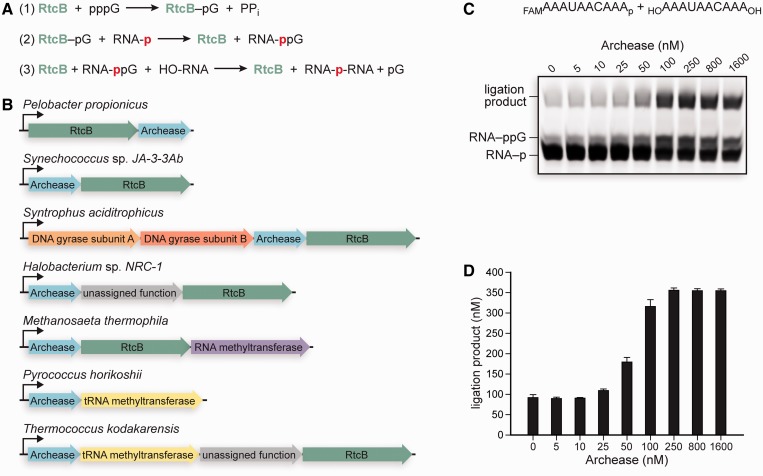
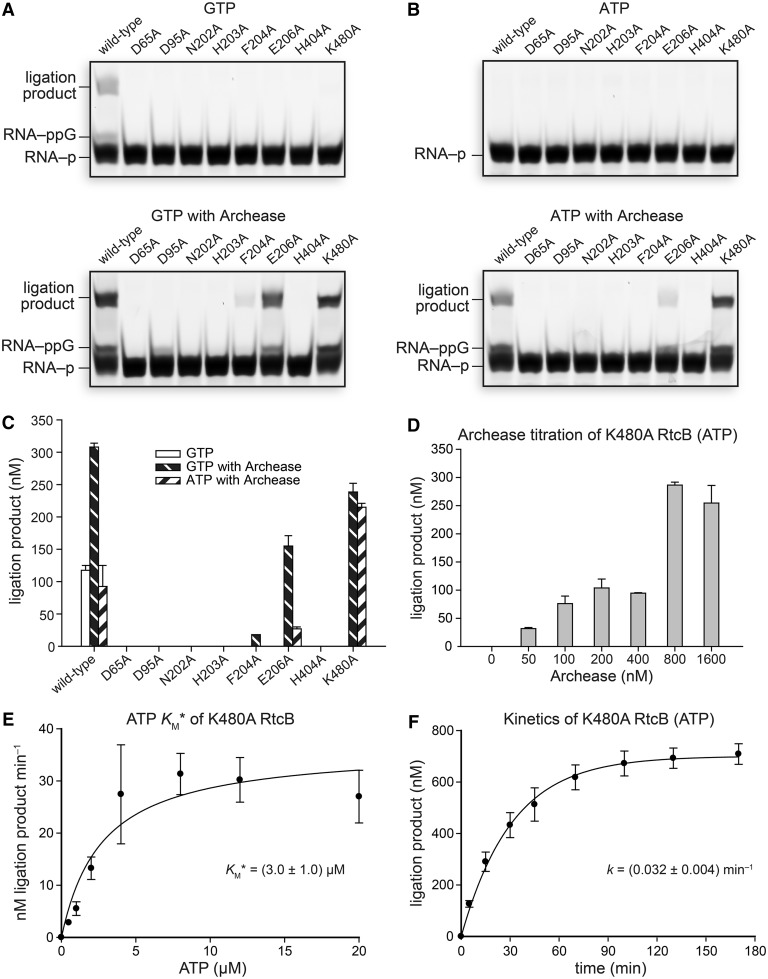
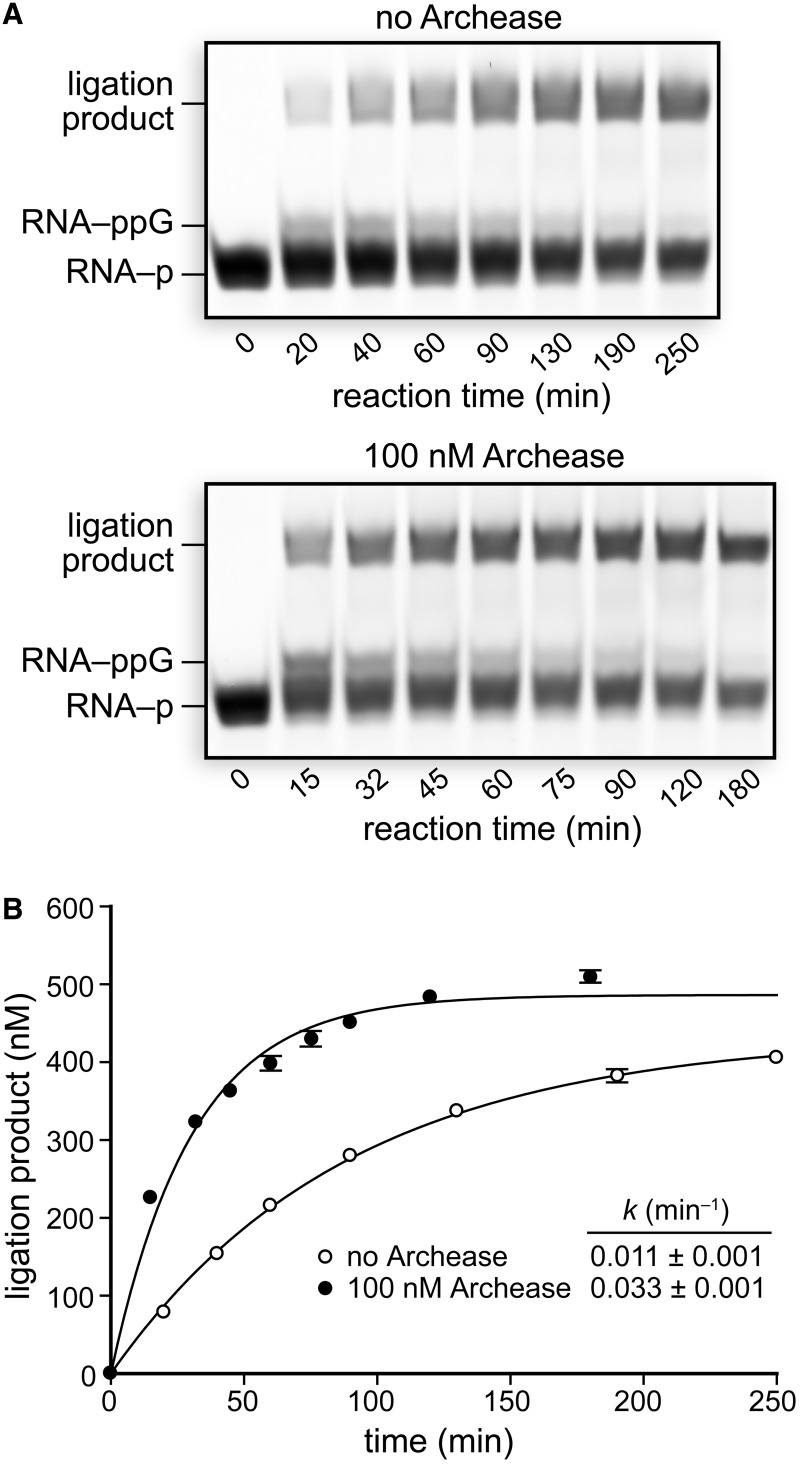
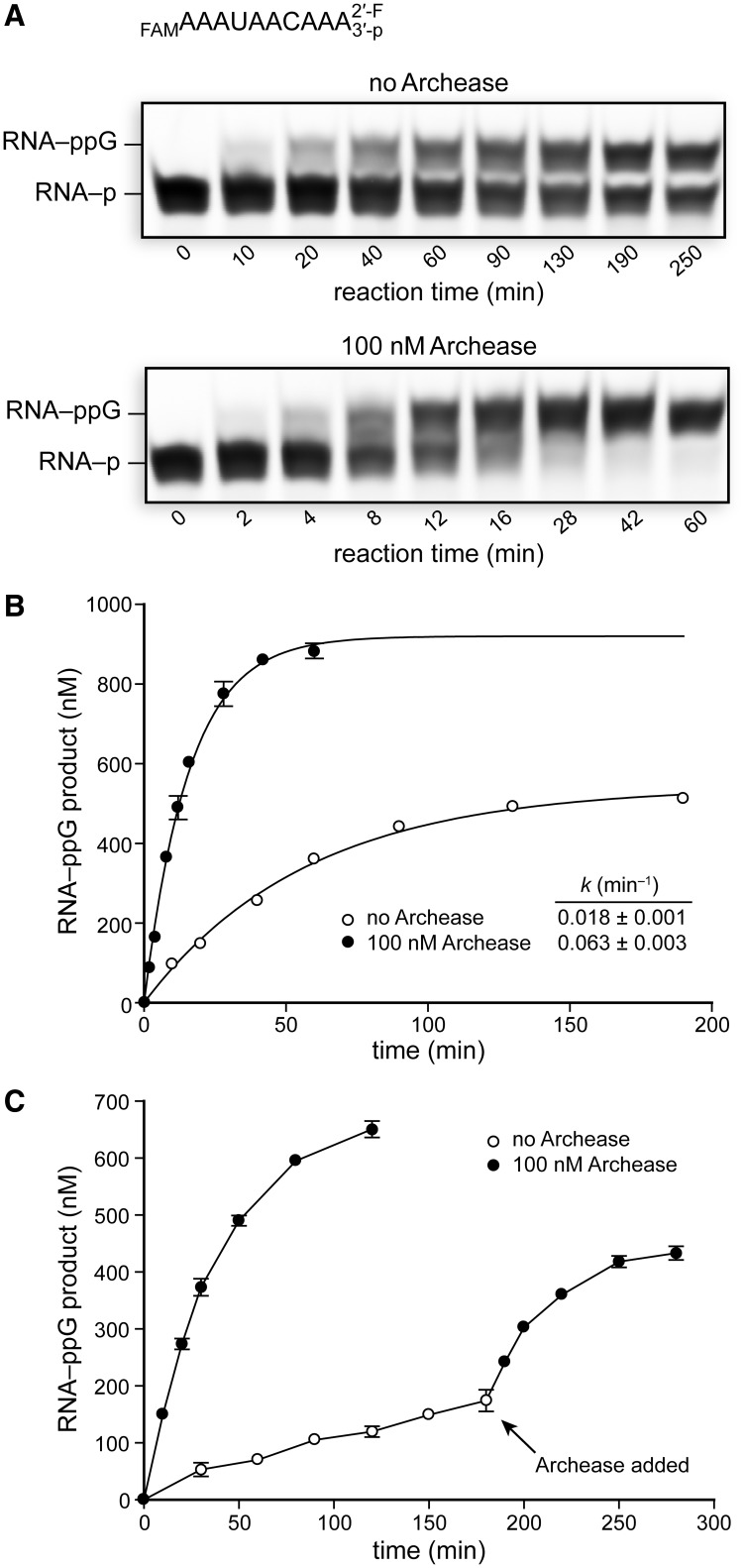
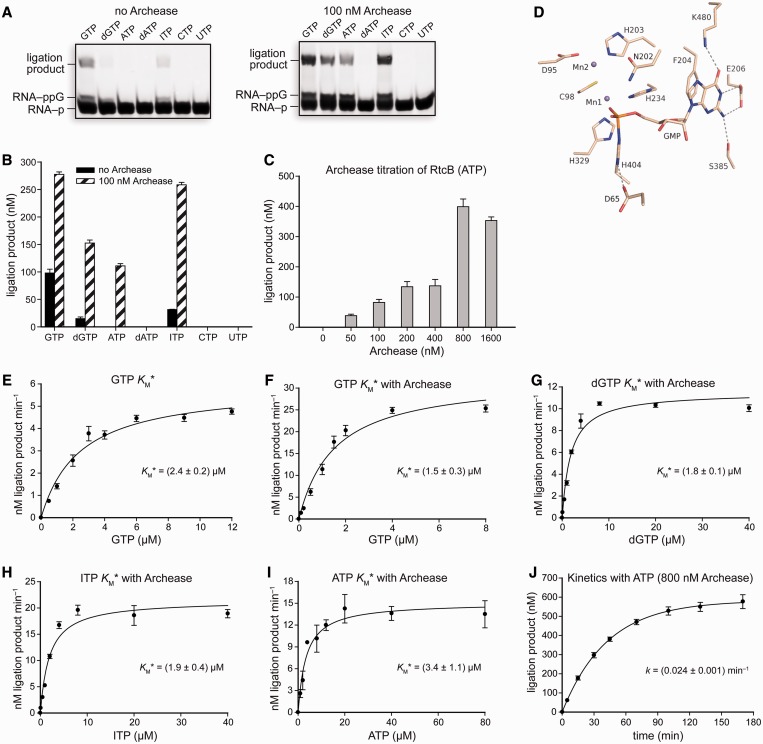
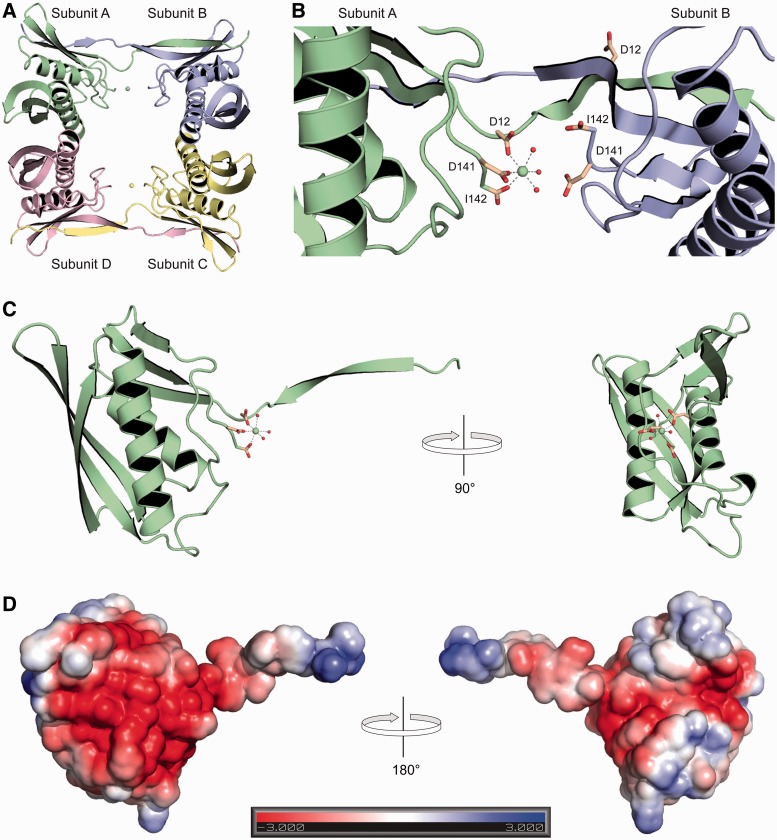
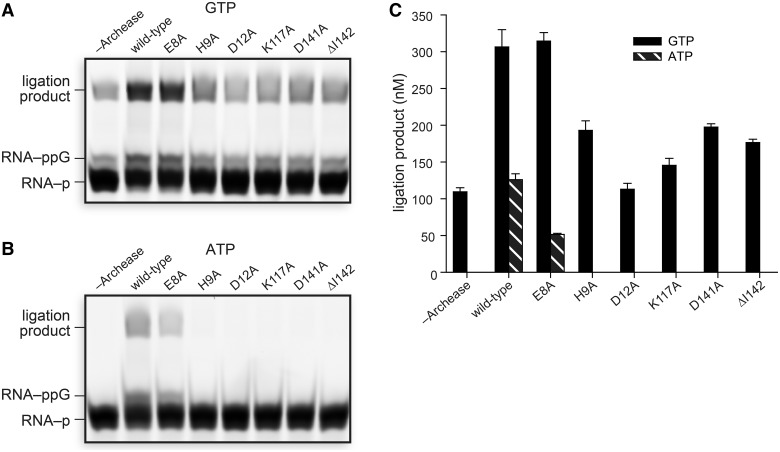
Archease is a 16-kDa protein that is conserved in all three domains of life. In diverse bacteria and archaea, the genes encoding Archease and the tRNA ligase RtcB are localized into an operon. Here we provide a rationale for this operon organization by showing that Archease and RtcB from Pyrococcus horikoshii function in tandem, with Archease altering the catalytic properties of the RNA ligase. RtcB catalyzes the GTP and Mn(II)-dependent joining of either 2',3'-cyclic phosphate or 3'-phosphate termini to 5'-hydroxyl termini. We find that catalytic concentrations of Archease are sufficient to activate RtcB, and that Archease accelerates both the RNA 3'-P guanylylation and ligation steps. In addition, we show that Archease can alter the NTP specificity of RtcB such that ATP, dGTP or ITP is used efficiently. Moreover, RtcB variants that have inactivating substitutions in the guanine-binding pocket can be rescued by the addition of Archease. We also present a 1.4 Å-resolution crystal structure of P. horikoshii Archease that reveals a metal-binding site consisting of conserved carboxylates located at the protein tip. Substitution of the Archease metal-binding residues drastically reduced Archease-dependent activation of RtcB. Thus, evolution has sought to co-express archease and rtcB by creating a tRNA splicing operon.
古酶是一种16千道尔顿的蛋白质,在生命的所有三个域中都保守存在。在多种细菌和古生菌中,编码古酶和tRNA连接酶RtcB的基因定位于一个操纵子中。在此,我们通过表明来自嗜热栖热菌的古酶和RtcB协同发挥作用,其中古酶改变了RNA连接酶的催化特性,为这种操纵子组织提供了一种理论依据。RtcB催化2',3'-环磷酸或3'-磷酸末端与5'-羟基末端的GTP和Mn(II)依赖性连接。我们发现,催化浓度的古酶足以激活RtcB,并且古酶加速了RNA 3'-P鸟苷酸化和连接步骤。此外,我们表明古酶可以改变RtcB的NTP特异性,从而使ATP、dGTP或ITP能够被有效利用。而且,在鸟嘌呤结合口袋中具有失活取代的RtcB变体可以通过添加古酶来挽救。我们还展示了嗜热栖热菌古酶的1.4 Å分辨率晶体结构,该结构揭示了一个位于蛋白质末端由保守羧酸盐组成的金属结合位点。替换古酶的金属结合残基会大幅降低古酶依赖性的RtcB激活。因此,进化通过创建一个tRNA剪接操纵子来促使古酶和rtcB共表达。