Department of Chemistry and Chemical Biology, Cornell University, Ithaca, NY 14853, USA.
ACS Chem Biol. 2012 Jun 15;7(6):947-60. doi: 10.1021/cb3001793. Epub 2012 May 16.
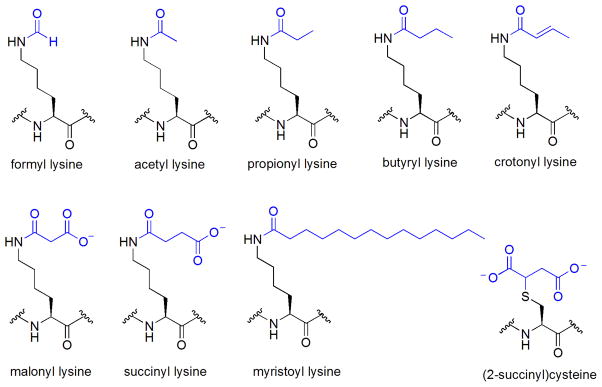
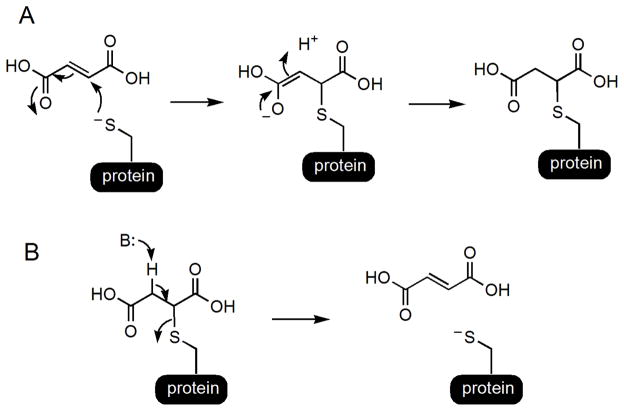
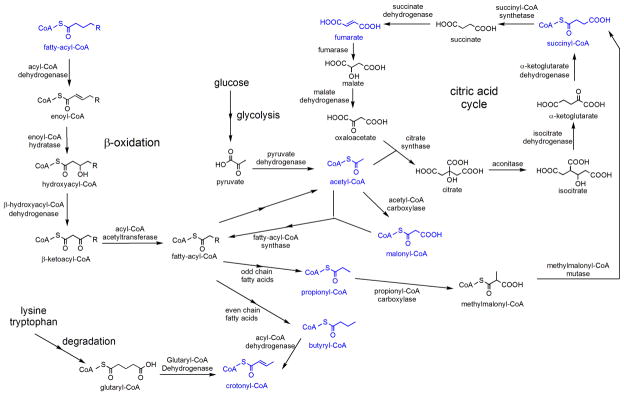
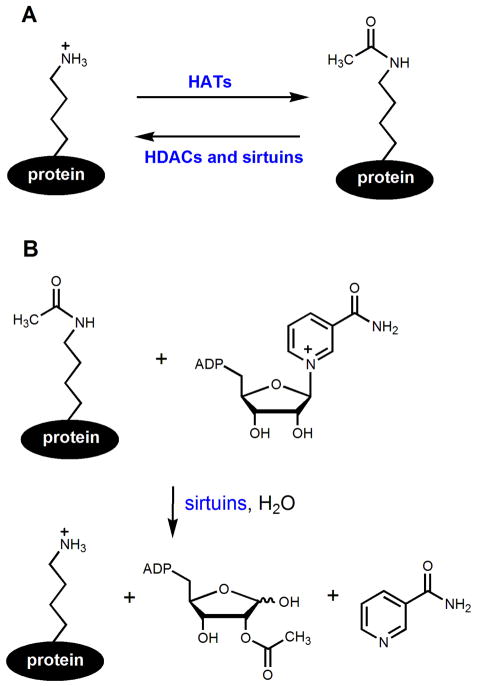
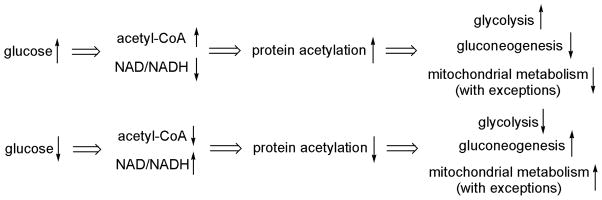
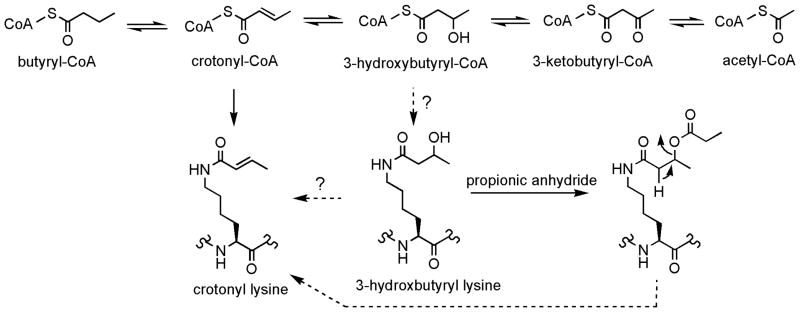
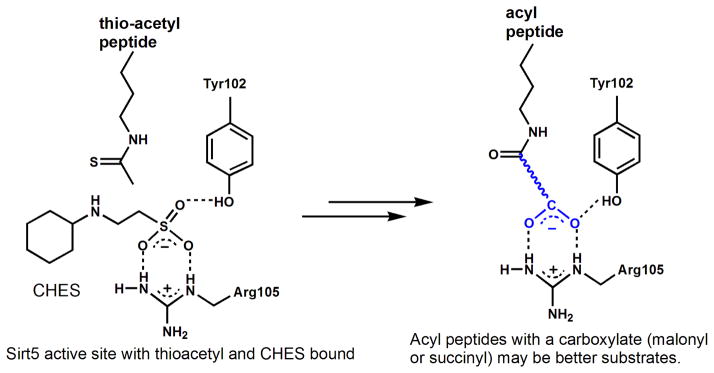
In the past few years, several new protein post-translational modifications that use intermediates in metabolism have been discovered. These include various acyl lysine modifications (formylation, propionylation, butyrylation, crotonylation, malonylation, succinylation, myristoylation) and cysteine succination. Here, we review the discovery and the current understanding of these modifications. Several of these modifications are regulated by the deacylases, sirtuins, which use nicotinamide adenine dinucleotide (NAD), an important metabolic small molecule. Interestingly, several of these modifications in turn regulate the activity of metabolic enzymes. These new modifications reveal interesting connections between metabolism and protein post-translational modifications and raise many questions for future investigations.
在过去的几年中,已经发现了几种利用代谢中间产物的新蛋白质翻译后修饰。这些修饰包括各种酰基辅氨酸修饰(甲酰化、丙酰化、丁酰化、巴豆酰化、丙二酰化、琥珀酰化、豆蔻酰化)和半胱氨酸琥珀酰化。在这里,我们回顾了这些修饰的发现和当前的认识。其中几种修饰受去乙酰酶,即烟酰胺腺嘌呤二核苷酸(NAD)的调节,这是一种重要的代谢小分子。有趣的是,这些修饰中的几种反过来又调节代谢酶的活性。这些新的修饰揭示了代谢和蛋白质翻译后修饰之间的有趣联系,并为未来的研究提出了许多问题。