Seifter Ari, Singh Sarabdeep, McArdle Patrick F, Ryan Kathleen A, Shuldiner Alan R, Mitchell Braxton D, Schäffer Alejandro A
Department of Medicine and Program for Personalized and Genomic Medicine, University of Maryland School of Medicine, Baltimore, Maryland, USA.
BMJ Open. 2014 Jan 15;4(1):e003670. doi: 10.1136/bmjopen-2013-003670.
This study investigates the association between bereavement and the mortality of a surviving spouse among Amish couples. We hypothesised that the bereavement effect would be relatively small in the Amish due to the unusually cohesive social structure of the Amish that might attenuate the loss of spousal support.
Population-based cohort study.
The USA.
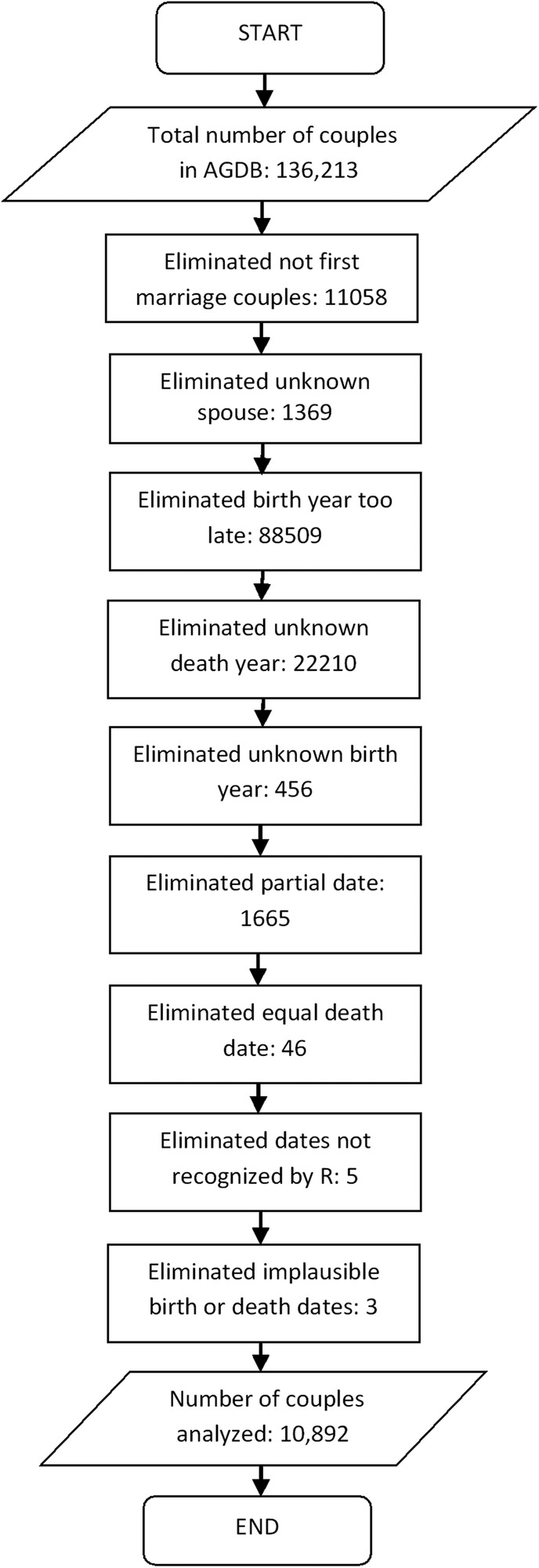
10,892 Amish couples born during 1725-1900 located in Pennsylvania, Ohio and Indiana. All the participants are deceased.
The survival time is 'age'; event is 'death'. Hazard ratios (HRs) of widowed individuals with respect to gender, age at widowhood, remarriage, the number of surviving children and time since bereavement.
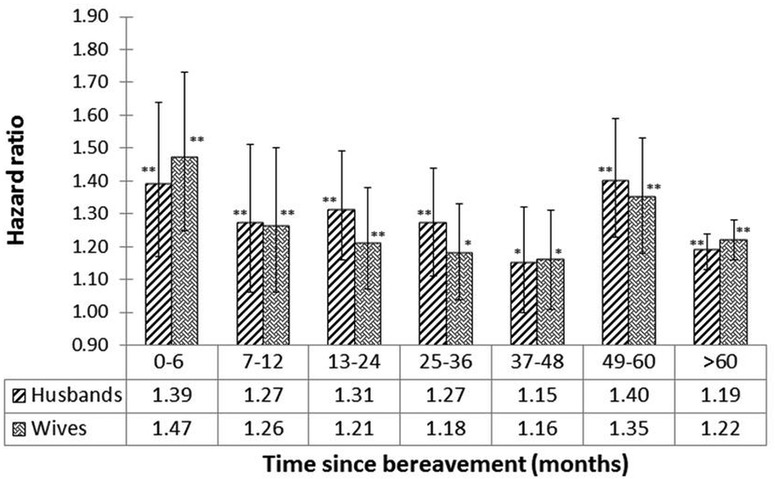
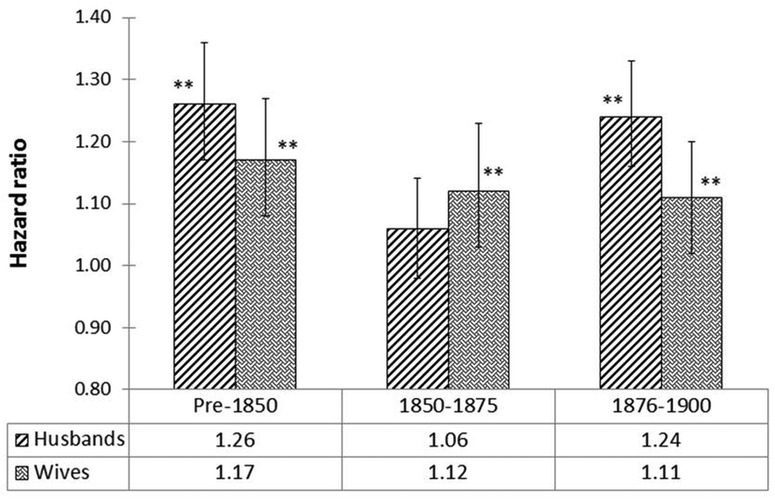
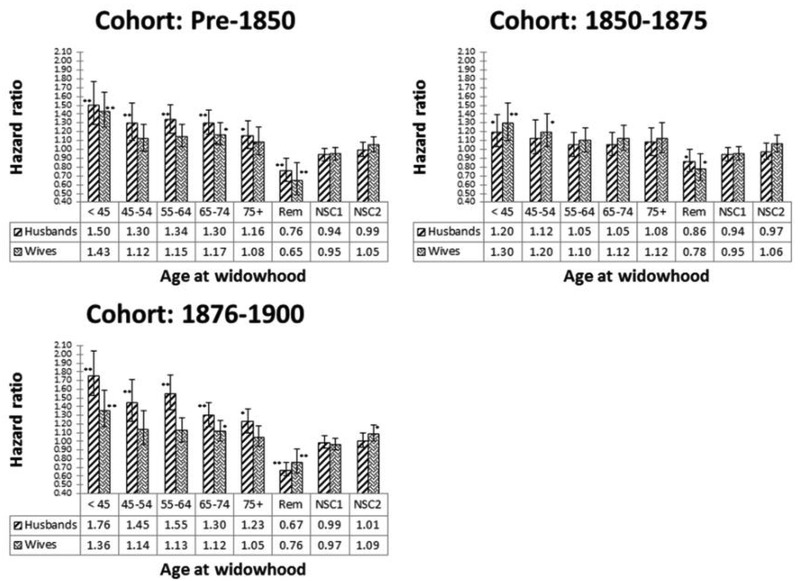
We observed HRs for widowhood ranging from 1.06 to 1.26 over the study period (nearly all differences significant at p<0.05). Mortality risks tended to be higher in men than in women and in younger compared with older bereaved spouses. There were significantly increased mortality risks in widows and widowers who did not remarry. We observed a higher number of surviving children to be associated with increased mortality in men and women. Mortality risk following bereavement was higher in the first 6 months among men and women.
We conclude that bereavement effects remain apparent even in this socially cohesive Amish community. Remarriage is associated with a significant decrease in the mortality risk among Amish individuals. Contrary to results from previous studies, an increase in the number of surviving children was associated with decreased survival rate.
本研究调查阿米什夫妇中丧偶与幸存配偶死亡率之间的关联。我们假设,由于阿米什人异常紧密的社会结构可能会减轻配偶支持的丧失,因此丧偶效应在阿米什人中相对较小。
基于人群的队列研究。
美国。
10892对出生于1725年至1900年之间、居住在宾夕法尼亚州、俄亥俄州和印第安纳州的阿米什夫妇。所有参与者均已去世。
生存时间为“年龄”;事件为“死亡”。按性别、丧偶年龄、再婚情况、存活子女数量和丧偶时间对丧偶个体的风险比(HRs)进行分析。
在研究期间,我们观察到丧偶的风险比在1.06至1.26之间(几乎所有差异在p<0.05时具有显著性)。男性的死亡风险往往高于女性,年轻丧偶配偶的死亡风险高于年长丧偶配偶。未再婚的寡妇和鳏夫的死亡风险显著增加。我们观察到,存活子女数量较多与男性和女性的死亡率增加有关。丧偶后的前6个月内,男性和女性的死亡风险都较高。
我们得出结论,即使在这个社会凝聚力强的阿米什社区,丧偶效应仍然明显。再婚与阿米什人死亡风险的显著降低有关。与先前研究的结果相反,存活子女数量的增加与生存率的降低有关。