Dominguez-Gutierrez Paul R, Ceribelli Angela, Satoh Minoru, Sobel Eric S, Reeves Westley H, Chan Edward K L
Arthritis Res Ther. 2014 Jan 23;16(1):R20. doi: 10.1186/ar4448.
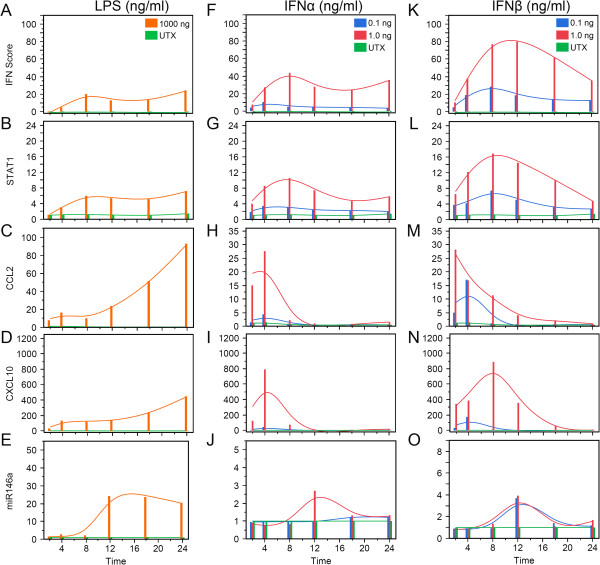
The present study examines the levels of recently reported biomarkers, adenosine deaminase acting on RNA (ADAR), C-C motif chemokine ligand 2 (CCL2), C-X-C motif chemokine 10 (CXCL10), signal transducers and activators of transcription 1 (STAT1), and miR-146a in systemic lupus erythematosus (SLE) patients over multiple visits.
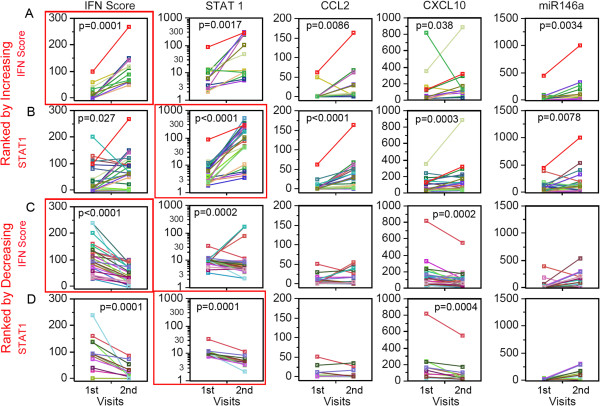
Peripheral blood leukocytes were collected from 65 healthy donors and 103 SLE patients, 60 of whom had samples from 2 or more visits. Total RNA was isolated and analyzed for the expression of mRNA and microRNA using Taqman real time PCR assays. Relative expression of I-IFN signature genes, chemokines, and miR-146a were determined by the ΔΔCT method. Results were correlated with clinical data and analyzed by Wilcoxon/Kruskal-Wallis test and Fisher's exact test.
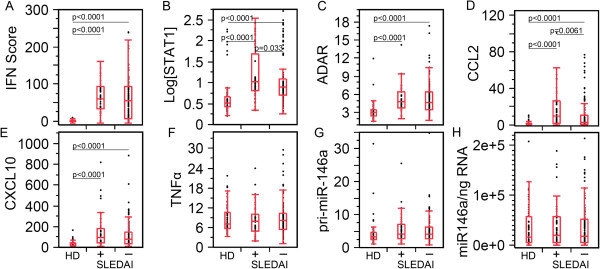
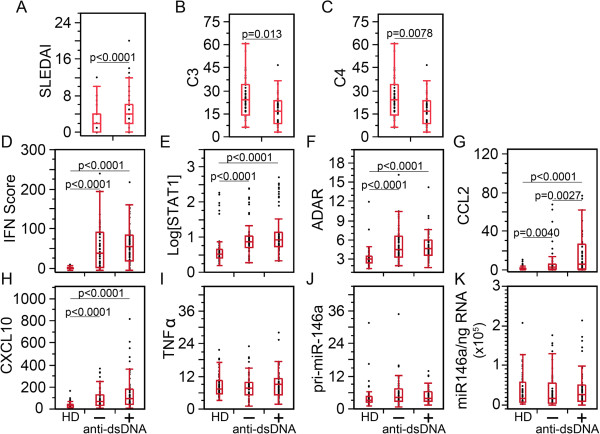
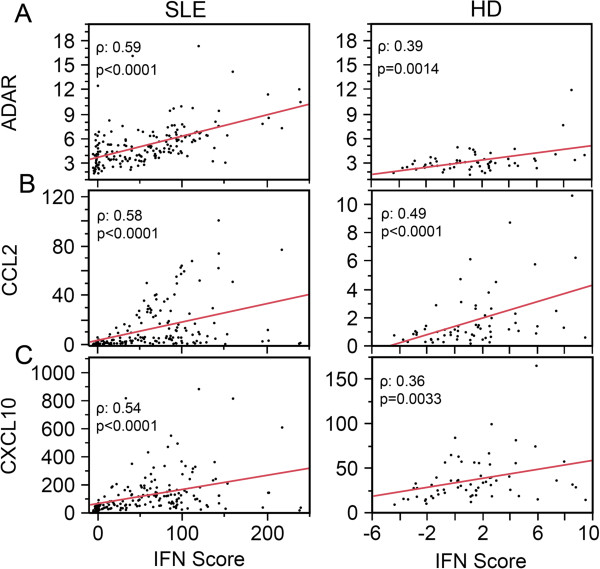
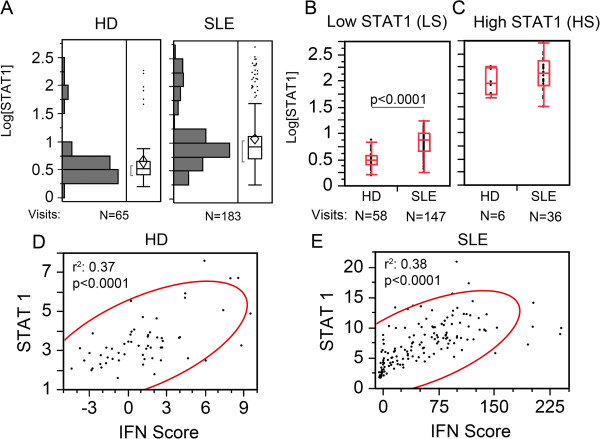
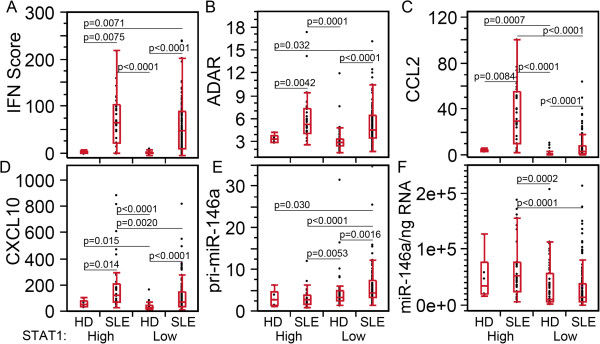
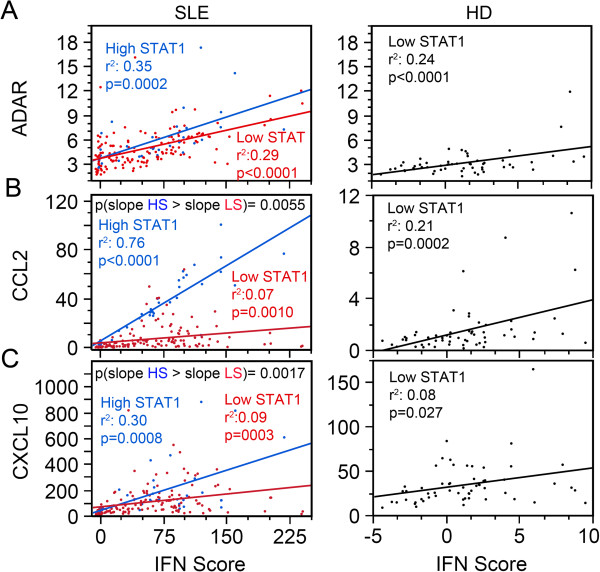
Levels of ADAR, CCL2, CXCL10, and STAT1 in SLE were significantly elevated compared with the healthy controls (P <0.0001). ADAR, CCL2, and CXCL10 showed significant correlation with IFN score in both healthy donors (P <0.0033) and SLE patients (P <0.0001). In SLE patients, miR-146a level was not significantly different from healthy controls nor correlated to the IFN score. Two STAT1 populations were identified: a low STAT1 and a high STAT1 group. High STAT1 patient visits displayed higher (P ≤0.0020) levels of CCL2 and CXCL10 than the low STAT1 patient visits. STAT1 levels correlated with IFN score in low STAT1 group but not in high STAT1 group. More importantly, high STAT1 levels appeared as an enhancer of CCL2 and CXCL10 as indicated by the significantly stronger correlation of CCL2 and CXCL10 with IFN score in high STAT1 patient visits relative to low STAT1 patient visits.
Our data indicate a novel role for STAT1 in the pathogenesis of SLE as an expression enhancer of CCL2 and CXCL10 in SLE patients with high levels of STAT1. Future study is needed to examine the exact role of STAT1 in the etiology of SLE.
本研究检测了近期报道的生物标志物——作用于RNA的腺苷脱氨酶(ADAR)、C-C基序趋化因子配体2(CCL2)、C-X-C基序趋化因子10(CXCL10)、信号转导和转录激活因子1(STAT1)以及miR-146a在系统性红斑狼疮(SLE)患者多次就诊时的水平。
收集了65名健康供者和103名SLE患者的外周血白细胞,其中60名患者有2次或更多次就诊时的样本。分离总RNA,使用Taqman实时PCR检测法分析mRNA和微小RNA的表达。通过ΔΔCT法确定I型干扰素特征基因、趋化因子和miR-146a的相对表达。将结果与临床数据相关联,并通过Wilcoxon/Kruskal-Wallis检验和Fisher精确检验进行分析。
与健康对照相比,SLE患者中ADAR、CCL2、CXCL10和STAT1的水平显著升高(P<0.0001)。ADAR、CCL2和CXCL10在健康供者(P<0.0033)和SLE患者(P<0.0001)中均与干扰素评分显著相关。在SLE患者中,miR-146a水平与健康对照无显著差异,也与干扰素评分无关。鉴定出两个STAT1亚群:低STAT1组和高STAT1组。高STAT1患者就诊时CCL2和CXCL10的水平高于低STAT1患者就诊时(P≤0.0020)。低STAT1组中STAT1水平与干扰素评分相关,而高STAT1组中则不相关。更重要的是,相对于低STAT1患者就诊时,高STAT1患者就诊时CCL2和CXCL10与干扰素评分的相关性显著更强,表明高STAT1水平是CCL2和CXCL10的增强因子。
我们的数据表明,在STAT1水平较高的SLE患者中,STAT1在SLE发病机制中作为CCL2和CXCL10的表达增强因子具有新的作用。需要进一步研究以明确STAT1在SLE病因中的具体作用。