Neurobiology and Pain Therapeutics Section, Laboratory of Sensory Biology, National Institute of Dental and Craniofacial Research, Bethesda, Maryland, United States of America.
PLoS One. 2012;7(2):e32001. doi: 10.1371/journal.pone.0032001. Epub 2012 Feb 21.
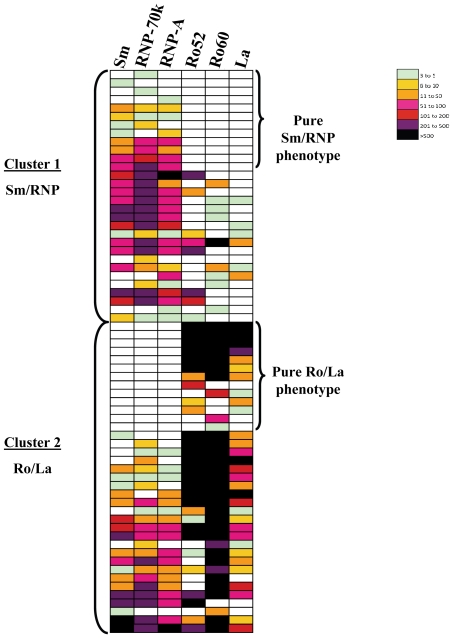
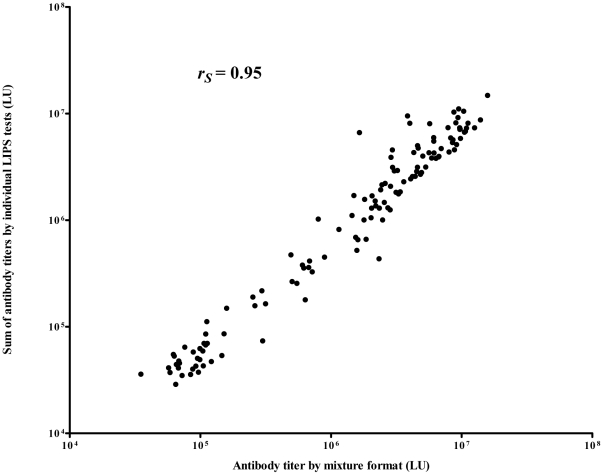
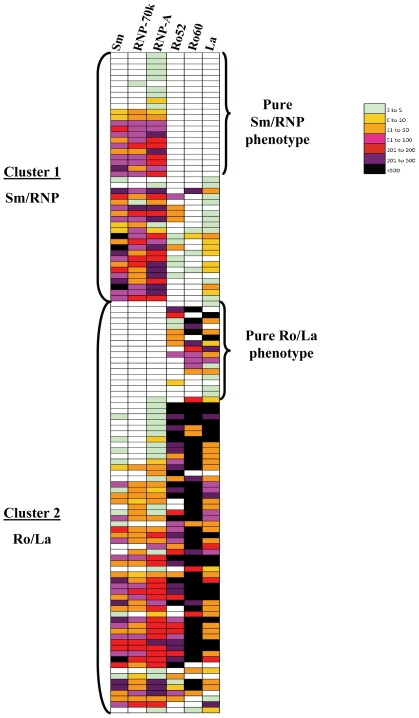
Systemic lupus erythematosus is a chronic autoimmune disease of complex clinical presentation and etiology and is likely influenced by numerous genetic and environmental factors. While a large number of susceptibility genes have been identified, the production of antibodies against a distinct subset of nuclear proteins remains a primary distinguishing characteristic in disease diagnosis. However, the utility of autoantibody biomarkers for disease sub-classification and grouping remains elusive, in part, because of the difficulty in large scale profiling using a uniform, quantitative platform. In the present study serological profiles of several known SLE antigens, including Sm-D3, RNP-A, RNP-70k, Ro52, Ro60, and La, as well as other cytokine and neuronal antigens were obtained using the luciferase immunoprecipitation systems (LIPS) approach. The resulting autoantibody profiles revealed that 88% of a pilot cohort and 98% of a second independent cohort segregated into one of two distinct clusters defined by autoantibodies against Sm/anti-RNP or Ro/La autoantigens, proteins often involved in RNA binding activities. The Sm/RNP cluster was associated with a higher prevalence of serositis in comparison to the Ro/La cluster (P = 0.0022). However, from the available clinical information, no other clinical characteristics were associated with either cluster. In contrast, evaluation of autoantibodies on an individual basis revealed an association between anti-Sm (P = 0.006), RNP-A (P = 0.018) and RNP-70k (P = 0.010) autoantibodies and mucocutaneous symptoms and between anti-RNP-70k and musculoskeletal manifestations (P = 0.059). Serologically active, but clinically quiescent disease also had a higher prevalence of anti-IFN-α autoantibodies. Based on our findings that most SLE patients belong to either a Sm/RNP or Ro/La autoantigen cluster, these results suggest the possibility that alterations in RNA-RNA-binding protein interactions may play a critical role in triggering and/or the pathogenesis of SLE.
系统性红斑狼疮是一种复杂临床表现和病因的慢性自身免疫性疾病,可能受到许多遗传和环境因素的影响。虽然已经确定了大量的易感基因,但针对一组独特核蛋白的抗体的产生仍然是疾病诊断的主要特征。然而,自身抗体生物标志物在疾病的亚分类和分组中的应用仍然难以捉摸,部分原因是使用统一的定量平台进行大规模分析存在困难。在本研究中,使用荧光素酶免疫沉淀系统(LIPS)方法获得了几种已知的 SLE 抗原的血清学特征,包括 Sm-D3、RNP-A、RNP-70k、Ro52、Ro60 和 La 以及其他细胞因子和神经元抗原。所得的自身抗体图谱显示,在一个试点队列中,88%,在第二个独立队列中,98%的患者根据针对 Sm/抗 RNP 或 Ro/La 自身抗原的自身抗体分为两个不同的簇之一,这些蛋白通常涉及 RNA 结合活性。与 Ro/La 簇相比,Sm/RNP 簇与较高的浆膜炎发生率相关(P = 0.0022)。然而,根据现有的临床资料,没有其他临床特征与任何一个簇相关。相比之下,单独评估自身抗体发现,抗 Sm(P = 0.006)、RNP-A(P = 0.018)和 RNP-70k(P = 0.010)抗体与黏膜皮肤症状以及抗 RNP-70k 和肌肉骨骼表现之间存在相关性(P = 0.059)。血清学上活跃但临床上静止的疾病也有更高的 IFN-α 自身抗体阳性率。基于我们的发现,大多数 SLE 患者属于 Sm/RNP 或 Ro/La 自身抗原簇,这些结果表明,RNA- RNA 结合蛋白相互作用的改变可能在触发和/或 SLE 的发病机制中起关键作用。