Narayanan Prasad
Department of Medical Oncology, Dubai Hospital, Dubai, United Arab Emirates.
South Asian J Cancer. 2013 Oct;2(4):272-7. doi: 10.4103/2278-330X.119895.
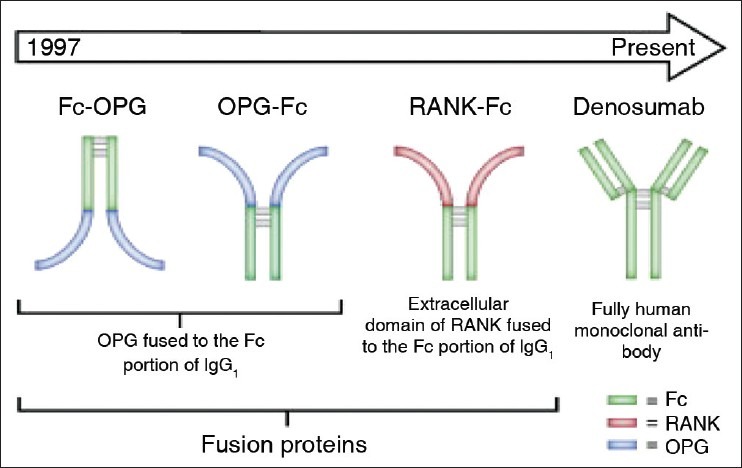
The clinical sequelae from bone metastases, termed skeletal-related events (SREs), are among the most frequent and debilitating complications in patients with advanced cancer. Bone metastases are characterized by pathologically increased osteoclast activity, and accumulating evidence indicates that tumor cells interact within the bone to stimulate the receptor activator of nuclear factor kB (RANK)-RANK ligand (RANKL) pathway. RANKL is an essential mediator of osteoclast formation, function, and survival. Because of the central role of RANKL in cancer-induced bone destruction, the inhibition of RANKL has the potential to result in the reduction of pathologic bone resorption. Denosumab is a fully human monoclonal antibody specific for RANKL that inhibits the formation, activation, and survival of osteoclasts. This in turn decreases bone resorption and reduces cancer-induced bone destruction. In this review, we give an overview of the drug Denosumab with its history, mechanism of action, clinical trial data, adverse effects, and future challenges.
骨转移导致的临床后遗症,称为骨相关事件(SREs),是晚期癌症患者中最常见且使人衰弱的并发症之一。骨转移的特征是破骨细胞活性在病理上增加,越来越多的证据表明肿瘤细胞在骨内相互作用以刺激核因子κB受体激活剂(RANK)-RANK配体(RANKL)通路。RANKL是破骨细胞形成、功能和存活的重要介质。由于RANKL在癌症诱导的骨破坏中起核心作用,抑制RANKL有可能减少病理性骨吸收。地诺单抗是一种针对RANKL的全人单克隆抗体,可抑制破骨细胞的形成、激活和存活。这进而减少骨吸收并减轻癌症诱导的骨破坏。在本综述中,我们概述了地诺单抗药物,包括其历史、作用机制、临床试验数据、不良反应及未来挑战。