Blizard Institute, Barts and The London School of Medicine and Dentistry, Queen Mary University of London, 4 Newark Street, London E1 2AT, UK.
Acta Neuropathol Commun. 2014 Jan 24;2:10. doi: 10.1186/2051-5960-2-10.
Medulloblastoma is the most common intracranial childhood malignancy and a genetically heterogeneous disease. Despite recent advances, current therapeutic approaches are still associated with high morbidity and mortality. Recent molecular profiling has suggested the stratification of medulloblastoma from one single disease into four distinct subgroups namely: WNT Group (best prognosis), SHH Group (intermediate prognosis), Group 3 (worst prognosis) and Group 4 (intermediate prognosis). BMI1 is a Polycomb group repressor complex gene overexpressed across medulloblastoma subgroups but most significantly in Group 4 tumours. Bone morphogenetic proteins are morphogens belonging to TGF-β superfamily of growth factors, known to inhibit medulloblastoma cell proliferation and induce apoptosis.
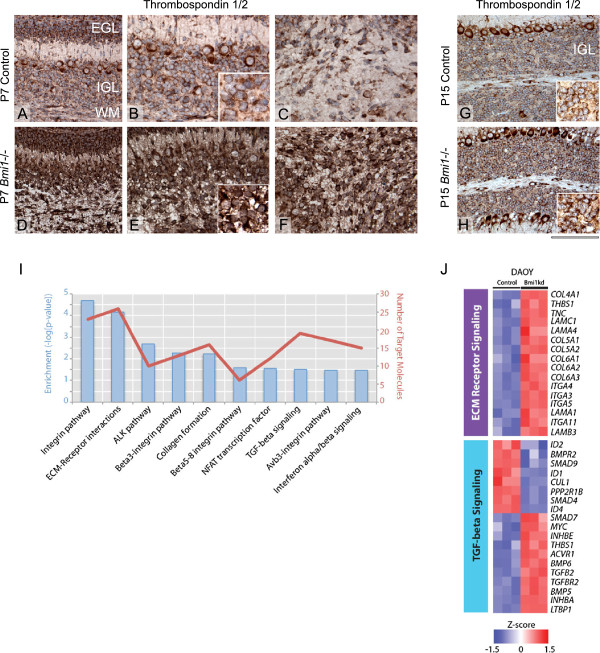
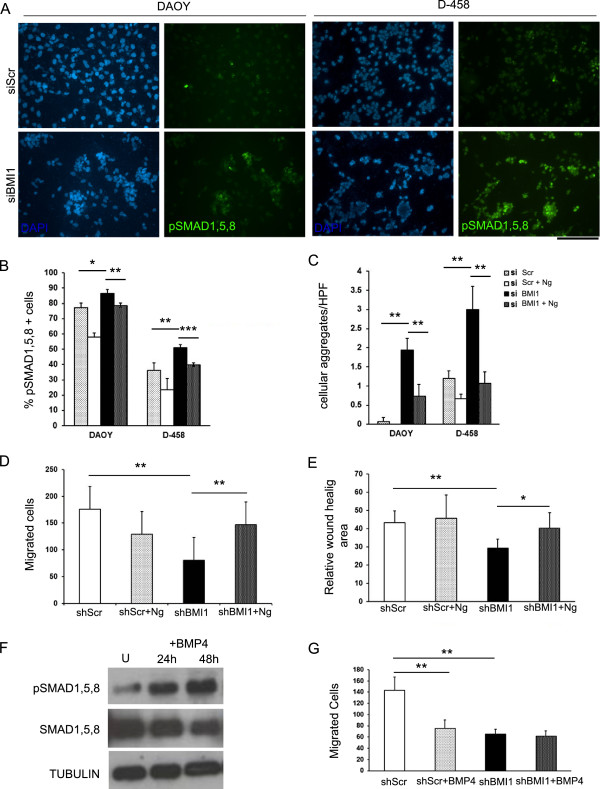
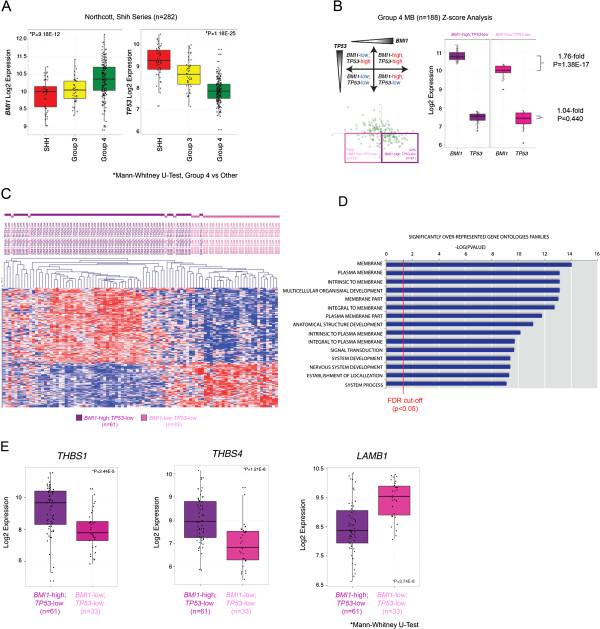
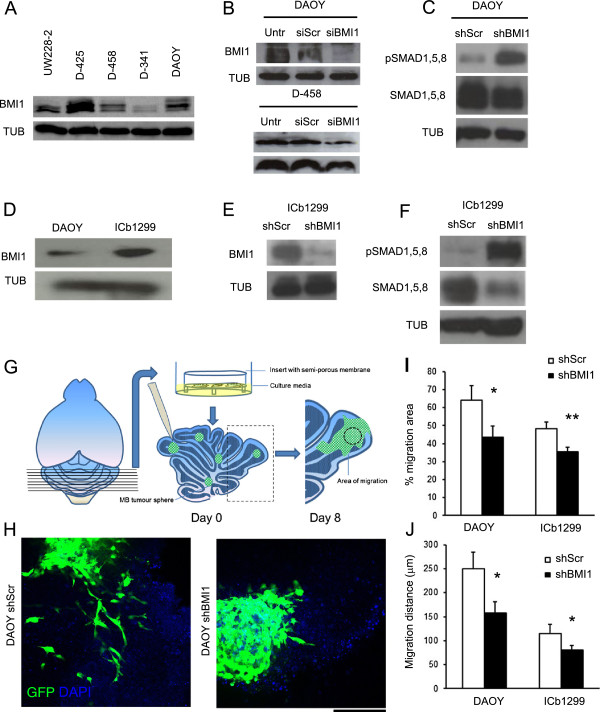
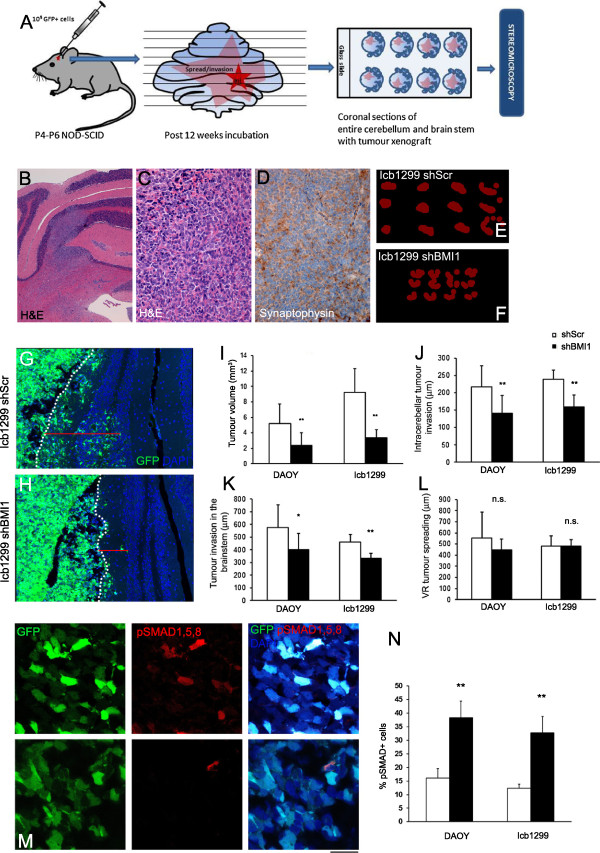
Here we demonstrate that human medulloblastoma of Group 4 characterised by the greatest overexpression of BMI1, also display deregulation of cell adhesion molecules. We show that BMI1 controls intraparenchymal invasion in a novel xenograft model of human MB of Group 4, while in vitro assays highlight that cell adhesion and motility are controlled by BMI1 in a BMP dependent manner.
BMI1 controls MB cell migration and invasion through repression of the BMP pathway, raising the possibility that BMI1 could be used as a biomarker to identify groups of patients who may benefit from a treatment with BMP agonists.
髓母细胞瘤是最常见的颅内儿童恶性肿瘤,是一种遗传异质性疾病。尽管最近取得了进展,但目前的治疗方法仍然与高发病率和死亡率相关。最近的分子分析表明,髓母细胞瘤从单一疾病分为四个不同的亚组,即:WNT 组(预后最好)、SHH 组(预后中等)、第 3 组(预后最差)和第 4 组(预后中等)。BMI1 是多梳抑制复合物基因,在髓母细胞瘤亚组中过度表达,但在第 4 组肿瘤中最为显著。骨形态发生蛋白是属于 TGF-β 超家族的生长因子中的形态发生蛋白,已知其能抑制髓母细胞瘤细胞增殖并诱导细胞凋亡。
在这里,我们证明了具有最大 BMI1 过表达特征的第 4 组人髓母细胞瘤也表现出细胞黏附分子的失调。我们表明,BMI1 在第 4 组人 MB 的新型异种移植模型中控制脑内侵袭,而体外检测突出显示细胞黏附和运动通过 BMI1 在 BMP 依赖性方式下进行控制。
BMI1 通过抑制 BMP 通路来控制 MB 细胞的迁移和侵袭,这增加了 BMI1 可用作识别可能受益于 BMP 激动剂治疗的患者群体的生物标志物的可能性。