Departamento de Zoología y Antropología Física, Facultad de Biología, Universidad Complutense, Madrid, Spain.
BMC Genet. 2014 Jan 24;15:11. doi: 10.1186/1471-2156-15-11.
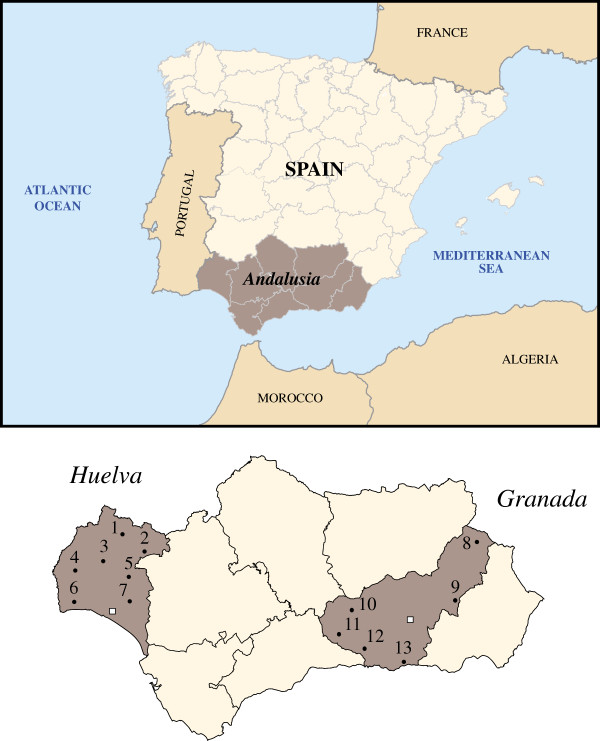
The archeology and history of the ancient Mediterranean have shown that this sea has been a permeable obstacle to human migration. Multiple cultural exchanges around the Mediterranean have taken place with presumably population admixtures. A gravitational territory of those migrations has been the Iberian Peninsula. Here we present a comprehensive analysis of the maternal gene pool, by means of control region sequencing and PCR-RFLP typing, of autochthonous Andalusians originating from the coastal provinces of Huelva and Granada, located respectively in the west and the east of the region.
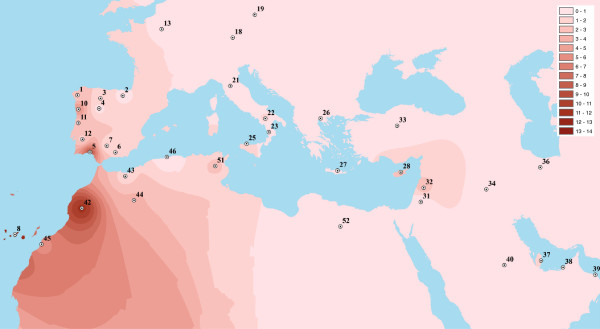
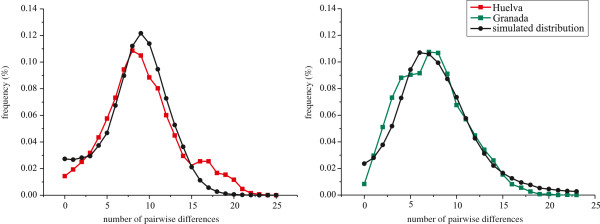
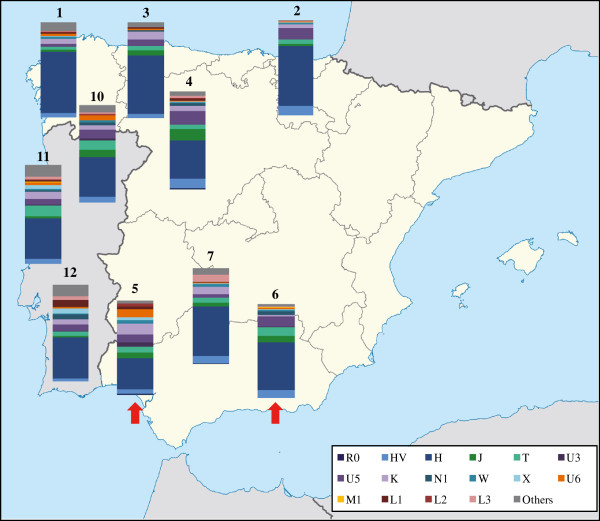
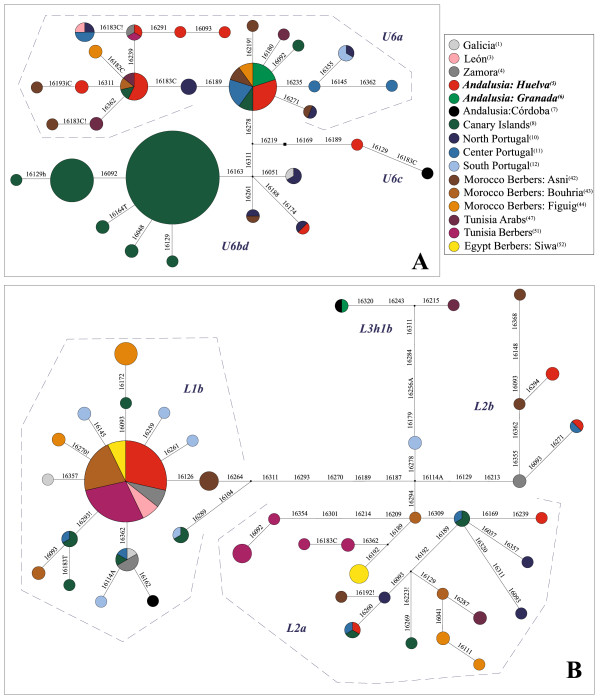
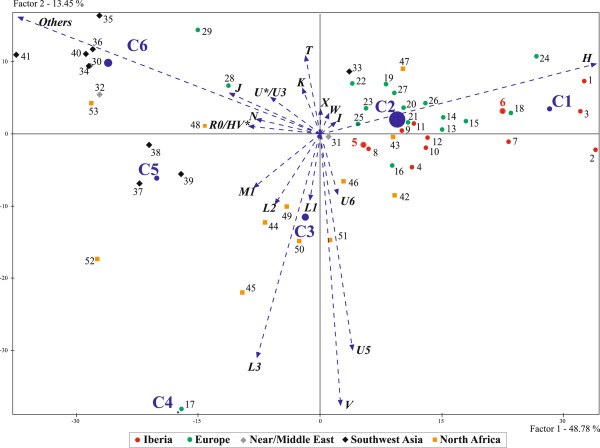
The mtDNA haplogroup composition of these two southern Spanish populations has revealed a wide spectrum of haplogroups from different geographical origins. The registered frequencies of Eurasian markers, together with the high incidence and diversification of African maternal lineages (15% of the total mitochondrial variability) among Huelva Andalusians when compared to its eastwards relatives of Granada and other Iberian populations, constitute relevant findings unknown up-to-date on the characteristics of mtDNA within Andalusia that testifies a female population substructure. Therefore, Andalusia must not be considered a single, unique population.
The maternal legacy among Andalusians reflects distinctive local histories, pointing out the role of the westernmost territory of Peninsular Spain as a noticeable recipient of multiple and diverse human migrations. The obtained results underline the necessity of further research on genetic relationships in both sides of the western Mediterranean, using carefully collected samples from autochthonous individuals. Many studies have focused on recent North African gene flow towards Iberia, yet scientific attention should be now directed to thoroughly study the introduction of European genes in northwest Africa across the sea, in order to determine its magnitude, timescale and methods, and to compare them to those terrestrial movements from eastern Africa and southwestern Asia.
古代地中海地区的考古学和历史学表明,这片海洋一直是人类迁徙的一个可渗透的障碍。地中海周边发生了多次文化交流,可能存在人口混合。这些迁徙的一个引力区域是伊比利亚半岛。在这里,我们通过控制区测序和 PCR-RFLP 分型,对来自位于该地区西部的 Huelva 和东部的 Granada 沿海省份的土生土长的安达卢西亚人进行了综合的母系基因库分析。
这两个西班牙南部人口的 mtDNA 单倍群组成揭示了来自不同地理起源的广泛的单倍群。所记录的欧亚标记的频率,以及与 Granada 和其他伊比利亚人口相比,Huelva 安达卢西亚人非洲母系谱系的高发率和多样化(占总线粒体变异性的 15%),是迄今为止在安达卢西亚 mtDNA 特征方面未知的重要发现,证明了女性人口的亚结构。因此,安达卢西亚不能被视为一个单一的、独特的人口。
安达卢西亚人的母系遗产反映了独特的地方历史,指出了西班牙半岛最西部领土作为多种不同人类迁徙的显著接受者的作用。所获得的结果强调了在西地中海两岸使用精心收集的土生土长个体样本进行遗传关系进一步研究的必要性。许多研究都集中在最近的北非基因流向伊比利亚,但科学注意力现在应该转向彻底研究欧洲基因在海上向西北非的传入,以确定其规模、时间尺度和方法,并将其与来自东非和西南亚的陆地迁徙进行比较。