Guo Yong, Fujimura Reiko, Sato Yoshinori, Suda Wataru, Kim Seok-won, Oshima Kenshiro, Hattori Masahira, Kamijo Takashi, Narisawa Kazuhiko, Ohta Hiroyuki
United Graduate School of Agricultural Science, Tokyo University of Agriculture and Technology.
Microbes Environ. 2014;29(1):38-49. doi: 10.1264/jsme2.me13142. Epub 2014 Jan 24.
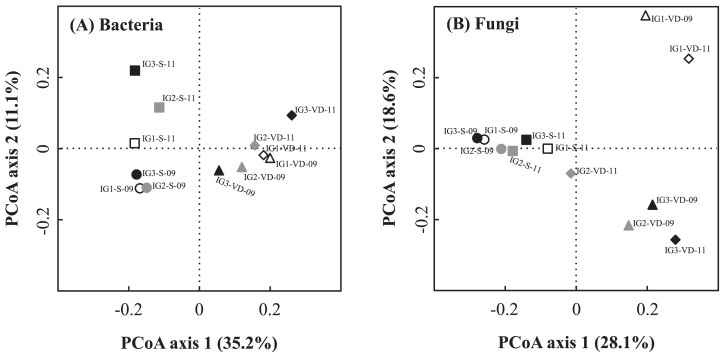
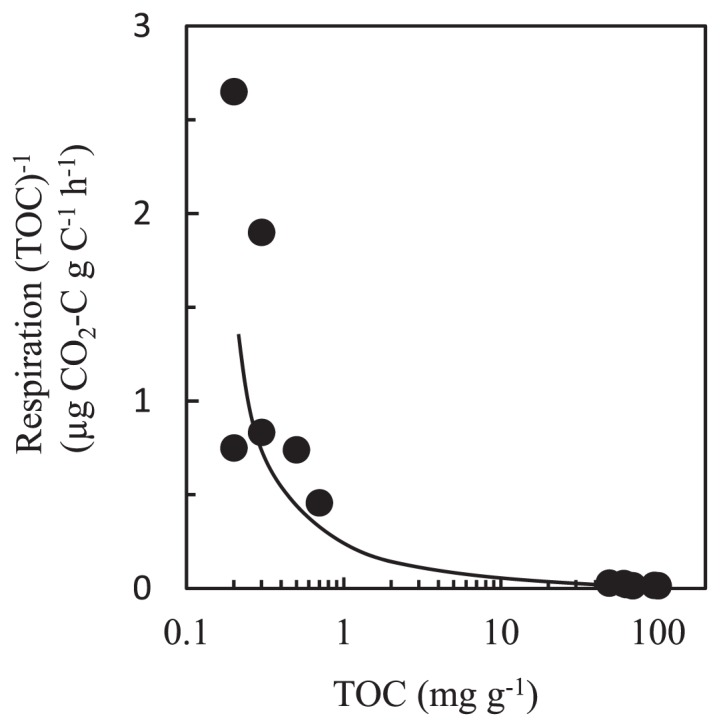
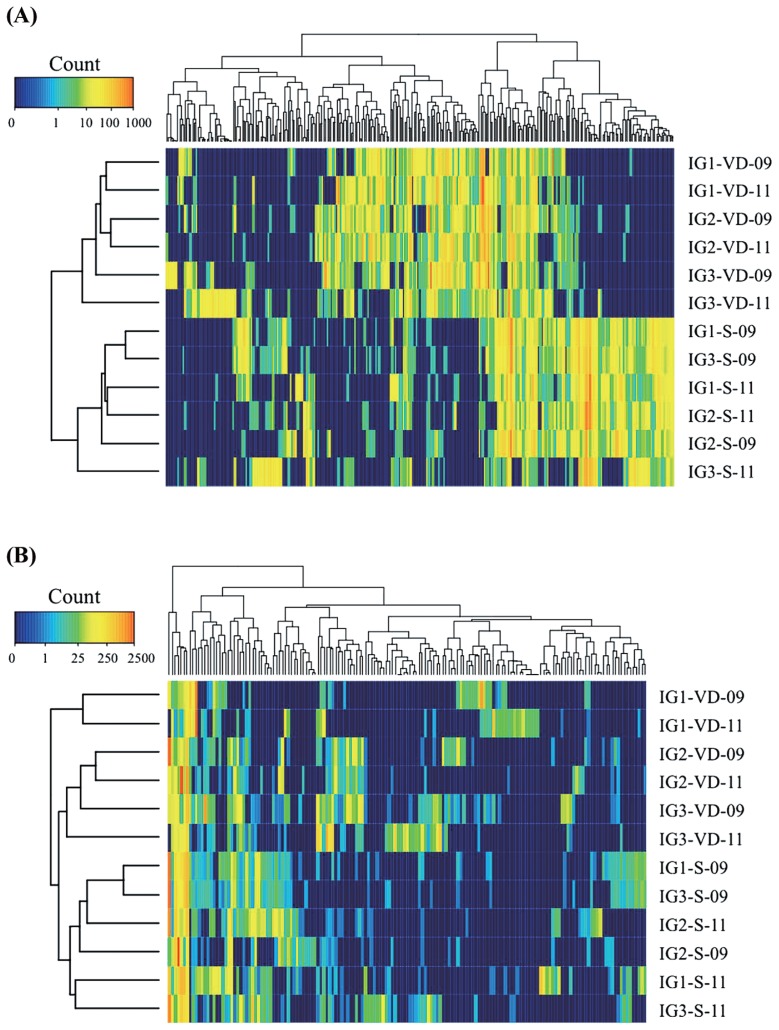
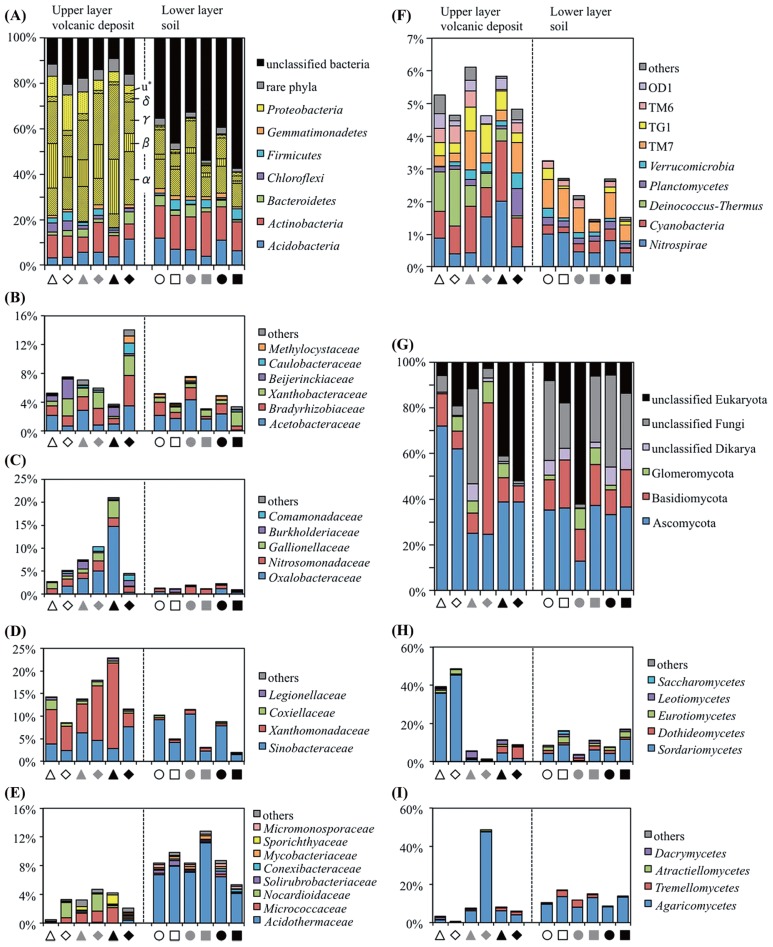
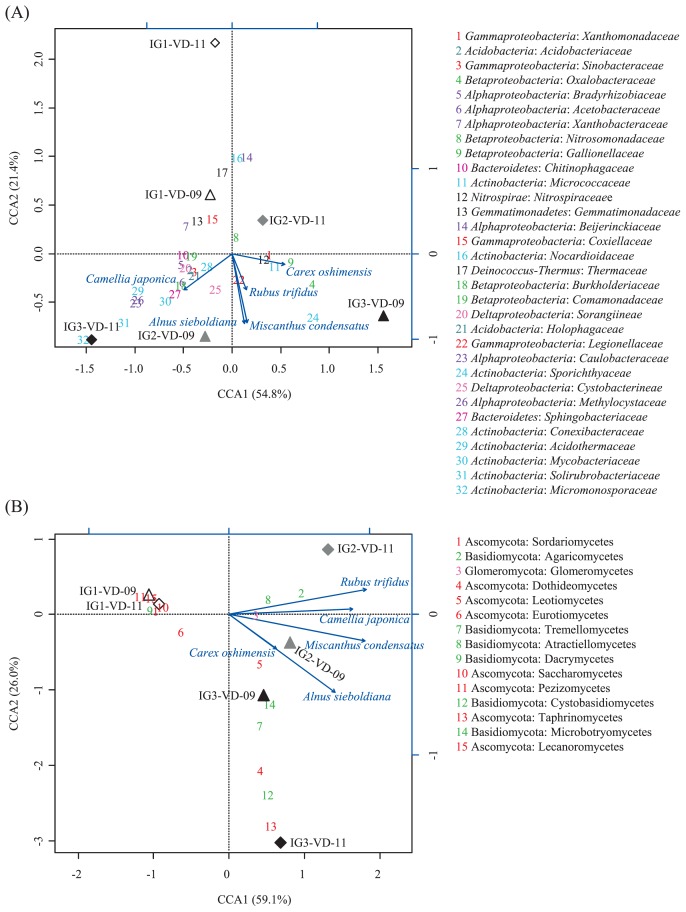
The 2000 eruption of Mount Oyama on the island of Miyake (Miyake-jima) created a unique opportunity to study the early ecosystem development on newly exposed terrestrial substrates. In this study, bacterial and fungal communities on 9- and 11-year-old volcanic deposits at poorly to fully vegetation-recovered sites in Miyake-jima, Japan, were characterized by conventional culture-based methods and pyrosequencing of 16S rRNA and 18S rRNA genes. Despite the differences in the vegetation cover, the upper volcanic deposit layer samples displayed low among-site variation for chemical properties (pH, total organic carbon, and total nitrogen) and microbial population densities (total direct count and culturable count). Statistical analyses of pyrosequencing data revealed that the microbial communities of volcanic deposit samples were phylogenetically diverse, in spite of very low-carbon environmental conditions, and their diversity was comparable to that in the lower soil layer (buried soil) samples. Comparing with the microbial communities in buried soil, the volcanic deposit communities were characterized by the presence of Betaproteobacteria and Gammaproteobacteria as the main bacterial class, Deinococcus- Thermus as the minor bacterial phyla, and Ascomycota as the major fungal phyla. Multivariate analysis revealed that several bacterial families and fungal classes correlated positively or negatively with plant species.
2000年,御岳山在御藏岛(三宅岛)喷发,创造了一个研究新暴露陆地基质上早期生态系统发育的独特机会。在本研究中,利用基于传统培养的方法以及对16S rRNA和18S rRNA基因进行焦磷酸测序,对日本三宅岛植被恢复程度从低到高的地点中9年和11年的火山沉积物上的细菌和真菌群落进行了特征分析。尽管植被覆盖存在差异,但火山沉积物上层样本在化学性质(pH值、总有机碳和总氮)和微生物种群密度(总直接计数和可培养计数)方面的位点间差异较小。对焦磷酸测序数据的统计分析表明,尽管环境碳含量极低,但火山沉积物样本的微生物群落系统发育多样,其多样性与下层土壤(埋藏土壤)样本相当。与埋藏土壤中的微生物群落相比,火山沉积物群落的特征是β-变形菌纲和γ-变形菌纲为主要细菌类群,异常球菌-栖热菌为次要细菌门,子囊菌门为主要真菌门。多变量分析表明,几个细菌科和真菌纲与植物物种呈正相关或负相关。