Hernández Marcela, Vera-Gargallo Blanca, Calabi-Floody Marcela, King Gary M, Conrad Ralf, Tebbe Christoph C
Johann Heinrich von Thünen Institut, Institut für Biodiversität, 50, 38116 Braunschweig, Germany.
School of Environmental Sciences, Norwich Research Park, University of East Anglia, Norwich NR4 7TJ, UK.
Microorganisms. 2020 Nov 27;8(12):1880. doi: 10.3390/microorganisms8121880.
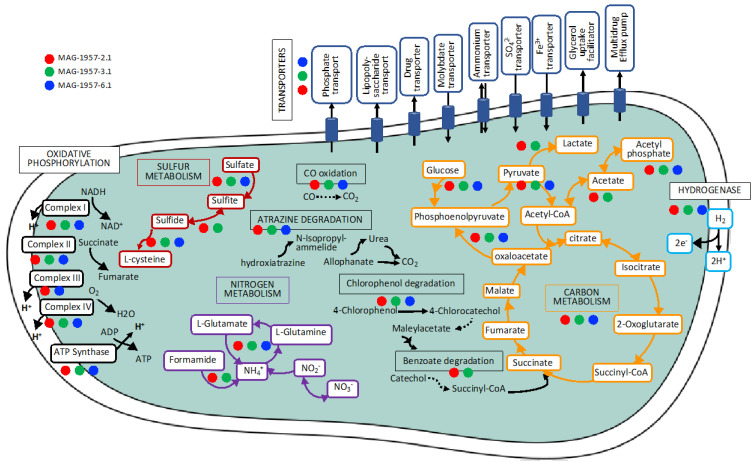
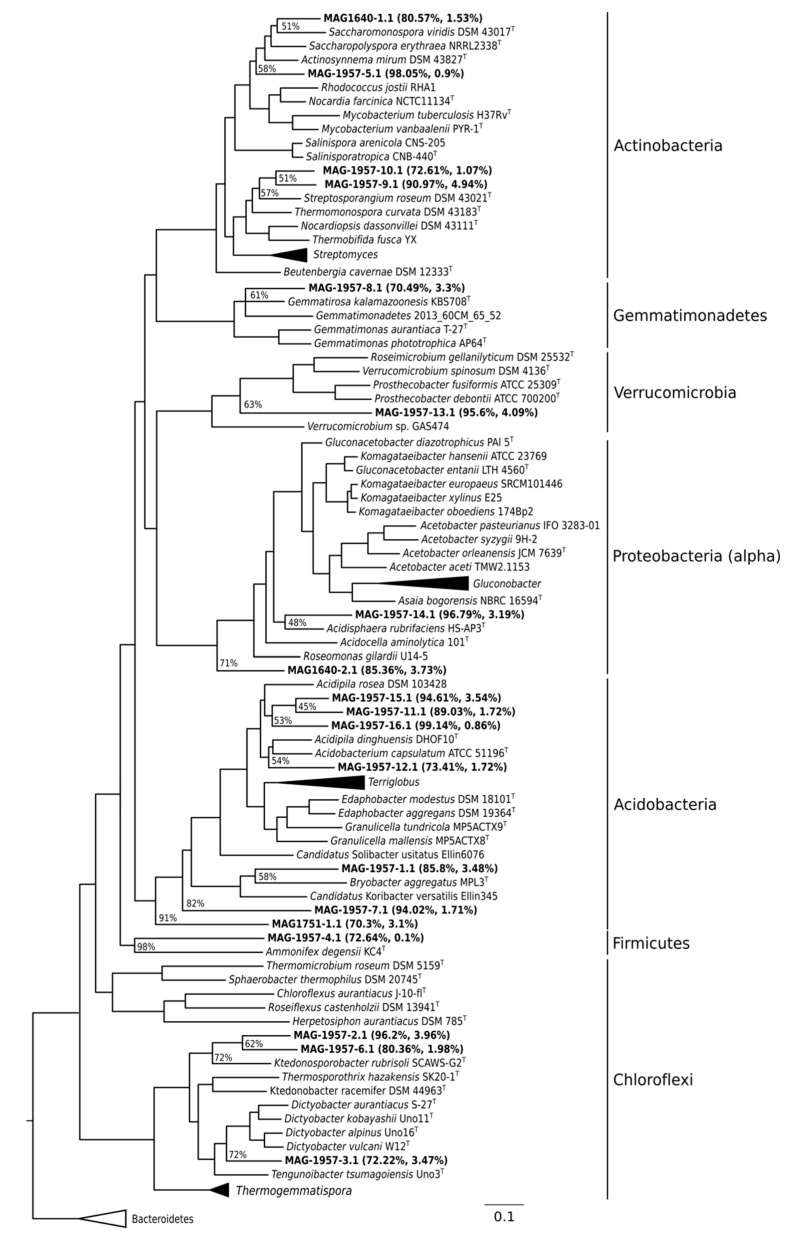
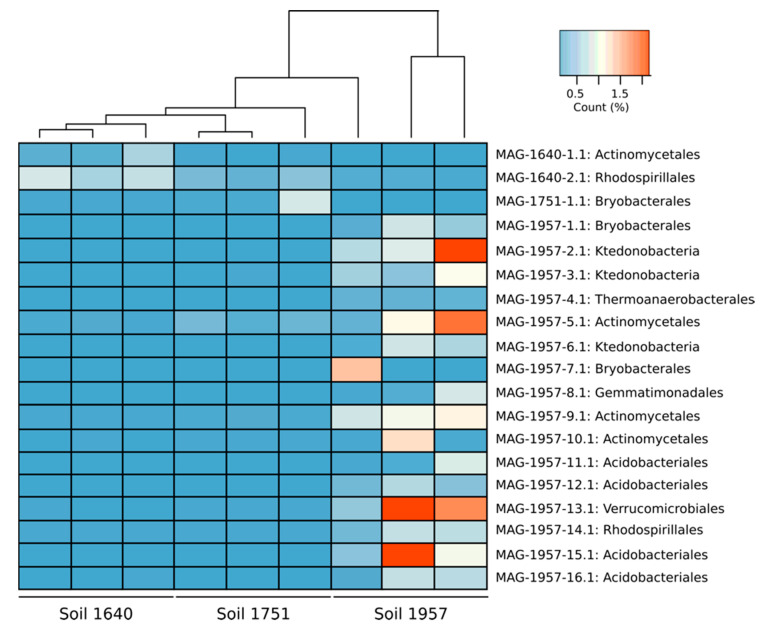
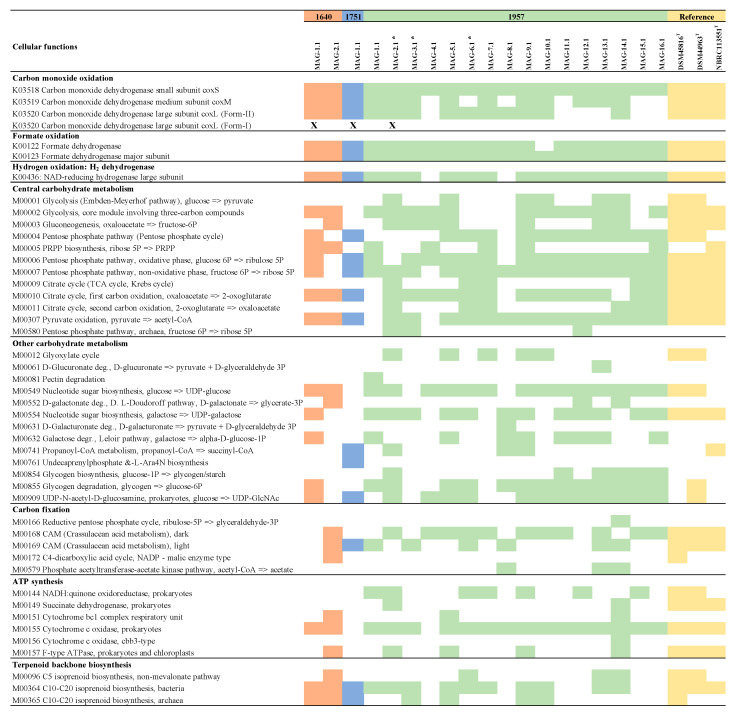
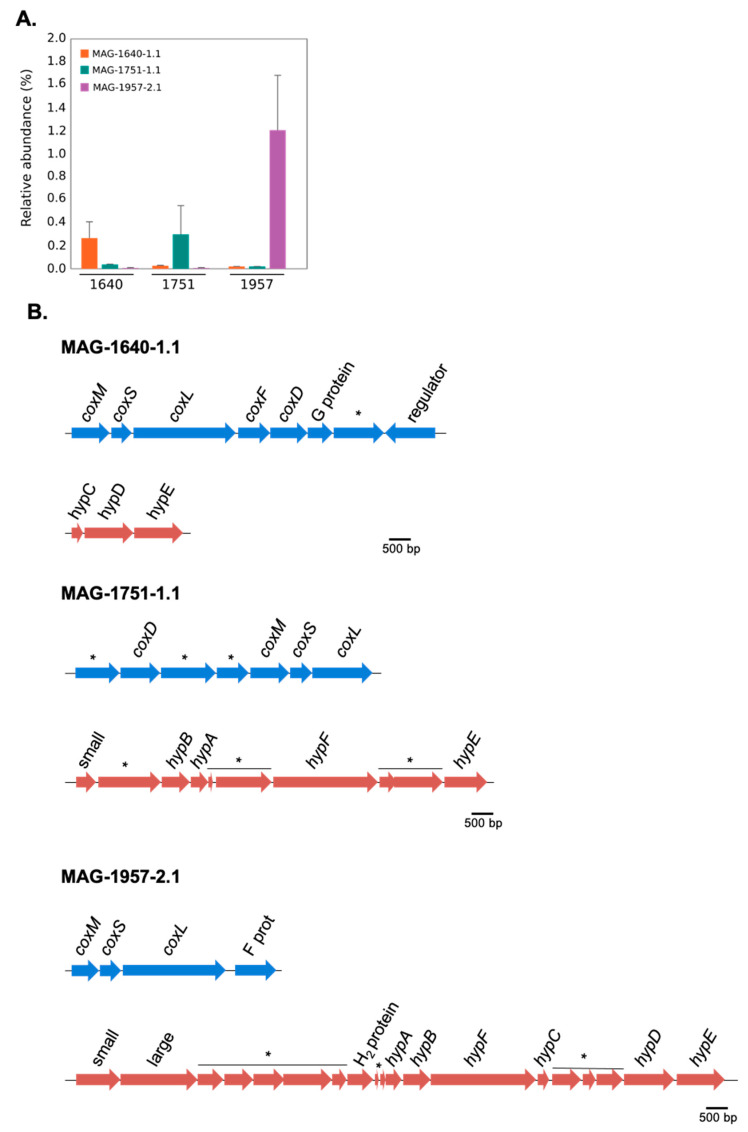
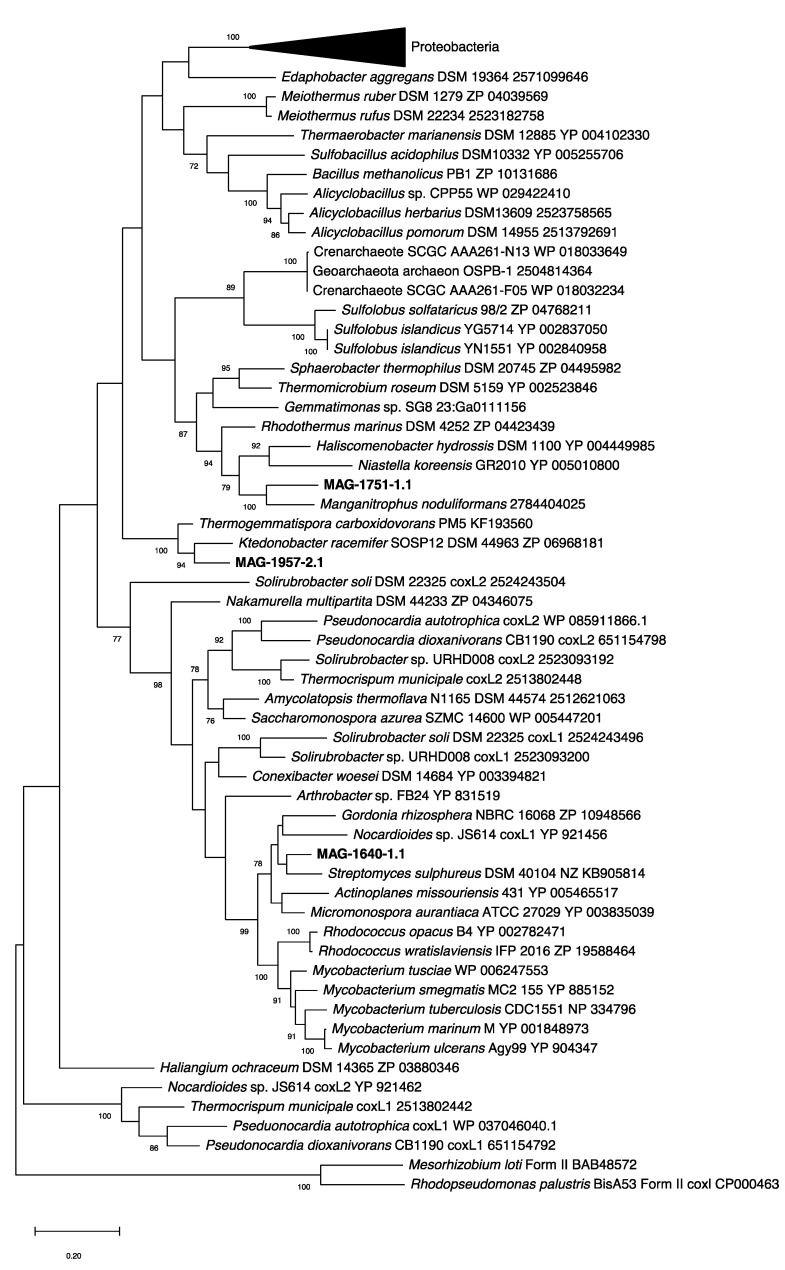
Microorganisms can potentially colonise volcanic rocks using the chemical energy in reduced gases such as methane, hydrogen (H) and carbon monoxide (CO). In this study, we analysed soil metagenomes from Chilean volcanic soils, representing three different successional stages with ages of 380, 269 and 63 years, respectively. A total of 19 metagenome-assembled genomes (MAGs) were retrieved from all stages with a higher number observed in the youngest soil (1640: 2 MAGs, 1751: 1 MAG, 1957: 16 MAGs). Genomic similarity indices showed that several MAGs had amino-acid identity (AAI) values >50% to the phyla Actinobacteria, Acidobacteria, Gemmatimonadetes, Proteobacteria and Chloroflexi. Three MAGs from the youngest site (1957) belonged to the class Ktedonobacteria (Chloroflexi). Complete cellular functions of all the MAGs were characterised, including carbon fixation, terpenoid backbone biosynthesis, formate oxidation and CO oxidation. All 19 environmental genomes contained at least one gene encoding a putative carbon monoxide dehydrogenase (CODH). Three MAGs had form I operon (encoding the large subunit CO-dehydrogenase). One of these MAGs (MAG-1957-2.1, Ktedonobacterales) was highly abundant in the youngest soil. MAG-1957-2.1 also contained genes encoding a [NiFe]-hydrogenase and genes encoding accessory enzymes and proteins. Little is known about the Ktedonobacterales through cultivated isolates, but some species can utilise H and CO for growth. Our results strongly suggest that the remote volcanic sites in Chile represent a natural habitat for Ktedonobacteria and they may use reduced gases for growth.
微生物可以利用甲烷、氢气(H)和一氧化碳(CO)等还原气体中的化学能量在火山岩上定殖。在本研究中,我们分析了来自智利火山土壤的土壤宏基因组,这些土壤代表了三个不同的演替阶段,年龄分别为380年、269年和63年。从所有阶段共检索到19个宏基因组组装基因组(MAG),在最年轻的土壤中观察到的数量更多(1640:2个MAG,1751:1个MAG,1957:16个MAG)。基因组相似性指数表明,几个MAG与放线菌门、酸杆菌门、芽单胞菌门、变形菌门和绿弯菌门的氨基酸同一性(AAI)值>50%。来自最年轻地点(1957)的三个MAG属于Ktedonobacteria纲(绿弯菌门)。对所有MAG的完整细胞功能进行了表征,包括碳固定、萜类骨架生物合成、甲酸氧化和CO氧化。所有19个环境基因组都至少包含一个编码假定一氧化碳脱氢酶(CODH)的基因。三个MAG具有I型操纵子(编码大亚基CO-脱氢酶)。其中一个MAG(MAG-1957-2.1,Ktedonobacterales)在最年轻的土壤中含量很高。MAG-1957-2.1还包含编码[NiFe]-氢化酶的基因以及编码辅助酶和蛋白质的基因。通过培养的分离株对Ktedonobacterales了解甚少,但一些物种可以利用H和CO进行生长。我们的结果强烈表明,智利偏远的火山地点是Ktedonobacteria的自然栖息地,它们可能利用还原气体进行生长。