Juang Jyh-Ming Jimmy, Lu Tzu-Pin, Lai Liang-Chuan, Hsueh Chia-Hsiang, Liu Yen-Bin, Tsai Chia-Ti, Lin Lian-Yu, Yu Chih-Chieh, Hwang Juey-Jen, Chiang Fu-Tien, Yeh Sherri Shih-Fan, Chen Wen-Pin, Chuang Eric Y, Lai Ling-Ping, Lin Jiunn-Lee
1] Cardiovascular Center and Division of Cardiology, Department of Internal Medicine, National Taiwan University Hospital and National Taiwan University College of Medicine, Taipei, Taiwan [2] Graduate Institute of Physiology, College of Medicine, National Taiwan University, Taipei, Taiwan.
YongLin Biomedical Engineering Center, National Taiwan University, Taipei, Taiwan.
Sci Rep. 2014 Jan 27;4:3850. doi: 10.1038/srep03850.
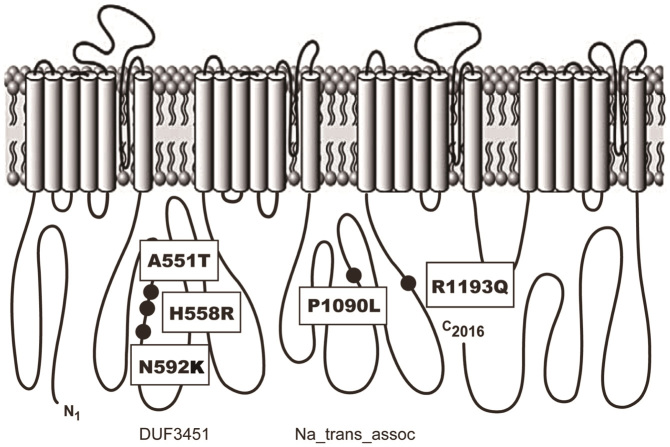
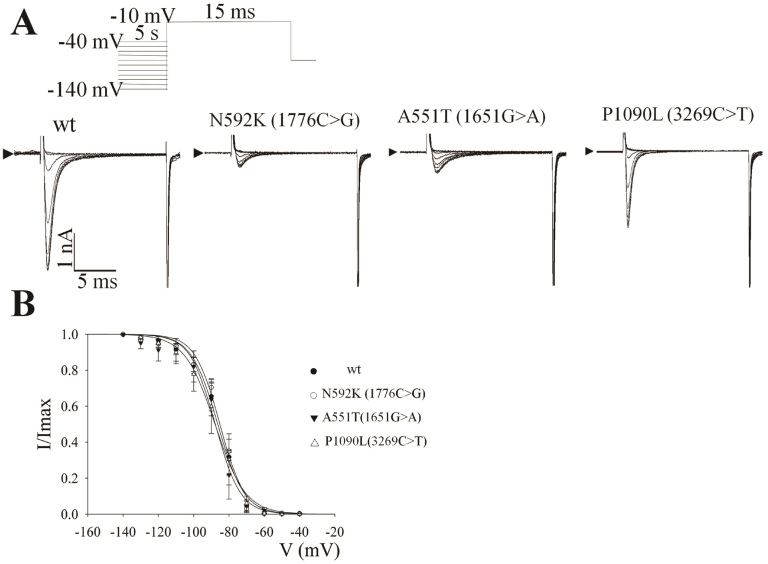
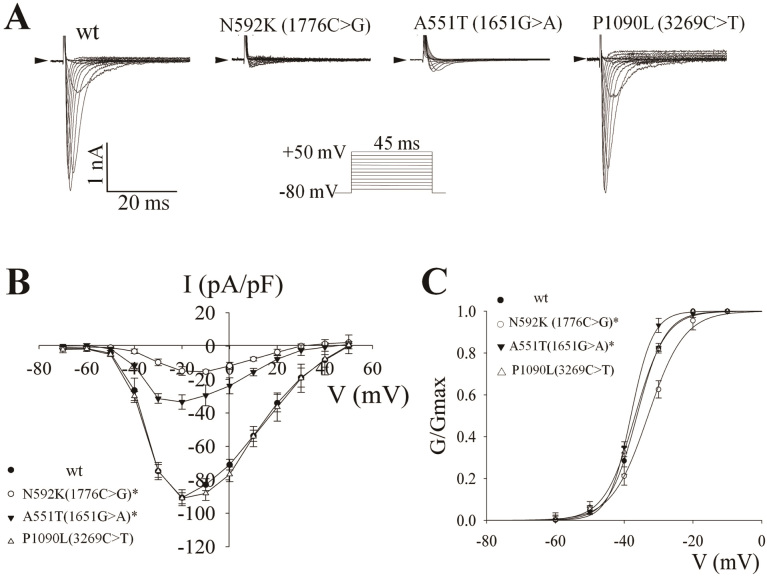
Brugada syndrome (BrS) is an inheritable sudden cardiac death disease mainly caused by SCN5A mutations. Traditional approaches can be costly and time-consuming if all candidate variants need to be validated through in vitro studies. Therefore, we developed a new approach by combining multiple in silico analyses to predict functional and structural changes of candidate SCN5A variants in BrS before conducting in vitro studies. Five SCN5A non-synonymous variants (1651G>A, 1776C>G, 1673A>G, 3269C>T and 3578G>A) were identified in 14 BrS patients using direct DNA sequencing. Several bioinformatics algorithms were applied and predicted that 1651G>A (A551T) and 1776C>G (N592K) were high-risk SCN5A variants (odds ratio 59.59 and 23.93). The results were validated by Mass spectrometry and in vitro electrophysiological assays. We concluded that integrating sequence-based information and secondary protein structures elements may help select highly potential variants in BrS before conducting time-consuming electrophysiological studies and two novel SCN5A mutations were validated.
布加综合征(BrS)是一种主要由SCN5A突变引起的遗传性心脏性猝死疾病。如果所有候选变异都需要通过体外研究来验证,传统方法可能既昂贵又耗时。因此,我们开发了一种新方法,通过结合多种计算机模拟分析,在进行体外研究之前预测BrS中候选SCN5A变异的功能和结构变化。使用直接DNA测序在14例BrS患者中鉴定出5种SCN5A非同义变异(1651G>A、1776C>G、1673A>G、3269C>T和3578G>A)。应用了几种生物信息学算法,预测1651G>A(A551T)和1776C>G(N592K)是高风险SCN5A变异(优势比分别为59.59和23.93)。结果通过质谱和体外电生理测定得到验证。我们得出结论,整合基于序列的信息和蛋白质二级结构元件可能有助于在进行耗时的电生理研究之前选择BrS中极具潜力的变异,并且验证了两种新的SCN5A突变。