Ní Gabhann Joan, Hams Emily, Smith Siobhán, Wynne Claire, Byrne Jennifer C, Brennan Kiva, Spence Shaun, Kissenpfennig Adrien, Johnston James A, Fallon Padraic G, Jefferies Caroline A
Molecular and Cellular Therapeutics and RCSI Research Institute, Royal College of Surgeons in Ireland, Dublin, Ireland.
Trinity Biomedical Sciences Institute, Trinity College Dublin, Dublin, Ireland.
PLoS One. 2014 Jan 21;9(1):e85834. doi: 10.1371/journal.pone.0085834. eCollection 2014.
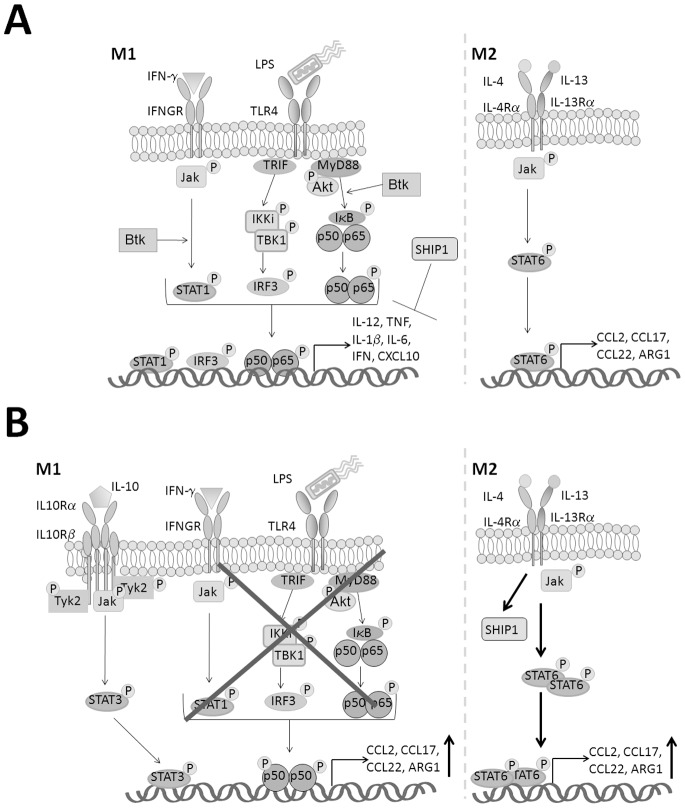
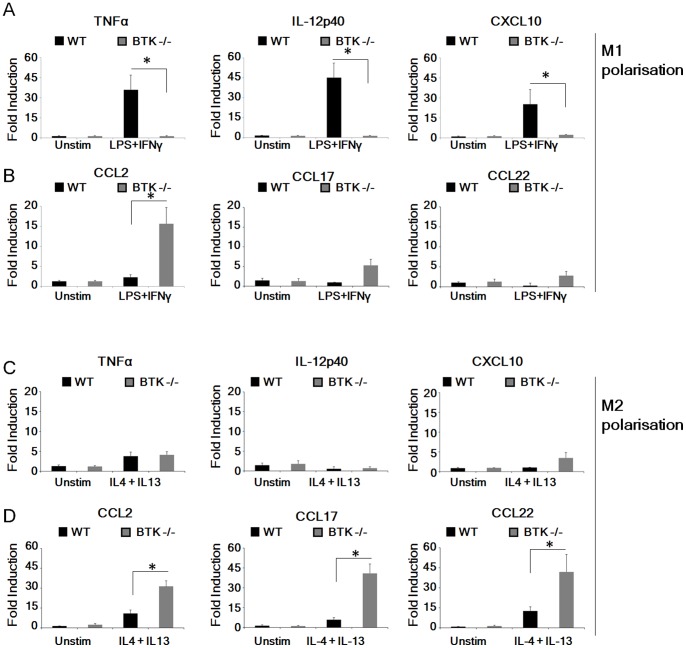
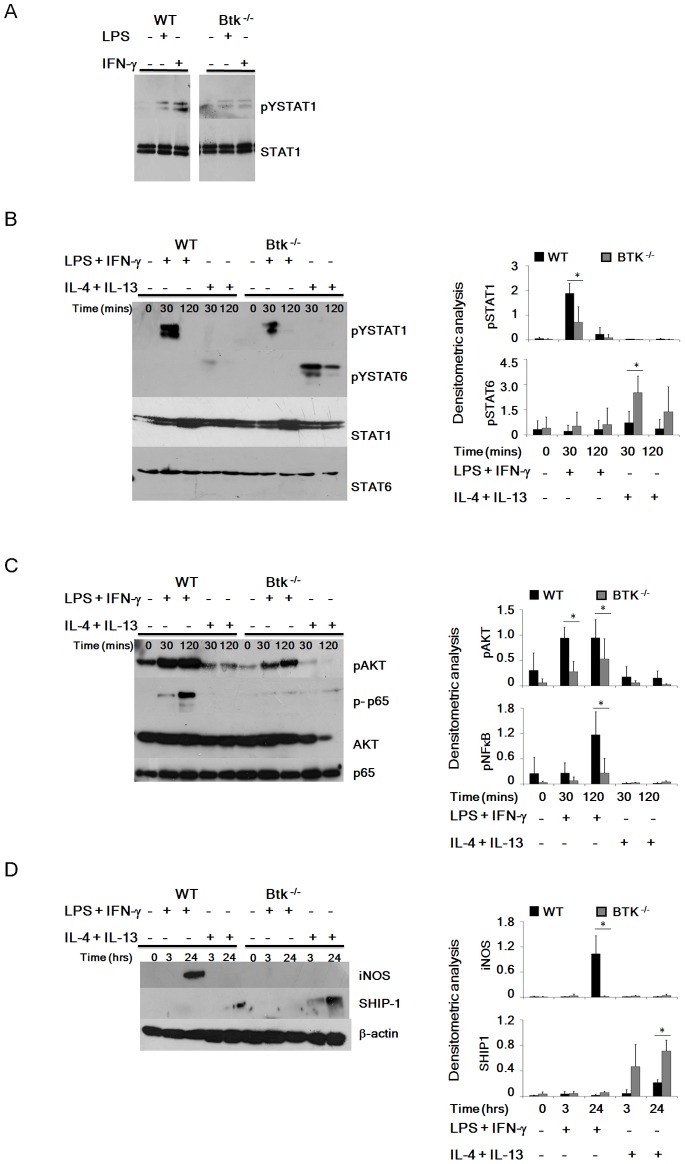
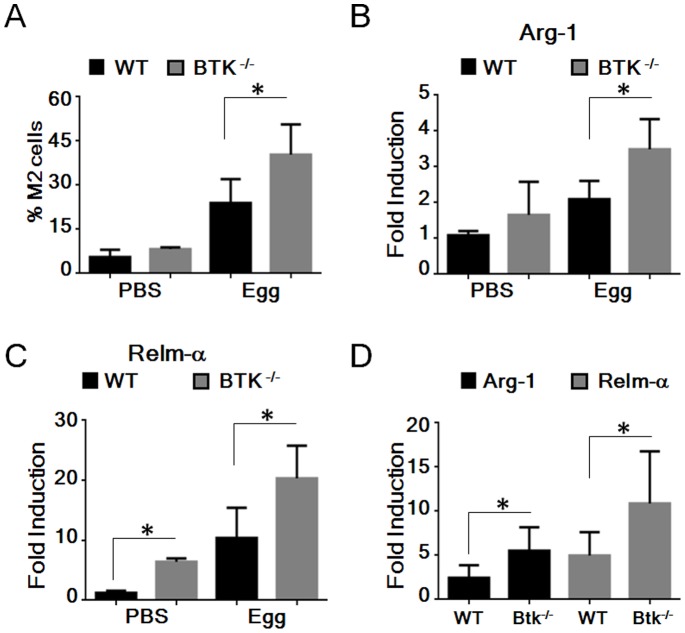
Bacterial Lipopolysaccharide (LPS) is a strong inducer of inflammation and does so by inducing polarization of macrophages to the classic inflammatory M1 population. Given the role of Btk as a critical signal transducer downstream of TLR4, we investigated its role in M1/M2 induction. In Btk deficient (Btk (--)) mice we observed markedly reduced recruitment of M1 macrophages following intraperitoneal administration of LPS. Ex vivo analysis demonstrated an impaired ability of Btk(-/-) macrophages to polarize into M1 macrophages, instead showing enhanced induction of immunosuppressive M2-associated markers in response to M1 polarizing stimuli, a finding accompanied by reduced phosphorylation of STAT1 and enhanced STAT6 phosphorylation. In addition to STAT activation, M1 and M2 polarizing signals modulate the expression of inflammatory genes via differential activation of transcription factors and regulatory proteins, including NF-κB and SHIP1. In keeping with a critical role for Btk in macrophage polarization, we observed reduced levels of NF-κB p65 and Akt phosphorylation, as well as reduced induction of the M1 associated marker iNOS in Btk(-/-) macrophages in response to M1 polarizing stimuli. Additionally enhanced expression of SHIP1, a key negative regulator of macrophage polarisation, was observed in Btk(-/-) macrophages in response to M2 polarizing stimuli. Employing classic models of allergic M2 inflammation, treatment of Btk (-/-) mice with either Schistosoma mansoni eggs or chitin resulted in increased recruitment of M2 macrophages and induction of M2-associated genes. This demonstrates an enhanced M2 skew in the absence of Btk, thus promoting the development of allergic inflammation.
细菌脂多糖(LPS)是一种强烈的炎症诱导剂,它通过诱导巨噬细胞极化为经典的炎症性M1群体来实现这一点。鉴于Btk作为TLR4下游关键信号转导分子的作用,我们研究了其在M1/M2诱导中的作用。在Btk缺陷(Btk(-/-))小鼠中,我们观察到腹腔注射LPS后M1巨噬细胞的募集明显减少。体外分析表明,Btk(-/-)巨噬细胞极化为M1巨噬细胞的能力受损,相反,在对M1极化刺激的反应中,免疫抑制性M2相关标志物的诱导增强,这一发现伴随着STAT1磷酸化减少和STAT6磷酸化增强。除了STAT激活外,M1和M2极化信号通过转录因子和调节蛋白(包括NF-κB和SHIP1)的差异激活来调节炎症基因的表达。与Btk在巨噬细胞极化中的关键作用一致,我们观察到在对M1极化刺激的反应中,Btk(-/-)巨噬细胞中NF-κB p65和Akt的磷酸化水平降低,以及M1相关标志物iNOS的诱导减少。此外,在对M2极化刺激的反应中,在Btk(-/-)巨噬细胞中观察到SHIP1(巨噬细胞极化的关键负调节因子)的表达增强。利用过敏性M2炎症的经典模型,用曼氏血吸虫卵或几丁质处理Btk(-/-)小鼠会导致M2巨噬细胞募集增加和M2相关基因的诱导。这表明在缺乏Btk的情况下M2偏向增强,从而促进过敏性炎症的发展。