Desai Vivek D, Hsia Henry C, Schwarzbauer Jean E
Department of Molecular Biology, Princeton University, Princeton, New Jersey, United States of America.
Robert Wood Johnson Medical School, Rutgers, The State University of New Jersey, New Brunswick, New Jersey, United States of America.
PLoS One. 2014 Jan 23;9(1):e86865. doi: 10.1371/journal.pone.0086865. eCollection 2014.
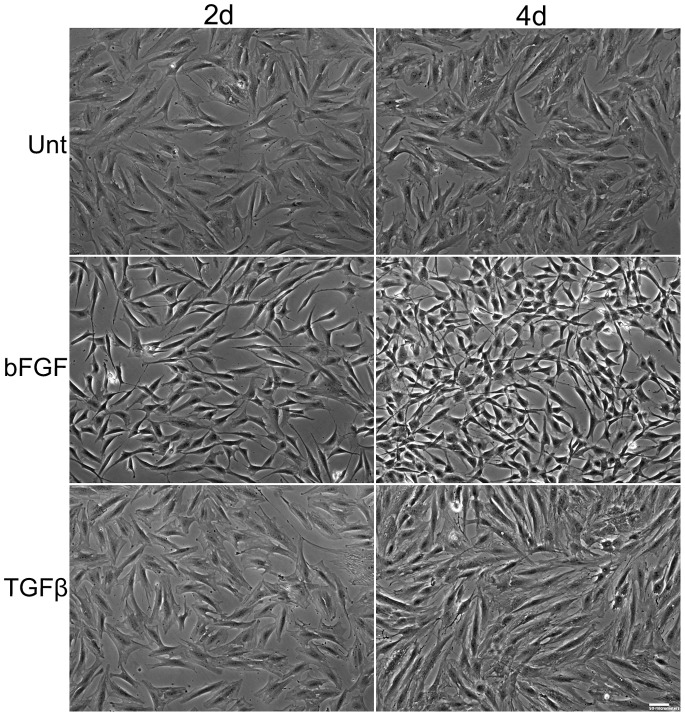
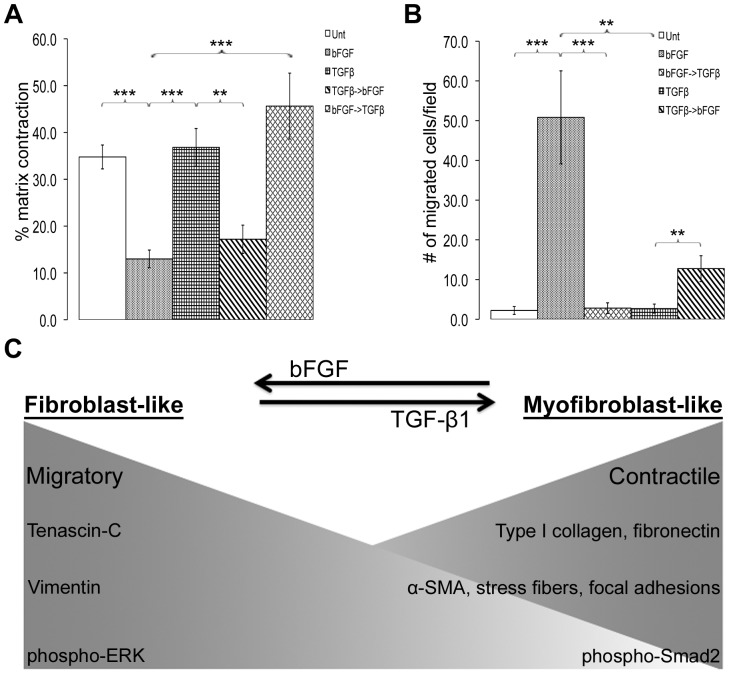
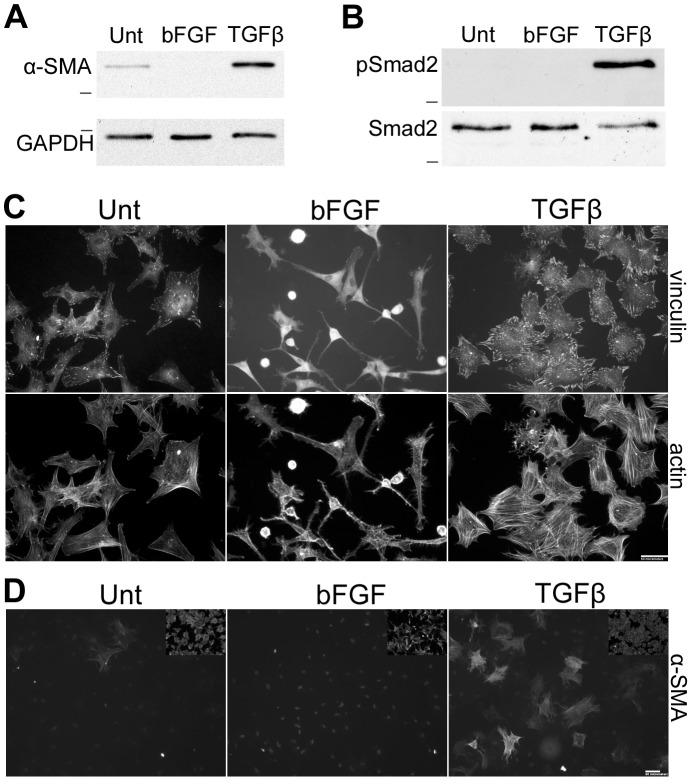
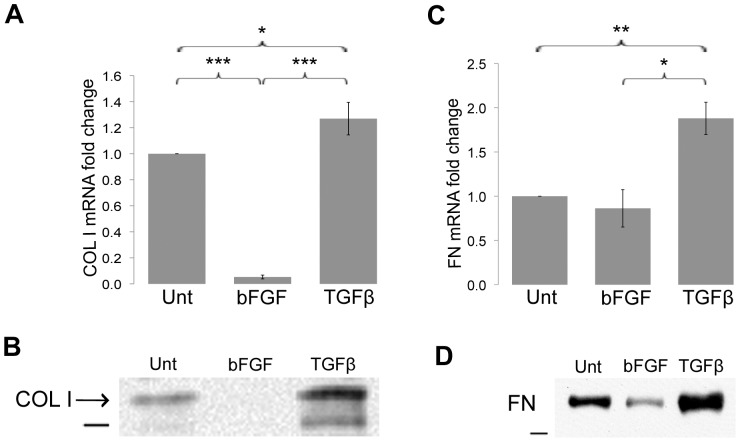
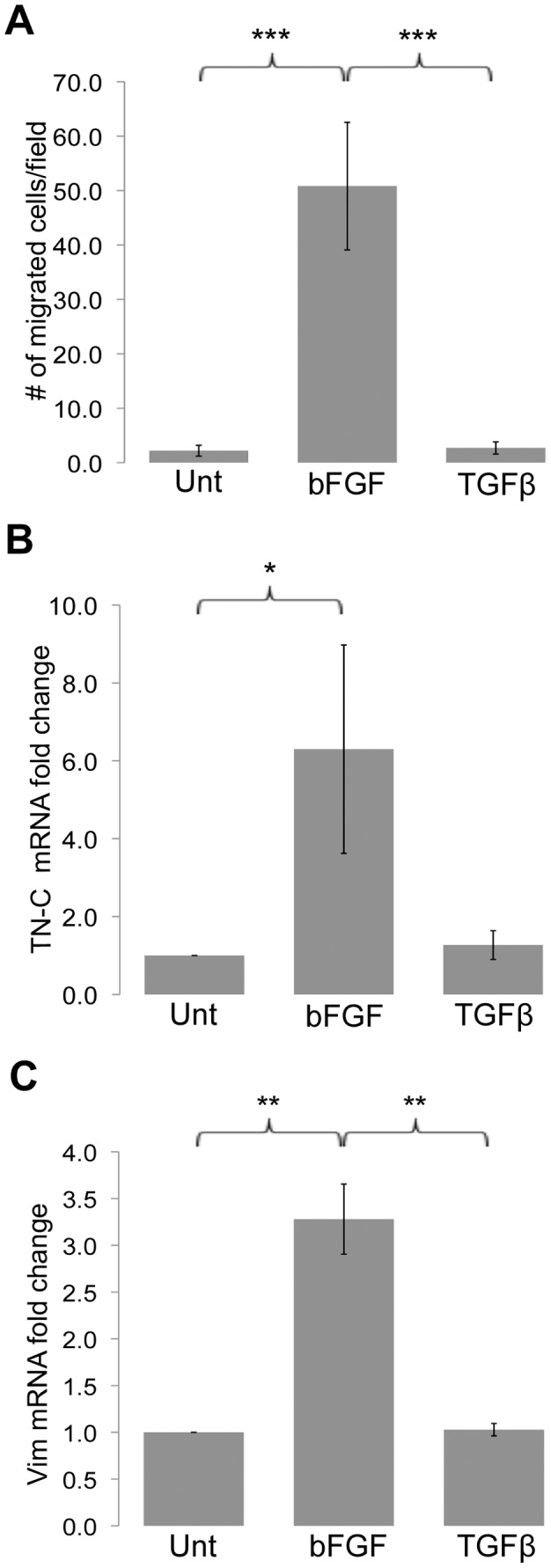
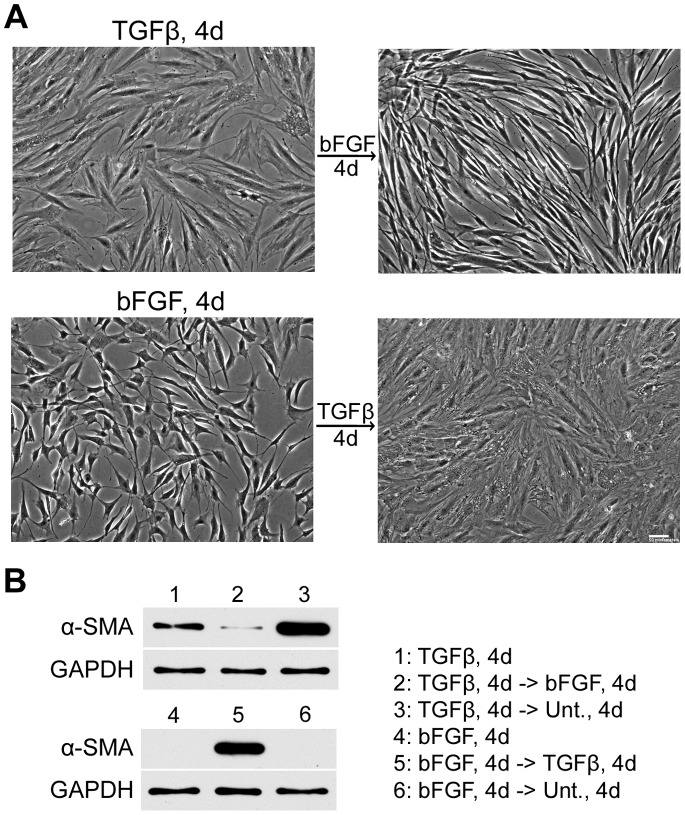
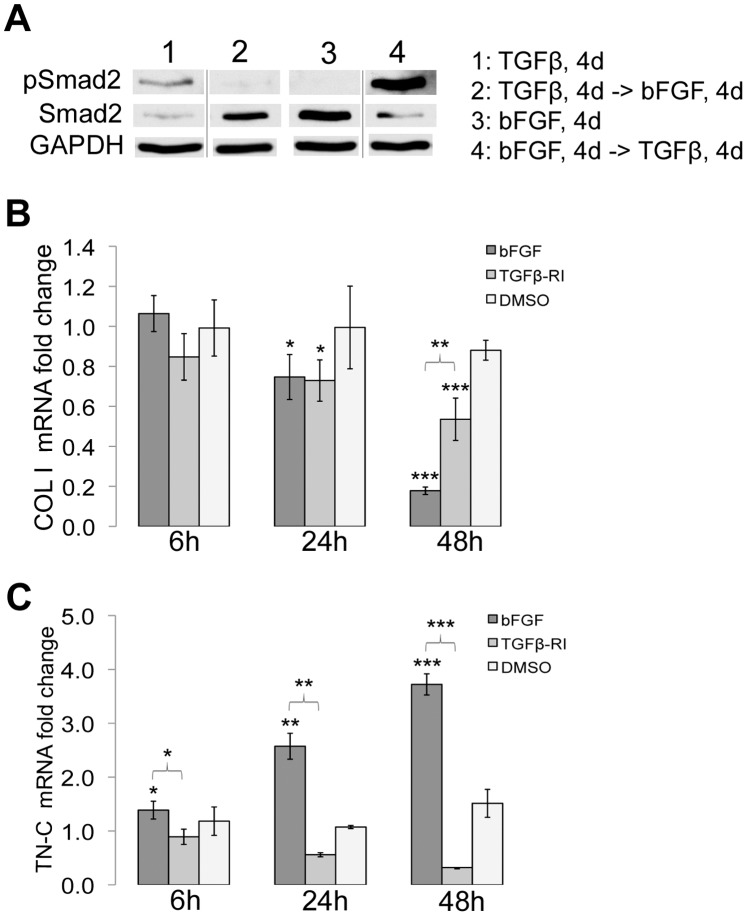
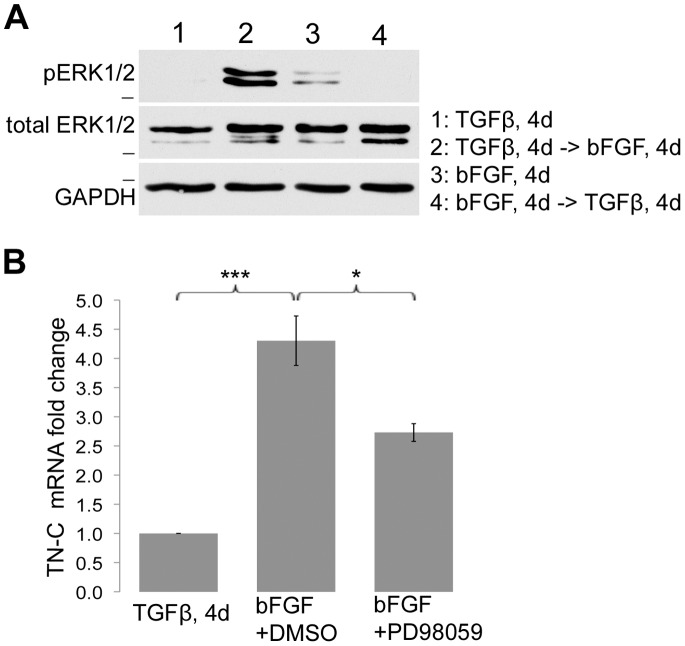
Unregulated activity of myofibroblasts, highly contractile cells that deposit abundant extracellular matrix (ECM), leads to fibrosis. To study the modulation of myofibroblast activity, we used human adipose-derived mesenchymal stem cells (ADSCs), which have much potential in regenerative medicine. We found that ADSCs treated with TGF-β developed a myofibroblastic phenotype with increases in α-smooth muscle actin (α-SMA), a myofibroblast marker, and ECM proteins type I collagen and fibronectin. In contrast, treatment with bFGF had the opposite effect. bFGF-differentiated ADSCs showed marked down-regulation of α-SMA expression, collagen I, and fibronectin, and loss of focal adhesions and stress fibers. Functionally, bFGF-differentiated ADSCs were significantly more migratory, which correlated with up-regulation of tenascin-C, an anti-adhesive ECM protein, and vimentin, a pro-migratory cytoskeletal protein. On the other hand, TGF-β-differentiated ADSCs were significantly more contractile than bFGF-differentiated cells. Interestingly, cells completely reversed their morphologies, marker expression, signaling pathways, and contractility versus migratory profiles when switched from culture with one growth factor to the other, demonstrating that the myofibroblast differentiation process is not terminal. Cell differentiation was associated with activation of Smad2 downstream of TGF-β and of ERK/MAP kinase downstream of bFGF. Reversibility of the TGF-β-induced myofibroblastic phenotype depends, in part, on bFGF-induced ERK/MAP kinase signaling. These findings show that ADSC differentiation into myofibroblasts and re-differentiation into fibroblast-like cells can be manipulated with growth factors, which may have implications in the development of novel therapeutic strategies to reduce the risk of fibrosis.
肌成纤维细胞具有不受调控的活性,这种高收缩性细胞会沉积大量细胞外基质(ECM),从而导致纤维化。为了研究肌成纤维细胞活性的调节,我们使用了人脂肪来源间充质干细胞(ADSCs),其在再生医学中具有很大潜力。我们发现,用转化生长因子-β(TGF-β)处理的ADSCs呈现出肌成纤维细胞表型,肌成纤维细胞标志物α-平滑肌肌动蛋白(α-SMA)以及ECM蛋白I型胶原蛋白和纤连蛋白增加。相反,用碱性成纤维细胞生长因子(bFGF)处理则产生相反的效果。bFGF分化的ADSCs显示α-SMA表达、I型胶原蛋白和纤连蛋白明显下调,粘着斑和应力纤维减少。在功能上,bFGF分化的ADSCs迁移能力显著更强,这与抗粘着ECM蛋白肌腱蛋白-C和促迁移细胞骨架蛋白波形蛋白的上调相关。另一方面,TGF-β分化的ADSCs比bFGF分化的细胞收缩能力显著更强。有趣的是,当从一种生长因子的培养条件转换到另一种时,细胞的形态、标志物表达、信号通路以及收缩与迁移特性完全逆转,这表明肌成纤维细胞的分化过程不是终末的。细胞分化与TGF-β下游的Smad2以及bFGF下游的ERK/丝裂原活化蛋白激酶的激活有关。TGF-β诱导的肌成纤维细胞表型的可逆性部分取决于bFGF诱导的ERK/丝裂原活化蛋白激酶信号传导。这些发现表明,ADSCs向肌成纤维细胞的分化以及再分化为成纤维细胞样细胞可以通过生长因子来调控,这可能对开发降低纤维化风险的新型治疗策略具有重要意义。