Jayaraman A, Jackson D J, Message S D, Pearson R M, Aniscenko J, Caramori G, Mallia P, Papi A, Shamji B, Edwards M, Westwick J, Hansel T, Stanciu L A, Johnston S L, Bartlett N W
1] Airway Disease Infection Section, National Heart and Lung Institute, Imperial College London, London, UK [2] MRC and Asthma UK Centre in Allergic Mechanisms of Asthma, London, UK [3] Centre for Respiratory Infections, Imperial College London, London, UK.
1] Airway Disease Infection Section, National Heart and Lung Institute, Imperial College London, London, UK [2] MRC and Asthma UK Centre in Allergic Mechanisms of Asthma, London, UK [3] Centre for Respiratory Infections, Imperial College London, London, UK [4] Imperial College Healthcare National Health Service Trust, London, UK.
Mucosal Immunol. 2014 Sep;7(5):1151-64. doi: 10.1038/mi.2014.2. Epub 2014 Jan 29.
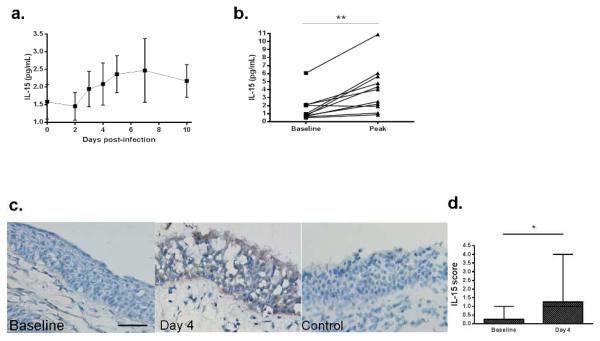
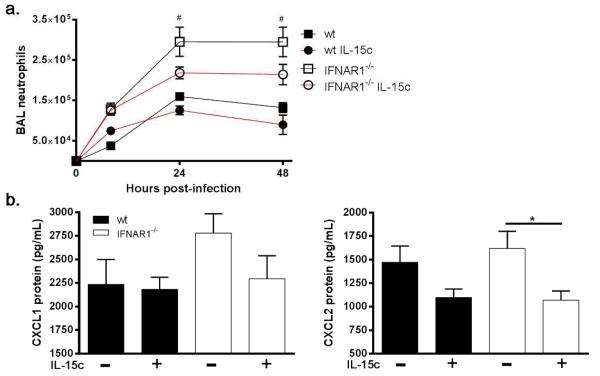
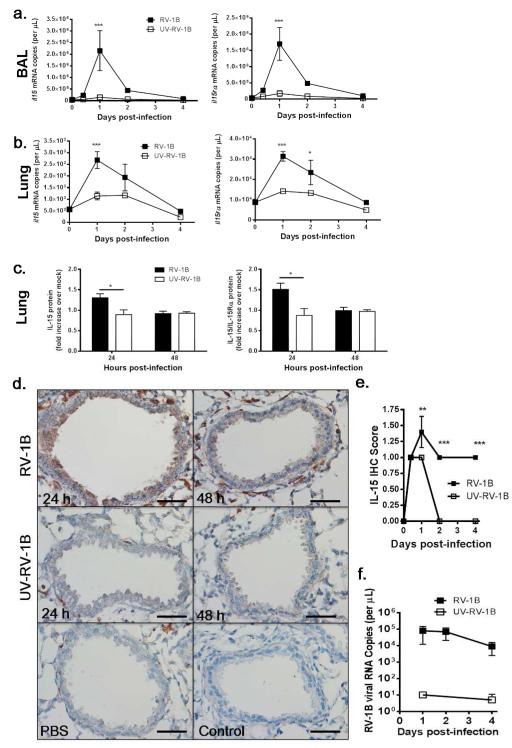
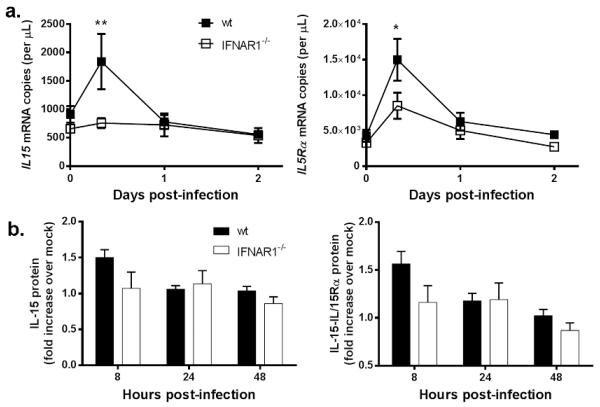
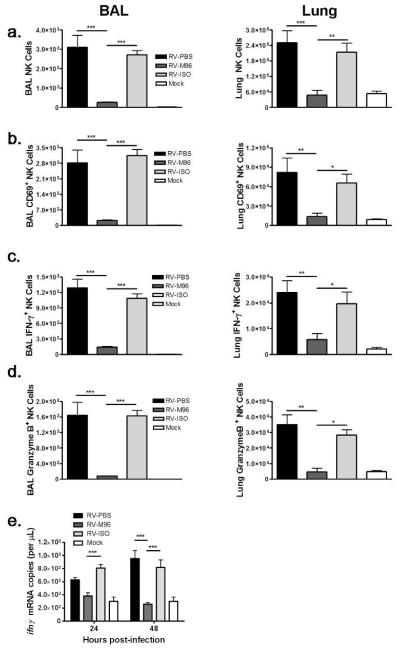
Rhinoviruses are among the most common viruses to infect man, causing a range of serious respiratory diseases including exacerbations of asthma and COPD. Type I IFN and IL-15 are thought to be required for antiviral immunity; however, their function during rhinovirus infection in vivo is undefined. In RV-infected human volunteers, IL-15 protein expression in fluid from the nasal mucosa and in bronchial biopsies was increased. In mice, RV induced type I IFN-dependent expressions of IL-15 and IL-15Rα, which in turn were required for NK- and CD8(+) T-cell responses. Treatment with IL-15-IL-15Rα complexes (IL-15c) boosted RV-induced expression of IL-15, IL-15Rα, IFN-γ, CXCL9, and CXCL10 followed by recruitment of activated, IFN-γ-expressing NK, CD8(+), and CD4(+) T cells. Treating infected IFNAR1(-/-) mice with IL-15c similarly increased IL-15, IL-15Rα, IFN-γ, and CXCL9 (but not CXCL10) expression also followed by NK-, CD8(+)-, and CD4(+)-T-cell recruitment and activation. We have demonstrated that type I IFN-induced IFN-γ and cellular immunity to RV was mediated by IL-15 and IL-15Rα. Importantly, we also show that IL-15 could be induced via a type I IFN-independent mechanism by IL-15 complex treatment, which in turn was sufficient to drive IFN-γ expression and lymphocyte responses.
鼻病毒是感染人类最常见的病毒之一,可引发一系列严重的呼吸道疾病,包括哮喘和慢性阻塞性肺疾病(COPD)的恶化。I型干扰素和白细胞介素-15(IL-15)被认为是抗病毒免疫所必需的;然而,它们在体内鼻病毒感染过程中的功能尚不清楚。在感染鼻病毒的人类志愿者中,鼻黏膜分泌物和支气管活检组织中的IL-15蛋白表达增加。在小鼠中,鼻病毒诱导IL-15和IL-15Rα的I型干扰素依赖性表达,而这反过来又是自然杀伤细胞(NK)和CD8(+) T细胞反应所必需的。用IL-15-IL-15Rα复合物(IL-15c)治疗可增强鼻病毒诱导的IL-15、IL-15Rα、干扰素-γ(IFN-γ)、CXC趋化因子配体9(CXCL9)和CXC趋化因子配体10(CXCL10)的表达,随后募集活化的、表达IFN-γ的NK、CD8(+)和CD4(+) T细胞。用IL-15c治疗感染的IFNAR1(-/-)小鼠同样增加了IL-15、IL-15Rα、IFN-γ和CXCL9(但不包括CXCL10)的表达,随后也出现了NK、CD8(+)和CD4(+) T细胞的募集和活化。我们已经证明,I型干扰素诱导的IFN-γ和对鼻病毒的细胞免疫是由IL-15和IL-15Rα介导的。重要的是,我们还表明,通过IL-15复合物治疗可通过一种不依赖I型干扰素的机制诱导IL-15,这反过来又足以驱动IFN-γ的表达和淋巴细胞反应。