Rychak Joshua J, Klibanov Alexander L
Targeson Inc., San Diego, CA 92121, USA.
Cardiovascular Division, University of Virginia, Charlottesville, VA 22908-1394, USA.
Adv Drug Deliv Rev. 2014 Jun;72:82-93. doi: 10.1016/j.addr.2014.01.009. Epub 2014 Jan 31.
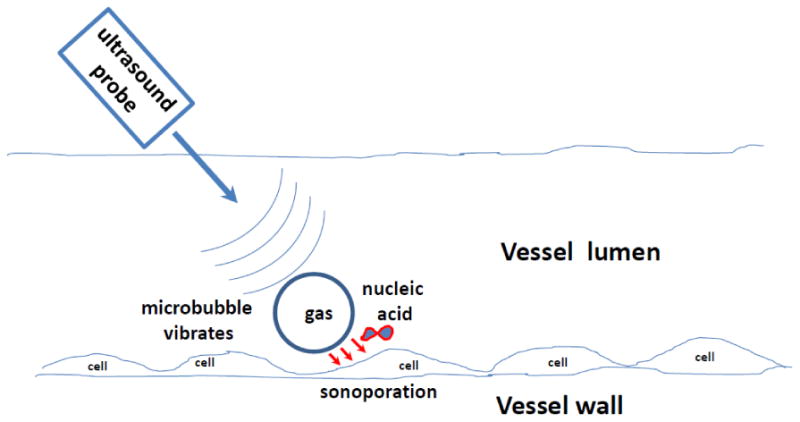
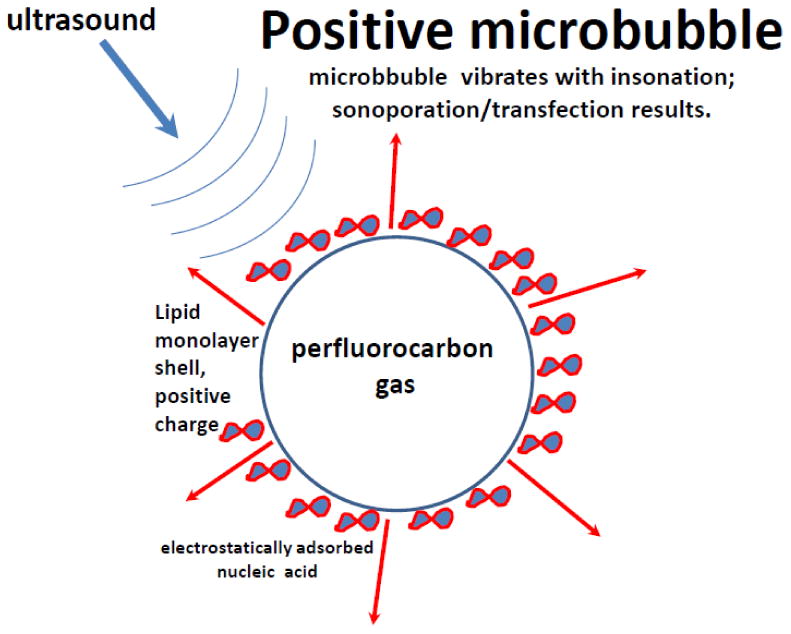
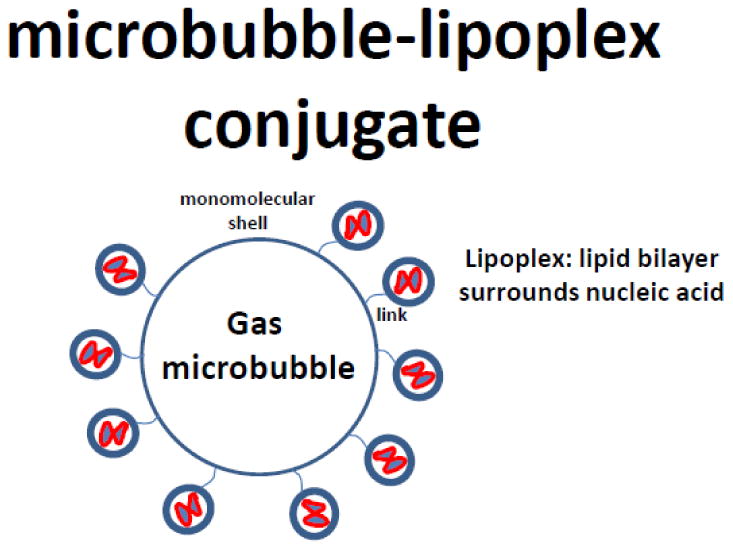
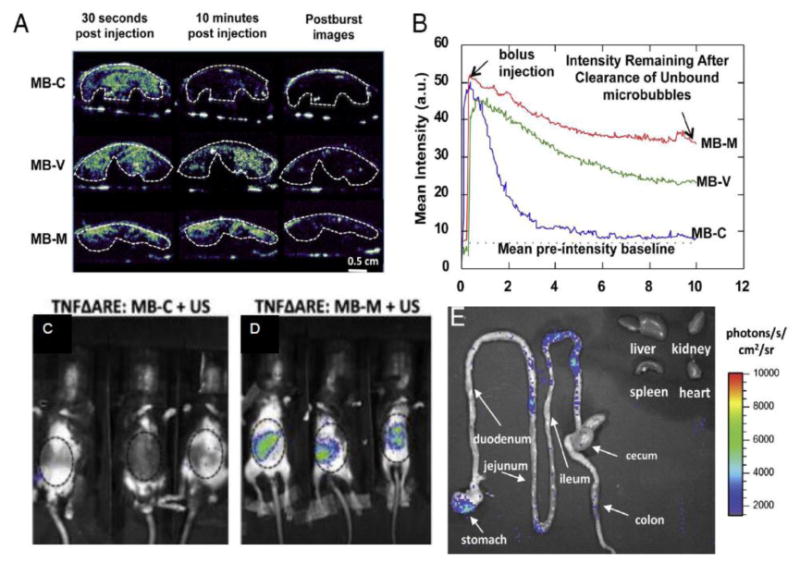
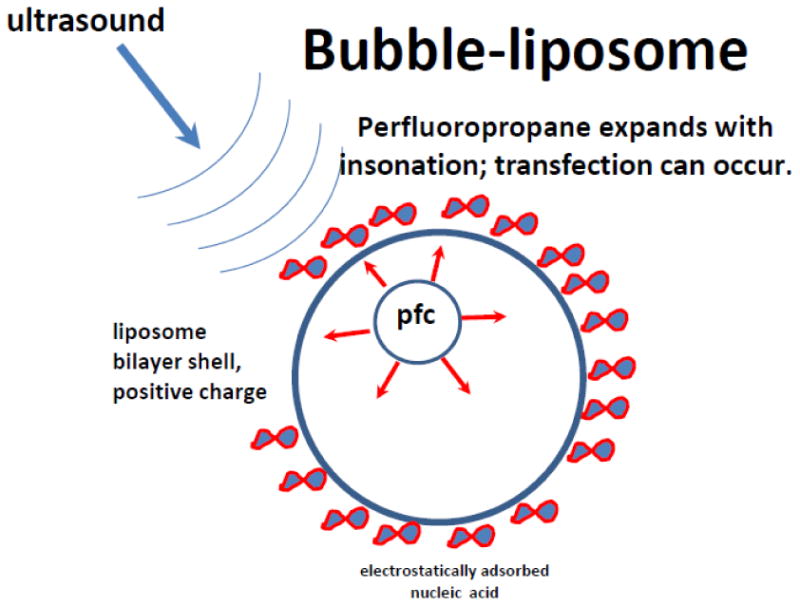
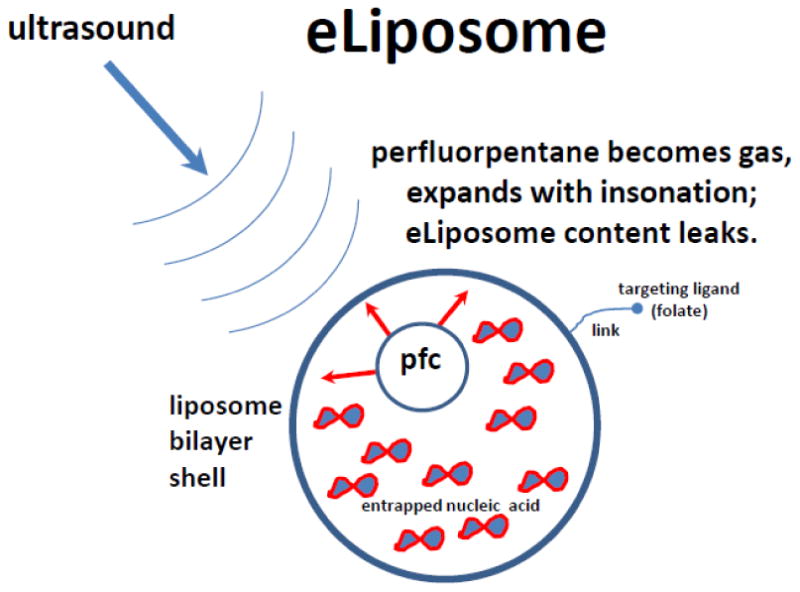
Nucleic acid-based therapy is a growing field of drug delivery research. Although ultrasound has been suggested to enhance transfection decades ago, it took a combination of ultrasound with nucleic acid carrier systems (microbubbles, liposomes, polyplexes, and viral carriers) to achieve reasonable nucleic acid delivery efficacy. Microbubbles serve as foci for local deposition of ultrasound energy near the target cell, and greatly enhance sonoporation. The major advantage of this approach is in the minimal transfection in the non-insonated non-target tissues. Microbubbles can be simply co-administered with the nucleic acid carrier or can be modified to carry nucleic acid themselves. Liposomes with embedded gas or gas precursor particles can also be used to carry nucleic acid, release and deliver it by the ultrasound trigger. Successful testing in a wide variety of animal models (myocardium, solid tumors, skeletal muscle, and pancreas) proves the potential usefulness of this technique for nucleic acid drug delivery.
基于核酸的疗法是药物递送研究中一个不断发展的领域。尽管几十年前就有人提出超声可增强转染作用,但直到超声与核酸载体系统(微泡、脂质体、多聚体和病毒载体)相结合,才实现了合理的核酸递送效果。微泡作为超声能量在靶细胞附近局部沉积的焦点,极大地增强了声孔效应。这种方法的主要优点是在未受超声照射的非靶组织中转染极少。微泡可以简单地与核酸载体共同给药,也可以进行修饰使其自身携带核酸。含有嵌入式气体或气体前体颗粒的脂质体也可用于携带核酸,通过超声触发释放并递送核酸。在多种动物模型(心肌、实体瘤、骨骼肌和胰腺)中成功进行的测试证明了该技术在核酸药物递送方面的潜在用途。