Dipartimento di Psicologia, Università La Sapienza, Via dei Marsi, 78, 00185, Rome, Italy,
Neuropsychol Rev. 2014 Jun;24(2):236-51. doi: 10.1007/s11065-014-9247-8. Epub 2014 Feb 1.
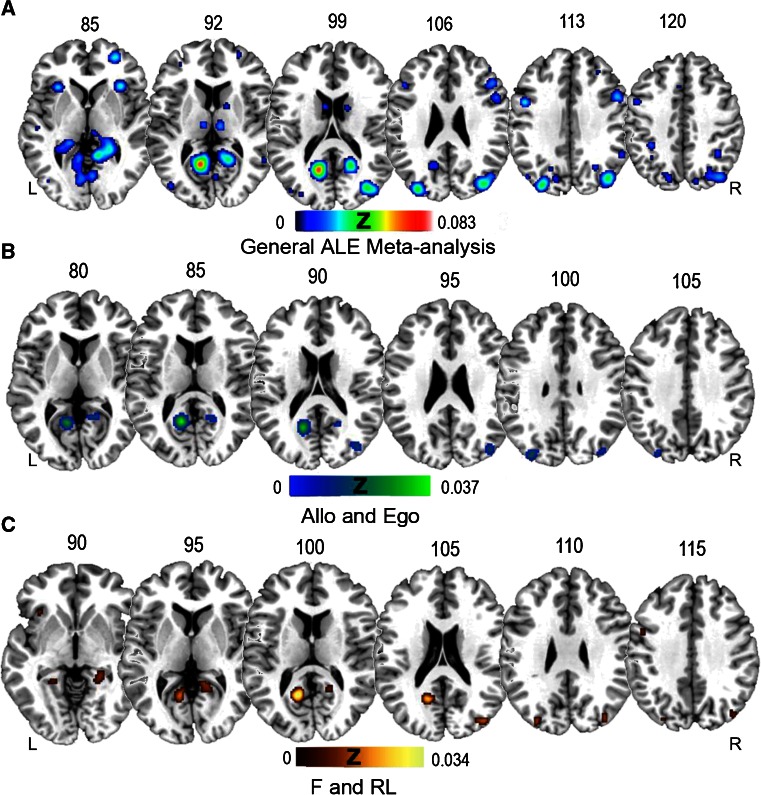
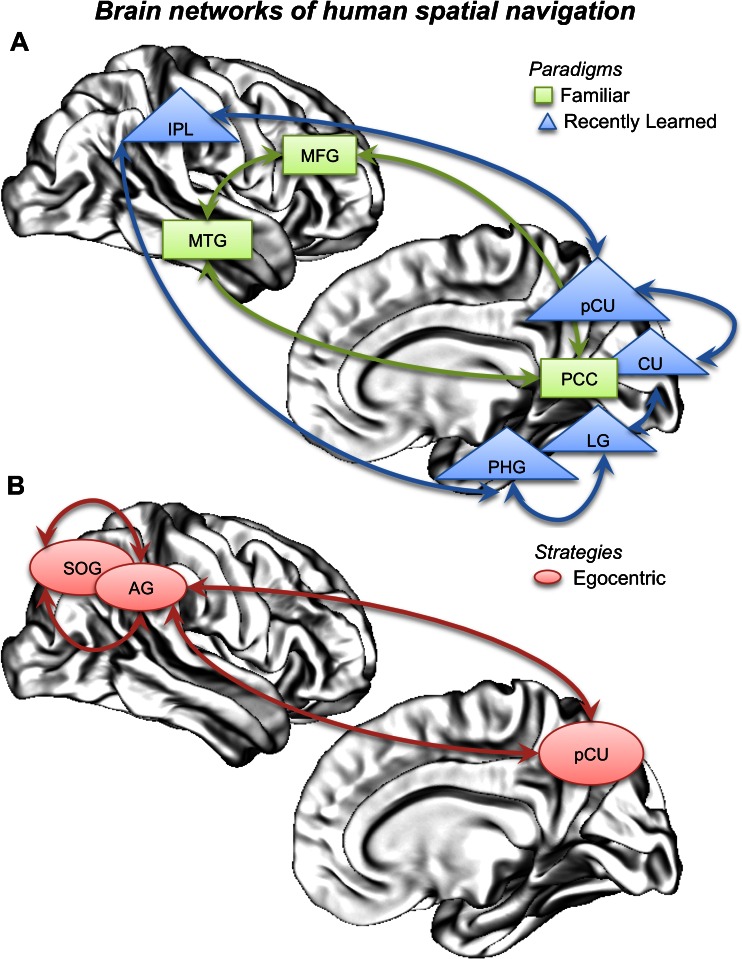
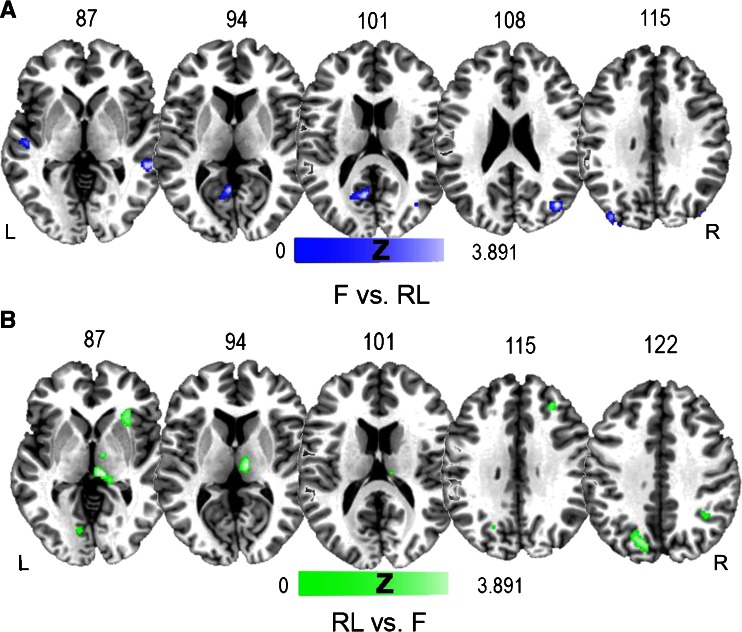
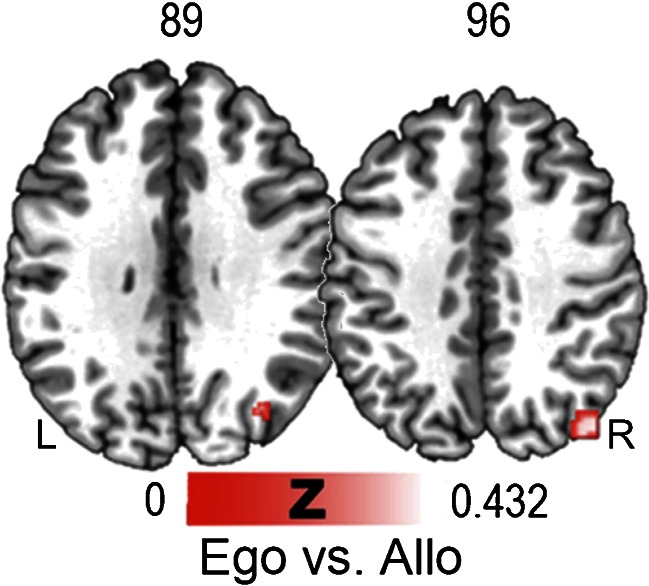
In the past 20 years, many studies in the cognitive neurosciences have analyzed human ability to navigate in recently learned and familiar environments by investigating the cognitive processes involved in successful navigation. In this study, we reviewed the main experimental paradigms and made a cognitive-oriented meta-analysis of fMRI studies of human navigation to underline the importance of the experimental designs and cognitive tasks used to assess navigational skills. We performed a general activation likelihood estimation (ALE) meta-analysis of 66 fMRI experiments to identify the neural substrates underpinning general aspects of human navigation. Four individual ALE analyses were performed to identify the neural substrates of different experimental paradigms (i.e., familiar vs. recently learned environments) and different navigational strategies (allocentric vs. egocentric). Results of the general ALE analysis highlighted a wide network of areas with clusters in the occipital, parietal, frontal and temporal lobes, especially in the parahippocampal cortex. Familiar environments seem to be processed by an extended temporal-frontal network, whereas recently learned environments require activation in the parahippocampal cortex and the parietal and occipital lobes. Allocentric strategy is subtended by the same areas as egocentric strategy, but the latter elicits greater activation in the right precuneus, middle occipital lobe and angular gyrus. Our results suggest that different neural correlates are involved in recalling a well-learned or recently acquired environment and that different networks of areas subtend egocentric and allocentric strategies.
在过去的 20 年中,认知神经科学的许多研究通过分析成功导航所涉及的认知过程,分析了人类在最近学习和熟悉的环境中导航的能力。在这项研究中,我们回顾了主要的实验范式,并对人类导航的 fMRI 研究进行了认知导向的荟萃分析,以强调评估导航技能的实验设计和认知任务的重要性。我们对 66 项 fMRI 实验进行了一般激活似然估计 (ALE) 荟萃分析,以确定支持人类导航一般方面的神经基础。进行了四项单独的 ALE 分析,以确定不同实验范式(即熟悉环境与最近学习环境)和不同导航策略(以自我为中心与以目标为中心)的神经基础。一般 ALE 分析的结果突出了一个广泛的区域网络,其中包括枕叶、顶叶、额叶和颞叶的簇,特别是在海马旁回。熟悉的环境似乎是由扩展的颞叶-额叶网络处理的,而最近学习的环境需要海马旁回以及顶叶和枕叶的激活。以自我为中心的策略与以目标为中心的策略有相同的区域支持,但后者在右楔前叶、中枕叶和角回引起更大的激活。我们的结果表明,回忆一个熟练学习或最近获得的环境涉及不同的神经相关物,并且以自我为中心和以目标为中心的策略由不同的区域网络支持。