Khanduri Vinod Prasad, Sharma C M, Kumar K S, Ghildiyal S K
Department of Forestry, Mizoram University, Aizawl, Mizoram, India ; Department of Forestry, Uttarakhand University of Horticulture and Forestry, Hill Campus, Ranichauri, Tehri Garhwal, Uttarakhand, India.
Department of Botany, HNB Garhwal University, Srinagar Garhwal, Uttarakhand, India.
ScientificWorldJournal. 2013 Dec 31;2013:350157. doi: 10.1155/2013/350157. eCollection 2013.
Schima wallichii is a highly valuable tree of tropical forest in north-east Himalaya region that grows naturally in a wide range of altitudes between 750 and 2400 m asl with varying environments. Flowering phenology of tropical tree species at population level is generally ignored and therefore a detailed knowledge of flowering and fruiting patterns of important multipurpose tree species is critical to the successful management of forest genetic resources.
The study was conducted at two different altitudes (i.e., 750 m and 900 m asl) in the tropical semideciduous forest of north-east Himalaya. The floral phenology including flowering synchrony in the populations, anthesis, anther dehiscence, stigma receptivity, pollinators visitation frequency, and mating system including index of self-incompatibility were worked out in Schima wallichii according to the ear-marked standard methods given by various scientists for each parameter.
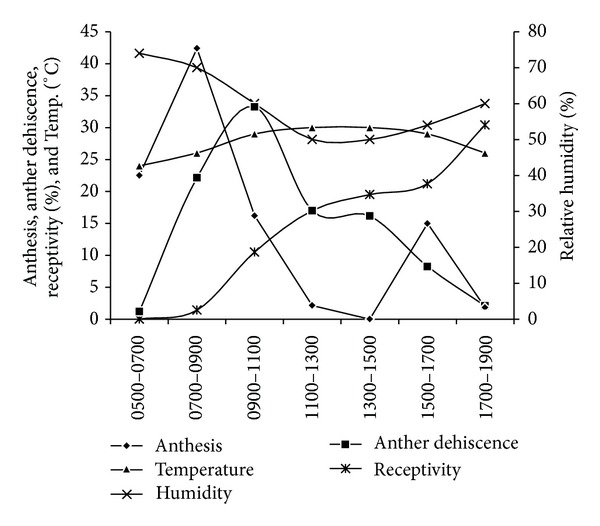
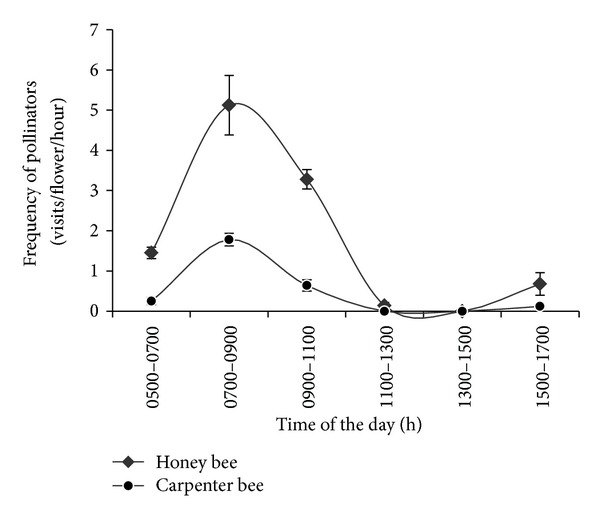
The flowering period in Schima wallichii varied from 33 to 42 days with mean synchrony of 0.54 to 0.68 between the populations. The stigma was receptive up to 2.5 days only and showed slightly protandrous type of dichogamy. Average pollen production ranged between 6.90 × 10(7) pollen per tree in 2007 and 15.49 × 10(8) pollen per tree in 2011. A three-year masting cycle was noticed in this species. The frequency of visitation of honey bees was fairly high (5.2 ± 1.12 visits/flower/hour) as compared to other pollinators. The hand pollination revealed maximum fruit (74.2 ± 5.72%) and seed (70.8 ± 7.46%) settings.
The variation in flowering phenology and pollen yield individually and annually along with temporal separation in anther dehiscence and pollinator's visitation cause pollen limited reproduction, which ultimately influences the reproductive success in Schima wallichii.
锡金蒲桃是喜马拉雅地区东北部热带森林中一种极具价值的树木,它自然生长在海拔750至2400米的广泛高度范围内,环境各异。热带树种在种群水平上的开花物候通常被忽视,因此,详细了解重要多用途树种的开花和结果模式对于森林遗传资源的成功管理至关重要。
该研究在喜马拉雅地区东北部热带半落叶森林的两个不同海拔高度(即海拔750米和900米)进行。根据不同科学家针对每个参数给出的标记标准方法,对锡金蒲桃的花物候进行了研究,包括种群内的开花同步性、开花、花药开裂、柱头可授性、传粉者访花频率,以及交配系统,包括自交不亲和指数。
锡金蒲桃的花期为33至42天,种群间的平均同步性为0.54至0.68。柱头仅在2.5天内具有可授性,呈现出轻微的雄性先熟型雌雄异熟现象。2007年每棵树平均产生的花粉量在6.90×10⁷粒之间,2011年每棵树平均产生的花粉量为15.49×10⁸粒。该物种呈现出三年的大年结实周期。与其他传粉者相比,蜜蜂的访花频率相当高(5.2±1.12次/花/小时)。人工授粉显示出最高的坐果率(74.2±5.72%)和结籽率(70.8±7.46%)。
开花物候和花粉产量的个体差异以及年度变化,再加上花药开裂和传粉者访花的时间间隔,导致花粉限制繁殖,最终影响了锡金蒲桃的繁殖成功率。