Geier Christian, Engel Michael S, Bouchal Johannes M, Ulrich Silvia, Grímsson Friðgeir, Wedmann Sonja, Wappler Torsten
University of Vienna, Department of Botany and Biodiversity Research, Division of Structural and Functional Botany, Rennweg 14, 1030 Vienna, Austria.
American Museum of Natural History, Division of Invertebrate Zoology, 200 Central Park West, New York, NY 10024-5192 U.S.A.
Paleobiodivers Paleoenviron. 2024;104(4):949-962. doi: 10.1007/s12549-024-00604-7. Epub 2024 May 23.
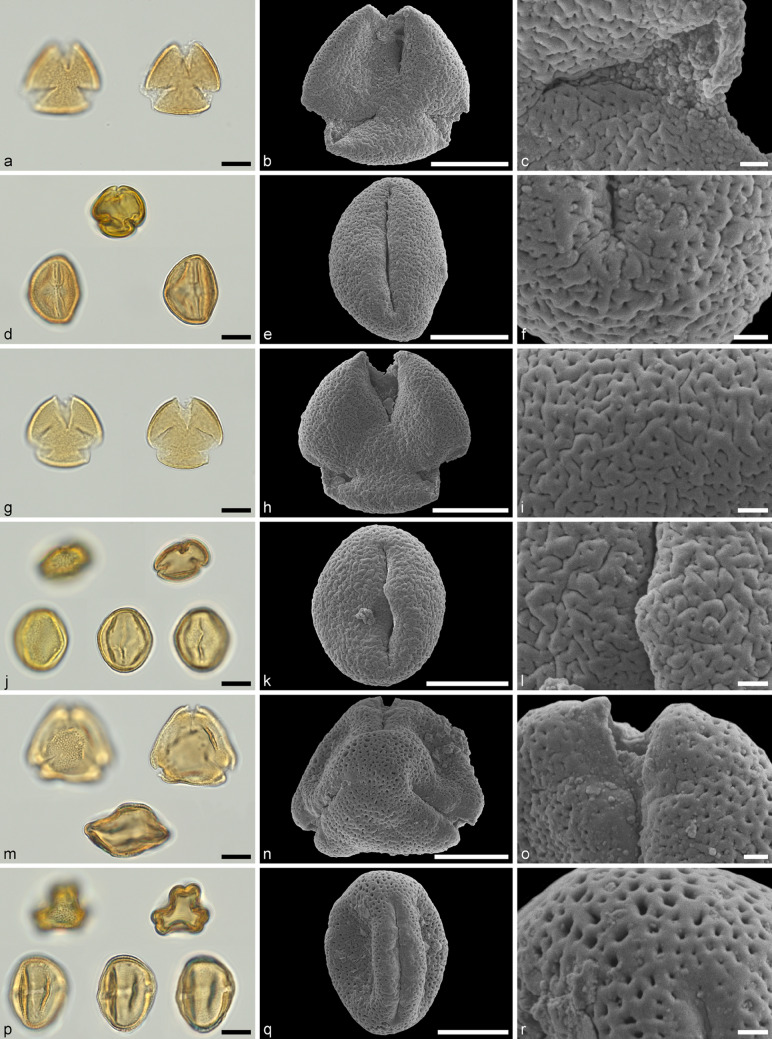
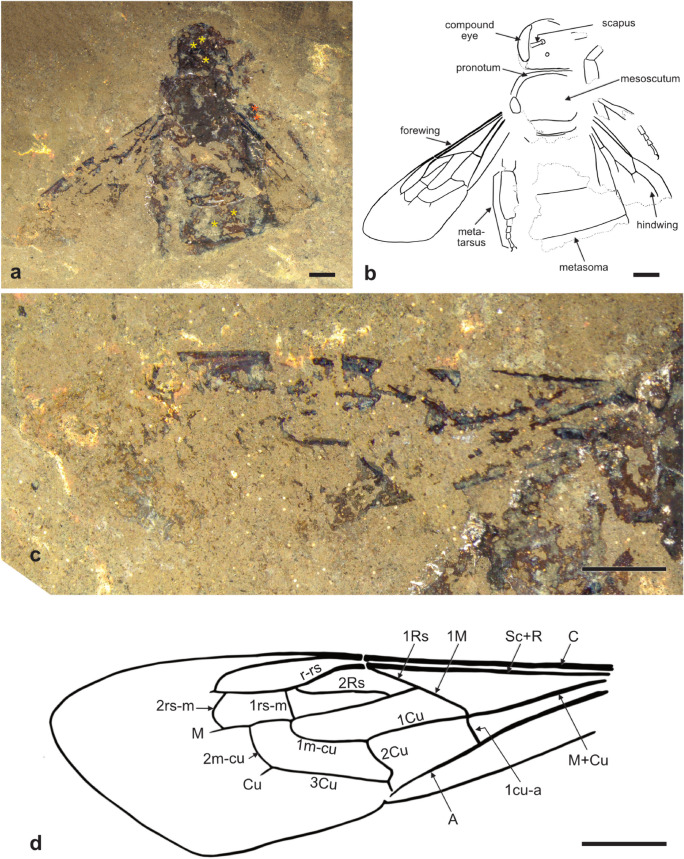
The association of pollinators with their host plants is a critical element of ecosystem functioning and one that is usually determined indirectly in the fossil record from specific morphological traits of flowers or putative pollinating animals. The exceptionally fine preservation at Messel, Germany, offers an excellent source of data on pollen from fossil flowers as well as preserved adhering to insects as direct evidence of their association with specific floral lineages. Here, we report on pollen recovered from the body and legs of a large carpenter bee (Apidae: Xylocopinae: Xylocopini) from the Eocene of Messel. The fossil is the earliest occurrence of the tribe Xylocopini and represents an extinct subgenus and species, described as () subgen. et sp. nov. Two eudicot pollen types were recovered from the bee, one of the family Theaceae (Asterids: Ericales) and another of Araliaceae (Euasterids: Apiales). The pollen grains are compared with various extinct and extant pollen types, and data on floral visitors to modern theaceous and araliaceous flowers are explored in relation to understanding the association of the fossil carpenter with these floral types in the paratropical Eocene biota of Messel.
传粉者与其寄主植物之间的关联是生态系统功能的关键要素,通常通过花或假定传粉动物的特定形态特征在化石记录中间接确定。德国梅塞尔的特殊精细保存状况提供了关于化石花的花粉以及附着在昆虫上的花粉的极佳数据来源,作为它们与特定花系关联的直接证据。在此,我们报告从梅塞尔始新世的一只大型木蜂(蜜蜂科:木蜂亚科:木蜂族)的身体和腿部采集到的花粉。该化石是木蜂族的最早出现记录,代表一个已灭绝的亚属和物种,被描述为()亚属及新种。从这只蜜蜂身上采集到了两种真双子叶植物花粉类型,一种来自茶科(菊类植物:杜鹃花目),另一种来自五加科(真菊类植物:伞形目)。将这些花粉粒与各种已灭绝和现存的花粉类型进行比较,并探讨现代茶科和五加科花的访花者数据,以了解在梅塞尔亚热带始新世生物群中这种化石木蜂与这些花类型之间的关联。