Division of Gastroenterology and Hepatology, Mayo Clinic, Rochester, Minnesota.
Division of Gastroenterology, Beth Israel Deaconess Medical Center, Harvard Medical School, Boston, Massachusetts.
Gastroenterology. 2014 May;146(5):1339-50.e1. doi: 10.1053/j.gastro.2014.01.061. Epub 2014 Feb 4.
BACKGROUND & AIMS: Vascular endothelial growth factor (VEGF)-induced angiogenesis is implicated in fibrogenesis and portal hypertension. However, the function of VEGF in fibrosis resolution has not been explored.
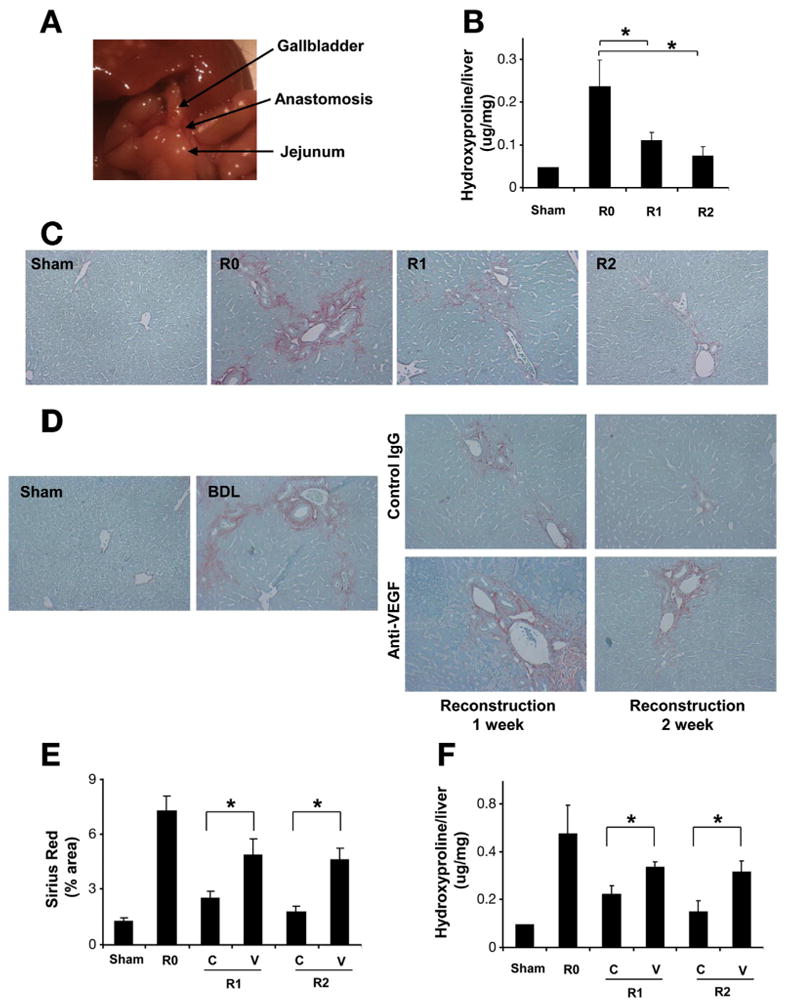
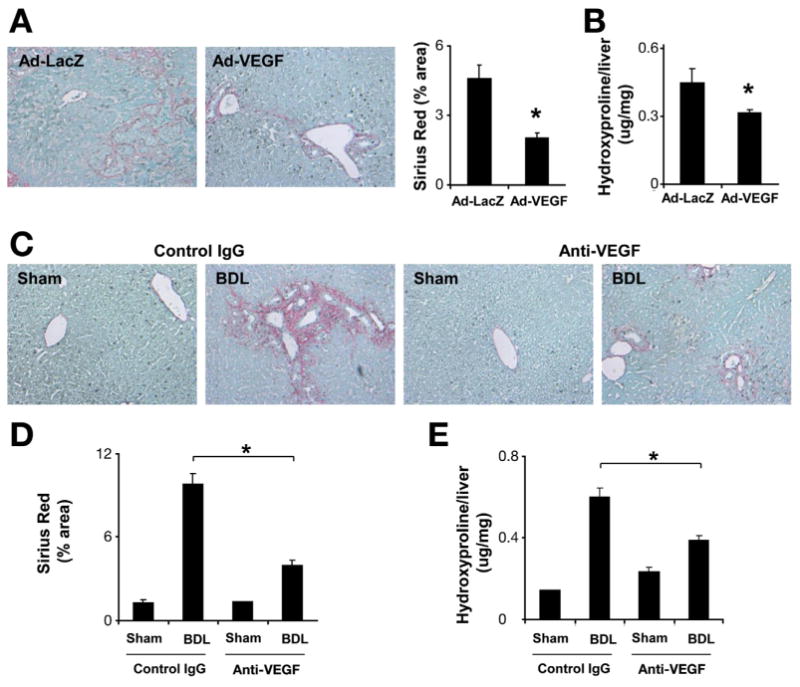
We developed a cholecystojejunostomy procedure to reconstruct biliary flow after bile duct ligation in C57BL/6 mice to generate a model of fibrosis resolution. These mice were then given injections of VEGF-neutralizing (mcr84) or control antibodies, and other mice received an adenovirus that expressed mouse VEGF or a control vector. The procedure was also performed on macrophage fas-induced apoptosis mice, in which macrophages can be selectively depleted. Liver and blood samples were collected and analyzed in immunohistochemical, morphometric, vascular permeability, real-time polymerase chain reaction, and flow cytometry assays.
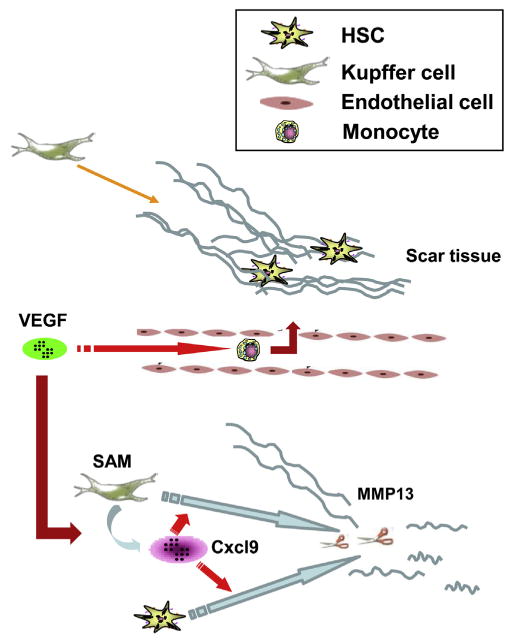
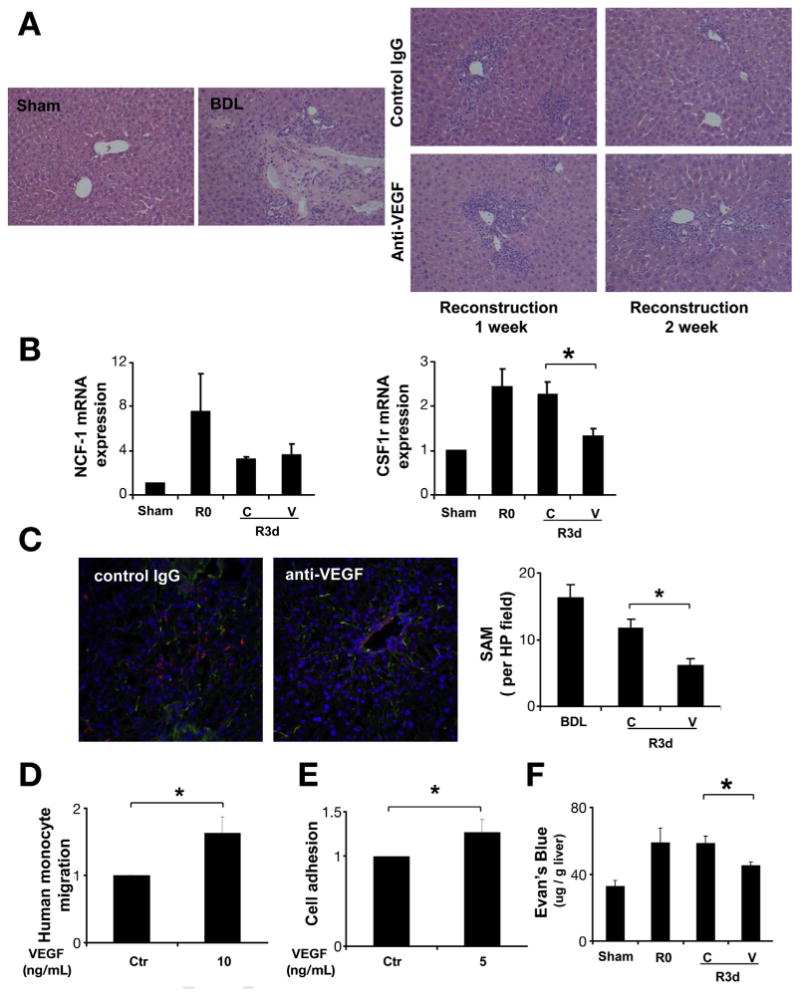
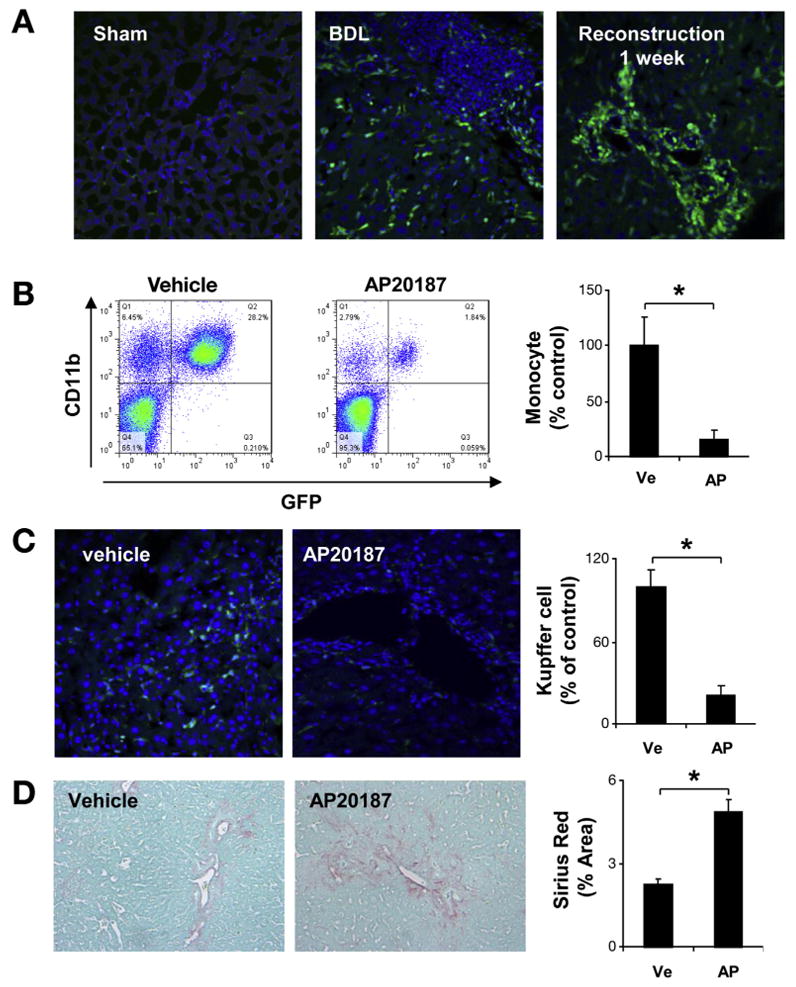
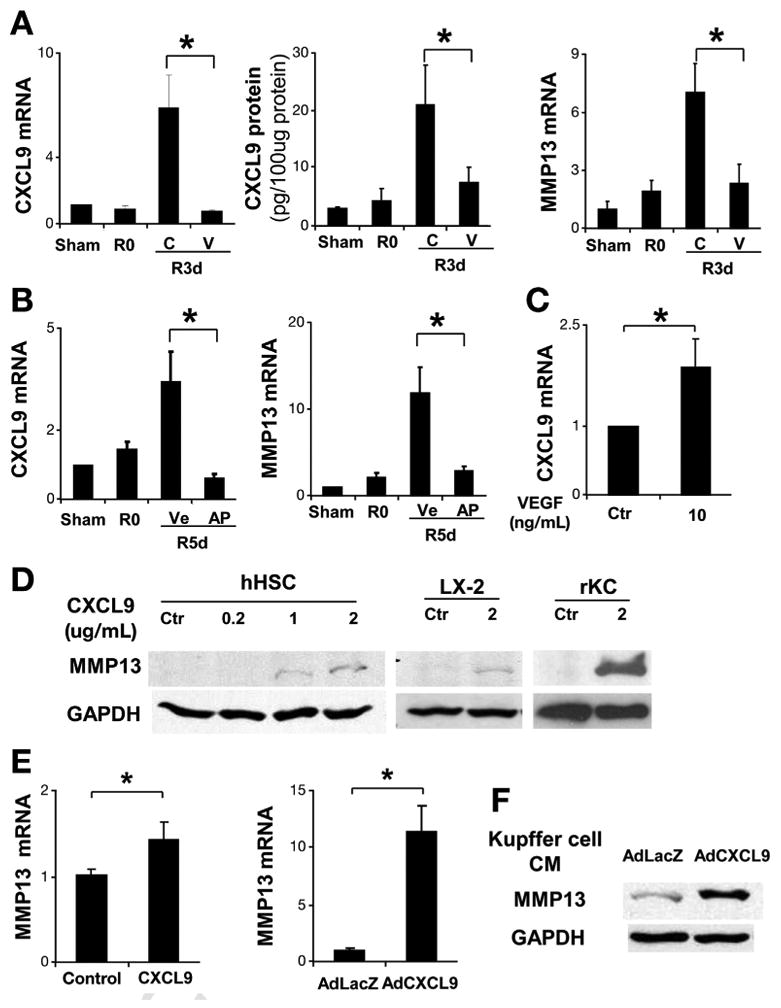
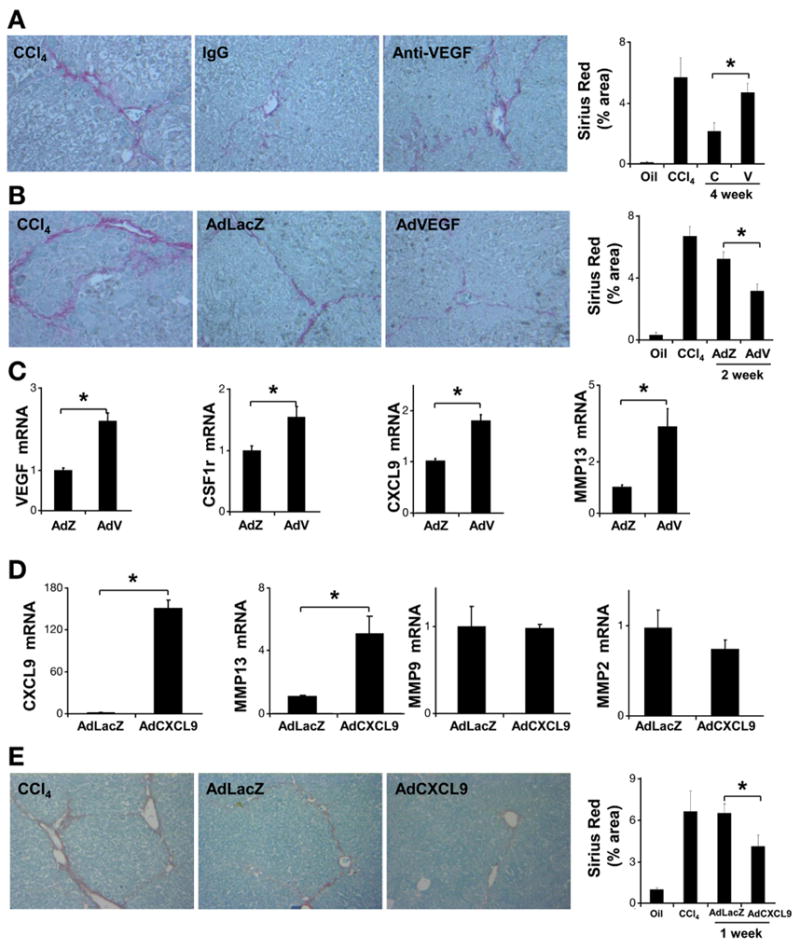
VEGF-neutralizing antibodies prevented development of fibrosis but also disrupted hepatic tissue repair and fibrosis resolution. During fibrosis resolution, VEGF inhibition impaired liver sinusoidal permeability, which was associated with reduced monocyte migration, adhesion, and infiltration of fibrotic liver. Scar-associated macrophages contributed to this process by producing the chemokine (C-X-C motif) ligand 9 (CXCL9) and matrix metalloproteinase 13. Resolution of fibrosis was impaired in macrophage fas-induced apoptosis mice but increased after overexpression of CXCL9.
In a mouse model of liver fibrosis resolution, VEGF promoted fibrogenesis, but was also required for hepatic tissue repair and fibrosis resolution. We observed that VEGF regulates vascular permeability, monocyte infiltration, and scar-associated macrophages function.
血管内皮生长因子(VEGF)诱导的血管生成与纤维化和门静脉高压有关。然而,VEGF 在纤维化消退中的作用尚未被探索。
我们开发了一种胆囊空肠吻合术,在 C57BL/6 小鼠的胆管结扎后重建胆汁流动,以生成纤维化消退模型。然后,这些小鼠接受 VEGF 中和(mcr84)或对照抗体的注射,其他小鼠接受表达小鼠 VEGF 的腺病毒或对照载体的注射。该程序还在巨噬细胞 fas 诱导的细胞凋亡小鼠上进行,其中可以选择性耗尽巨噬细胞。收集肝和血样进行免疫组织化学、形态计量学、血管通透性、实时聚合酶链反应和流式细胞术分析。
VEGF 中和抗体阻止了纤维化的发展,但也破坏了肝组织修复和纤维化消退。在纤维化消退过程中,VEGF 抑制损害了肝窦通透性,这与单核细胞迁移、粘附和纤维性肝脏浸润减少有关。疤痕相关巨噬细胞通过产生趋化因子(C-X-C 基序)配体 9(CXCL9)和基质金属蛋白酶 13 促进了这一过程。在巨噬细胞 fas 诱导的细胞凋亡小鼠中,纤维化消退受损,但 CXCL9 过表达后增加。
在小鼠肝纤维化消退模型中,VEGF 促进了纤维化,但也需要肝组织修复和纤维化消退。我们观察到 VEGF 调节血管通透性、单核细胞浸润和疤痕相关巨噬细胞功能。