Molecular and Cellular Oncogenesis Program, Wistar Cancer Center, Center for Systems and Computational Biology, The Wistar Institute, Philadelphia, PA, USA and Department of Neurosurgery and Abramson Cancer Center, Penn Brain Tumor Center, University of Pennsylvania, Philadelphia, PA, USA.
Nucleic Acids Res. 2014 Apr;42(8):e64. doi: 10.1093/nar/gku121. Epub 2014 Feb 6.
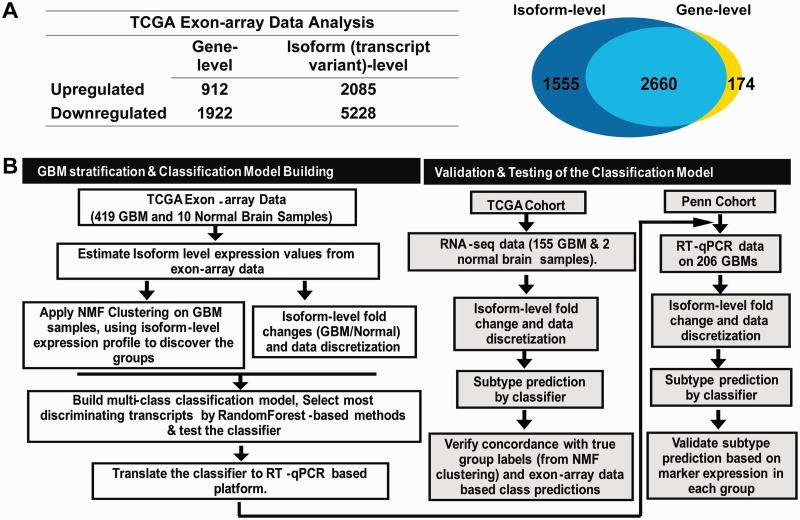
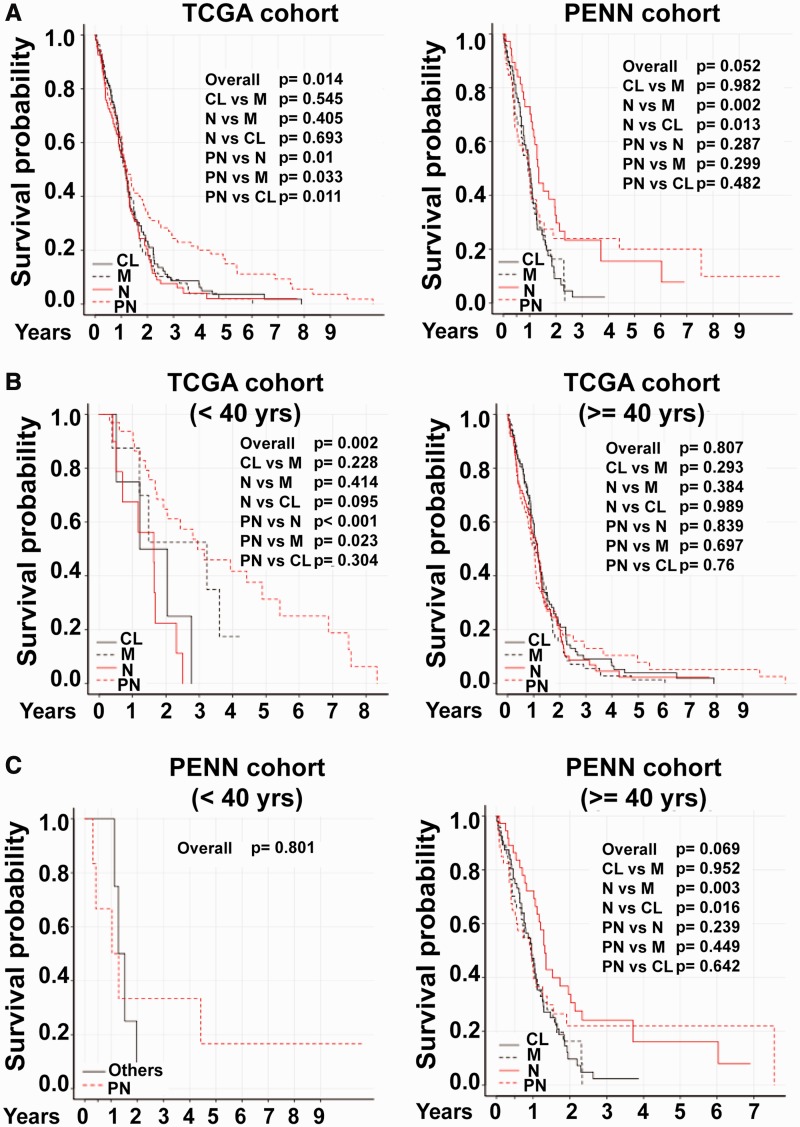
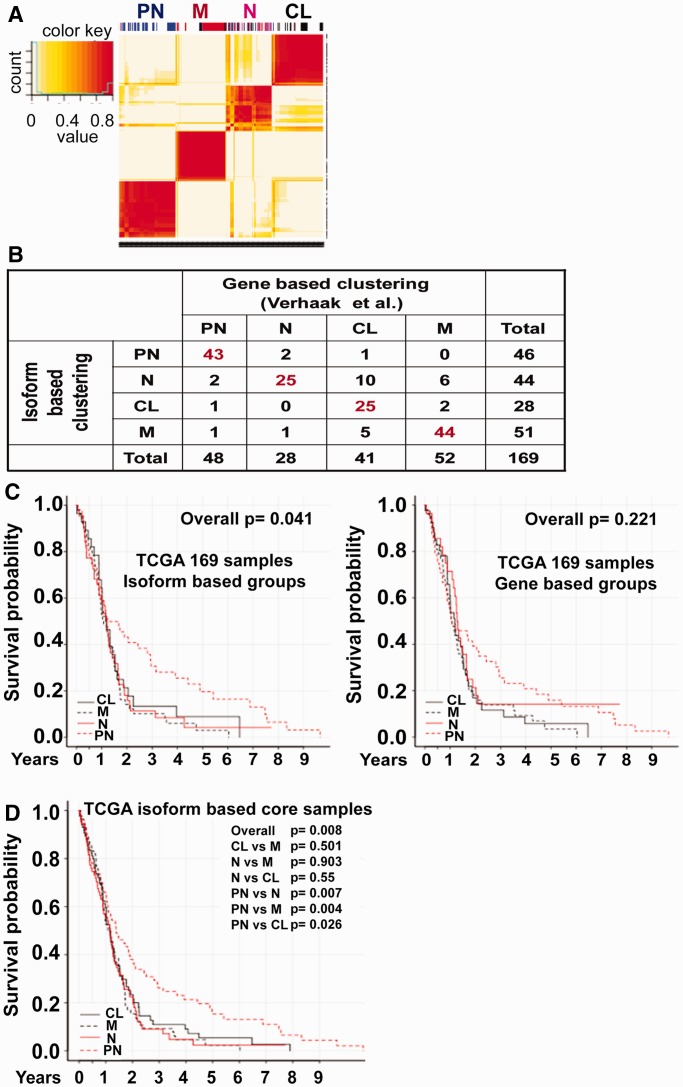
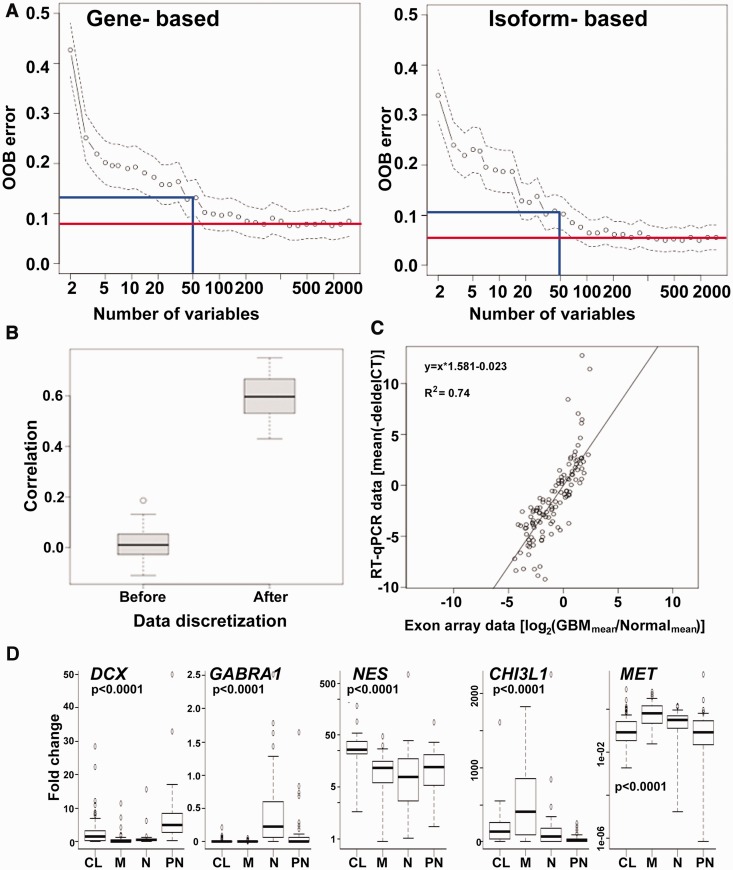
Molecular stratification of tumors is essential for developing personalized therapies. Although patient stratification strategies have been successful; computational methods to accurately translate the gene-signature from high-throughput platform to a clinically adaptable low-dimensional platform are currently lacking. Here, we describe PIGExClass (platform-independent isoform-level gene-expression based classification-system), a novel computational approach to derive and then transfer gene-signatures from one analytical platform to another. We applied PIGExClass to design a reverse transcriptase-quantitative polymerase chain reaction (RT-qPCR) based molecular-subtyping assay for glioblastoma multiforme (GBM), the most aggressive primary brain tumors. Unsupervised clustering of TCGA (the Cancer Genome Altas Consortium) GBM samples, based on isoform-level gene-expression profiles, recaptured the four known molecular subgroups but switched the subtype for 19% of the samples, resulting in significant (P = 0.0103) survival differences among the refined subgroups. PIGExClass derived four-class classifier, which requires only 121 transcript-variants, assigns GBM patients' molecular subtype with 92% accuracy. This classifier was translated to an RT-qPCR assay and validated in an independent cohort of 206 GBM samples. Our results demonstrate the efficacy of PIGExClass in the design of clinically adaptable molecular subtyping assay and have implications for developing robust diagnostic assays for cancer patient stratification.
肿瘤的分子分层对于开发个性化治疗方法至关重要。尽管患者分层策略已经取得了成功;但目前缺乏将基因特征从高通量平台准确地转化为临床可适应的低维平台的计算方法。在这里,我们描述了 PIGExClass(基于平台独立的异构体水平基因表达的分类系统),这是一种从一种分析平台到另一种平台推导和转移基因特征的新计算方法。我们应用 PIGExClass 设计了一种基于逆转录定量聚合酶链反应 (RT-qPCR) 的胶质母细胞瘤 (GBM) 分子亚型检测方法,GBM 是最具侵袭性的原发性脑肿瘤。基于异构体水平基因表达谱的 TCGA(癌症基因组图谱联盟)GBM 样本的无监督聚类重新捕获了四个已知的分子亚群,但有 19%的样本改变了亚型,导致细分亚组之间存在显著的(P=0.0103)生存差异。PIGExClass 衍生的四分类器仅需要 121 个转录变体,可将 GBM 患者的分子亚型准确分类为 92%。该分类器被转化为 RT-qPCR 检测,并在 206 个 GBM 样本的独立队列中进行了验证。我们的结果证明了 PIGExClass 在设计临床可适应的分子分型检测中的有效性,并对开发用于癌症患者分层的稳健诊断检测具有重要意义。