Sicotte Maryline, Langlois Étienne V, Aho Joséphine, Ziegler Daniela, Zunzunegui Maria Victoria
Research Center of the Montreal University Hospital Center (CRCHUM), 850 rue St-Denis, tour St-Antoine, Montreal, QC H2X 0A9, Canada.
Syst Rev. 2014 Feb 10;3:9. doi: 10.1186/2046-4053-3-9.
Over 850 million people worldwide and 200 million adults in Sub-Saharan Africa suffer from malnutrition. Countries most affected by HIV are also stricken by elevated rates of food insecurity and malnutrition. HIV infection and insufficient nutritional intake are part of a vicious cycle that contributes to immunodeficiency and negative health outcomes. However, the effect of the overlap between HIV infection and undernutrition on the immune response following antiretroviral initiation remains unclear. A possible explanation could be the lack of consensus concerning the definition and assessment of nutritional status. Our objectives are to investigate the existence of an association between undernutrition and immune response at antiretroviral treatment initiation and the following year in low- and middle-income countries where malnutrition is most prevalent.
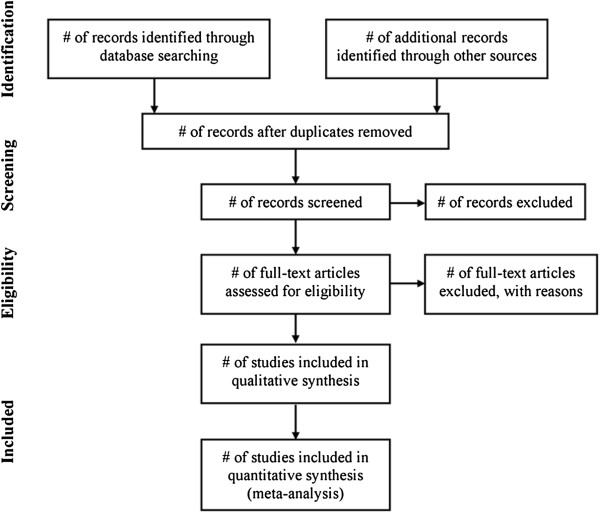
METHODS/DESIGN: Our systematic review will identify studies originating from low- and middle-income countries (LMICs) published from 1996 onwards, through searches in MEDLINE (PubMed interface), EMBASE (OVID interface), Cochrane Central (OVID interface) and grey literature. No language restrictions will be applied. We will seek out studies of any design investigating the association between the nutritional status (for example, undernourished versus well nourished) and the immune response, either in terms of CD4 count or immune failure, in seropositive patients initiating antiretroviral therapy or in their first year of treatment. Two reviewers will independently screen articles, extract data and assess scientific quality using standardized forms and published quality assessment tools tailored for each study design. Where feasible, pooled measures of association will be obtained through meta-analyses. Results will be reported according to the Preferred Reporting Items for Systematic Reviews and Meta-Analyses (PRISMA) Statement. This protocol has been registered in the PROSPERO database (registration number: CRD42014005961).
Undernutrition and weight loss are prevalent amongst highly active antiretroviral therapy (HAART)-treated patients in LMICs and contribute to excess early mortality. A possible intermediate pathway could be poor immune reconstitution secondary to deficient nutritional status. In the face of limited access to second line treatments, raising HIV resistance and cut backs to HIV programs, it is crucial to identify the factors associated with suboptimal response and therapeutic failure in order to better customize the care strategies employed in LMICs.
全球有超过8.5亿人营养不良,撒哈拉以南非洲地区有2亿成年人营养不良。受艾滋病影响最严重的国家也面临着粮食不安全和营养不良率上升的问题。艾滋病毒感染和营养摄入不足是导致免疫缺陷和不良健康后果的恶性循环的一部分。然而,艾滋病毒感染与营养不良的重叠对抗逆转录病毒治疗开始后免疫反应的影响仍不清楚。一个可能的解释是在营养状况的定义和评估方面缺乏共识。我们的目标是调查在营养不良最为普遍的低收入和中等收入国家,在开始抗逆转录病毒治疗时及之后的一年里,营养不良与免疫反应之间是否存在关联。
方法/设计:我们的系统评价将通过检索MEDLINE(PubMed界面)、EMBASE(OVID界面)、Cochrane Central(OVID界面)和灰色文献,识别1996年以来发表的来自低收入和中等收入国家(LMICs)的研究。不设语言限制。我们将寻找任何设计的研究,调查开始抗逆转录病毒治疗的血清阳性患者或其治疗的第一年中,营养状况(例如,营养不良与营养良好)与免疫反应之间的关联,免疫反应以CD4细胞计数或免疫衰竭来衡量。两名评审员将独立筛选文章、提取数据,并使用标准化表格和针对每种研究设计定制的已发表质量评估工具评估科学质量。在可行的情况下,将通过荟萃分析获得合并的关联度量。结果将根据系统评价和荟萃分析的首选报告项目(PRISMA)声明进行报告。本方案已在PROSPERO数据库中注册(注册号:CRD42014005961)。
在低收入和中等收入国家接受高效抗逆转录病毒治疗(HAART)的患者中,营养不良和体重减轻很普遍,并导致早期死亡率过高。一个可能的中间途径可能是营养状况不佳导致免疫重建不良。面对二线治疗的可及性有限、艾滋病毒耐药性增加以及艾滋病毒项目的削减,识别与次优反应和治疗失败相关的因素以更好地定制低收入和中等收入国家采用的护理策略至关重要。