Department of Biotechnology, University of Natural Resources and Life Sciences, Vienna, Austria.
Department of Biotechnology, University of Natural Resources and Life Sciences, Vienna, Austria; Austrian Centre of Industrial Biotechnology GmbH, Graz, Austria.
J Biotechnol. 2014 Apr 10;175(100):38-44. doi: 10.1016/j.jbiotec.2014.01.032. Epub 2014 Feb 8.
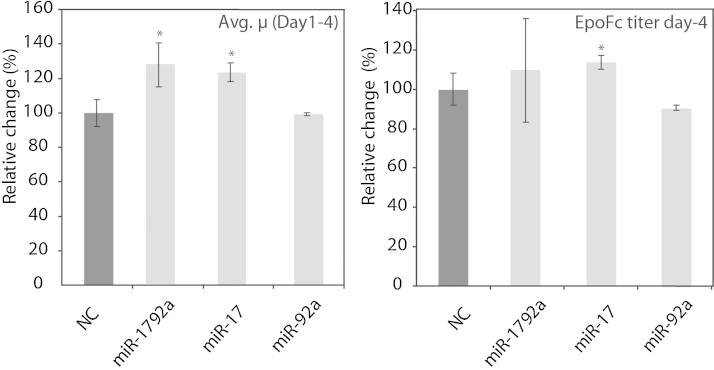
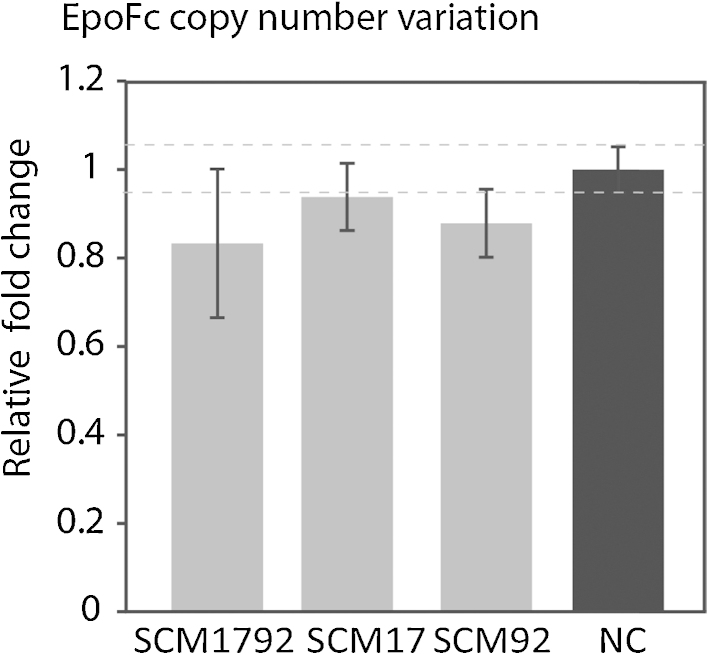
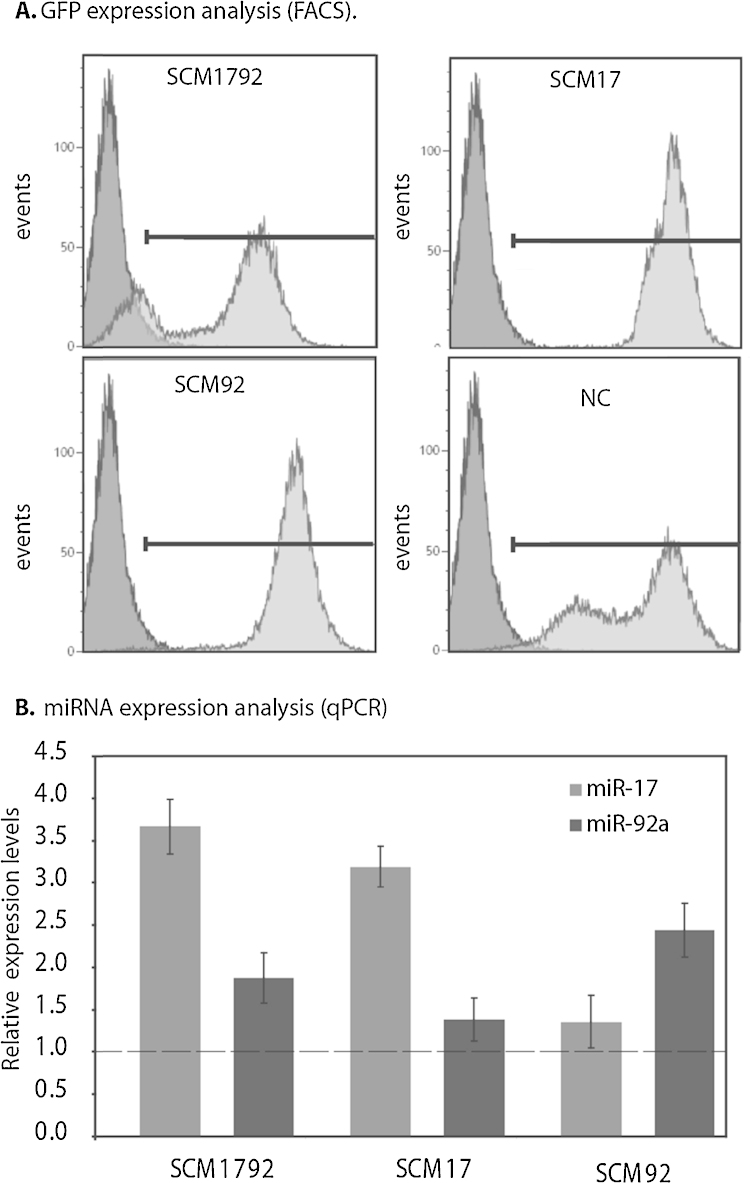
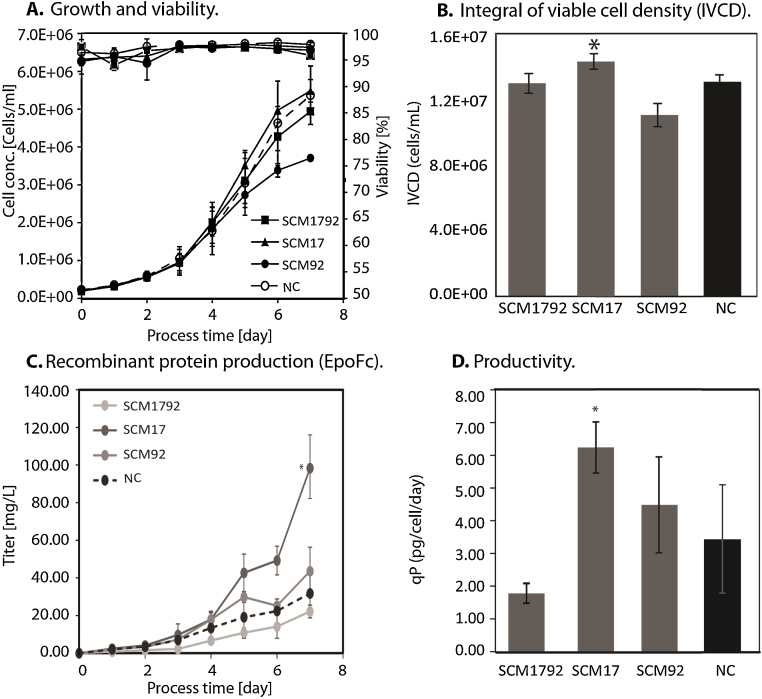
miRNAs negatively regulate gene expression at post-transcriptional level, and consequently play an important role in the control of many cellular pathways. The use of miRNAs to engineer Chinese hamster ovary (CHO) cells is an emerging strategy to improve recombinant protein production. Here, we describe the effect of transient and stable miRNA overexpression on CHO cell phenotype. Using an established transient miRNA screening protocol, the effects of miR-17, miR-92a and cluster miR17-92a on CHO growth and protein productivity were studied and followed by analysis of cell pools with stable overexpression of these miRNAs. CHO cells stably engineered with miR-17 exhibited both enhanced growth performance and a 2-fold increase in specific productivity, which resulted in a 3-fold overall increase in EpoFc titer. While further studies of miRNA-mRNA interactions will be necessary to understand the molecular basis of this effect, these data provide valuable evidence for miR-17 as a cell engineering target to enhance CHO cell productivity.
miRNAs 在后转录水平上负向调控基因表达,因此在许多细胞途径的调控中发挥着重要作用。利用 miRNAs 来工程化中国仓鼠卵巢 (CHO) 细胞是提高重组蛋白生产的一种新兴策略。在这里,我们描述了瞬时和稳定 miRNA 过表达对 CHO 细胞表型的影响。使用已建立的瞬时 miRNA 筛选方案,研究了 miR-17、miR-92a 和 miR17-92a 簇对 CHO 生长和蛋白生产能力的影响,随后对这些 miRNA 稳定过表达的细胞池进行了分析。稳定工程化 miR-17 的 CHO 细胞表现出增强的生长性能和 2 倍的特异性生产率,这导致 EpoFc 滴度总体增加了 3 倍。虽然进一步研究 miRNA-mRNA 相互作用将有助于理解这种效应的分子基础,但这些数据为 miR-17 作为增强 CHO 细胞生产率的细胞工程靶点提供了有价值的证据。