Division of Molecular Genetics Research, Life Science Research Center, University of Toyama, 2630 Sugitani, Toyama 930-0194, Japan.
Exp Anim. 2014;63(1):31-44. doi: 10.1538/expanim.63.31.
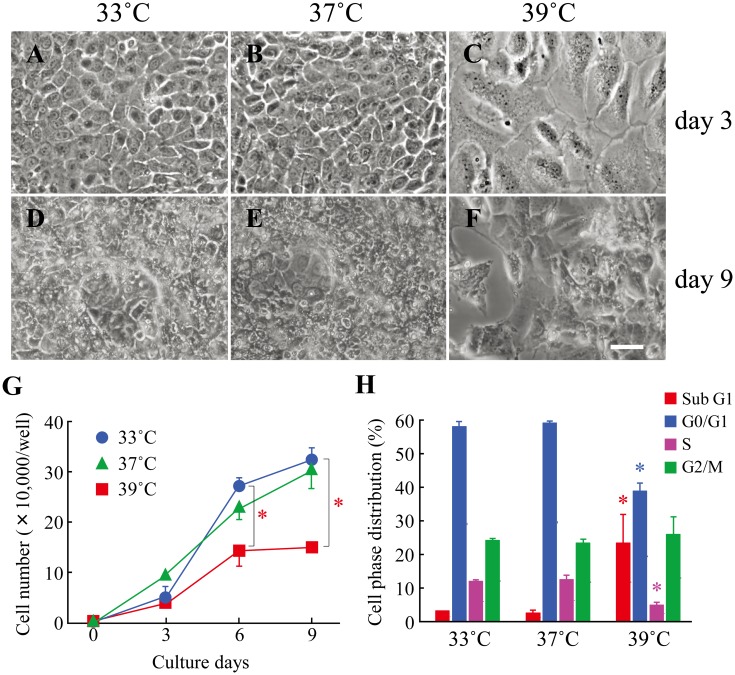
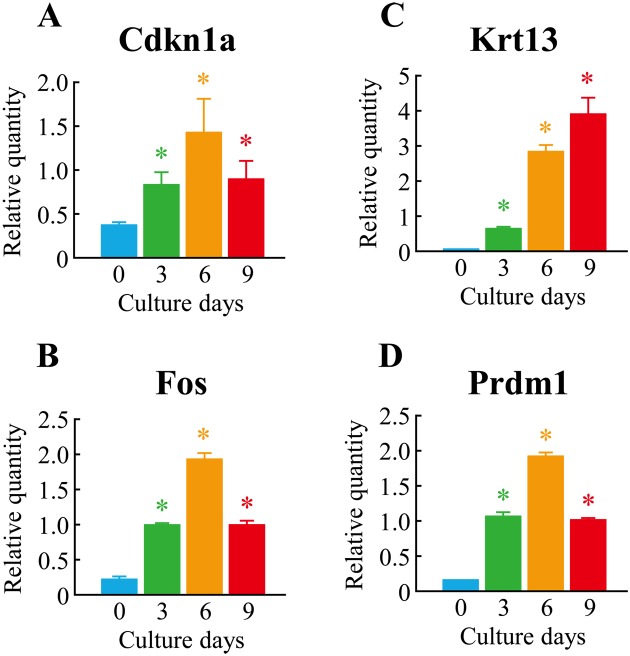
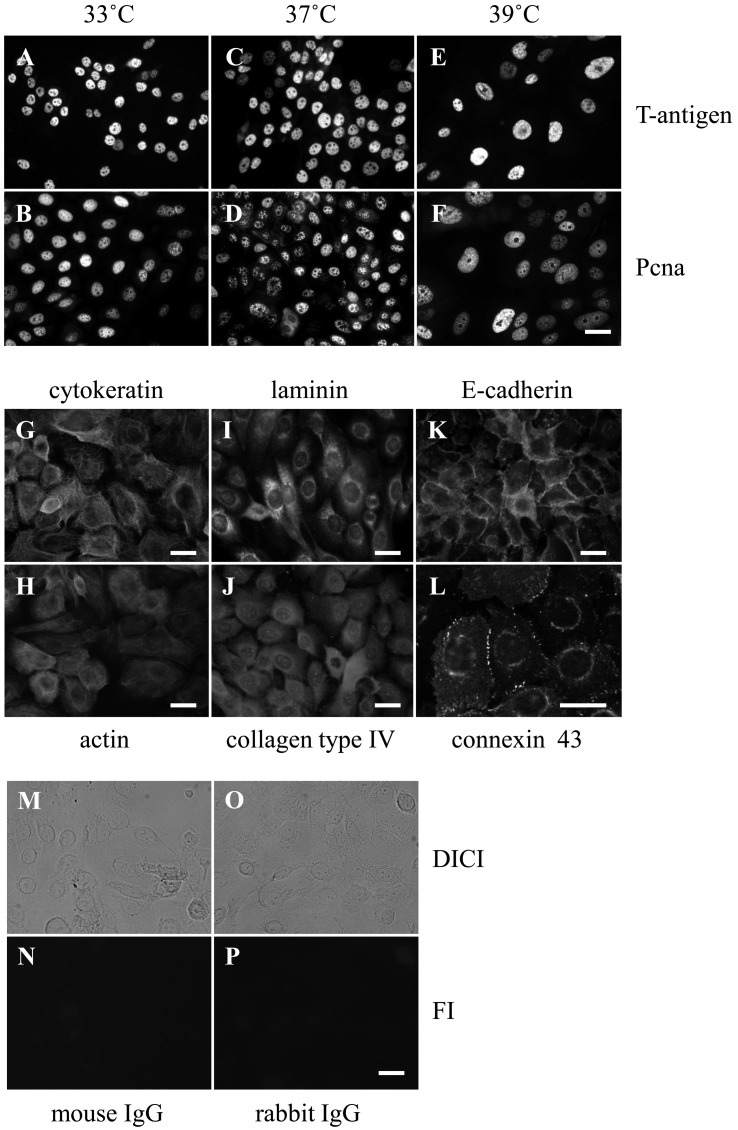
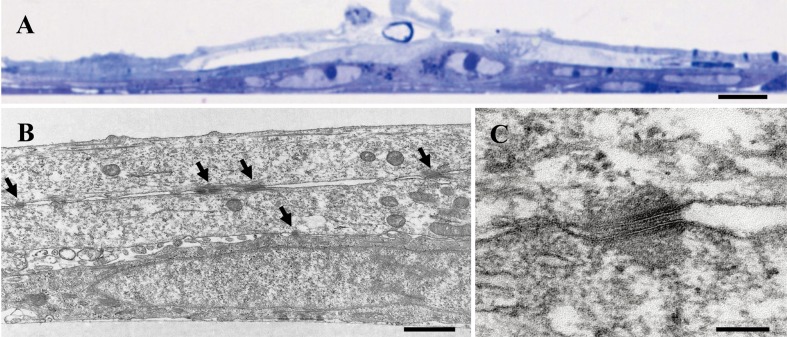
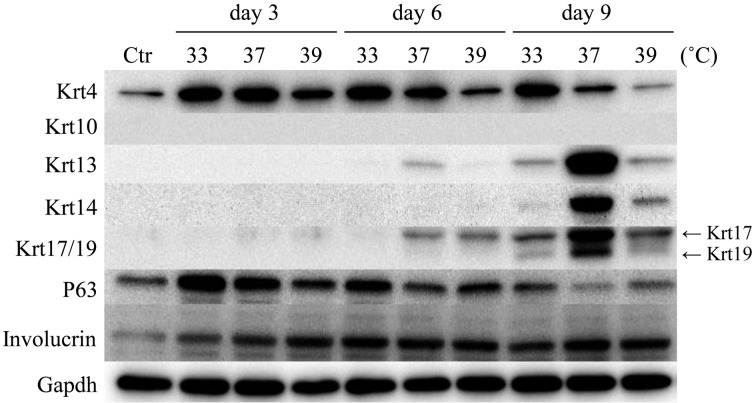
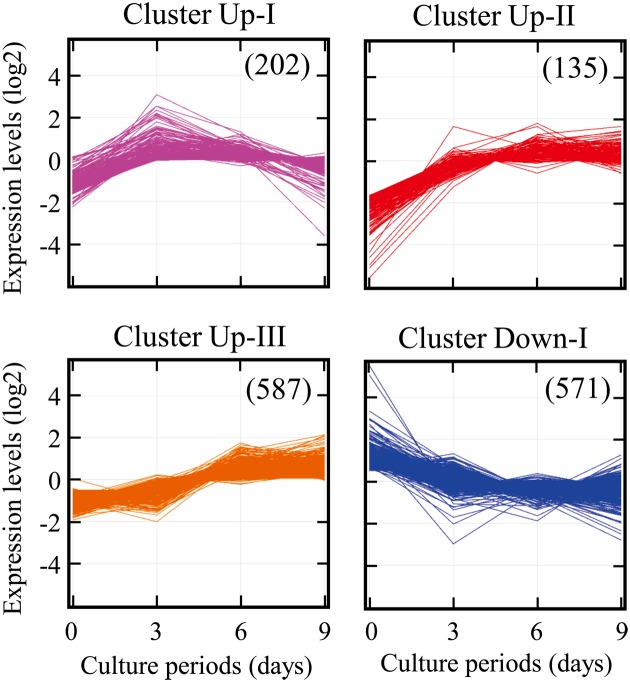
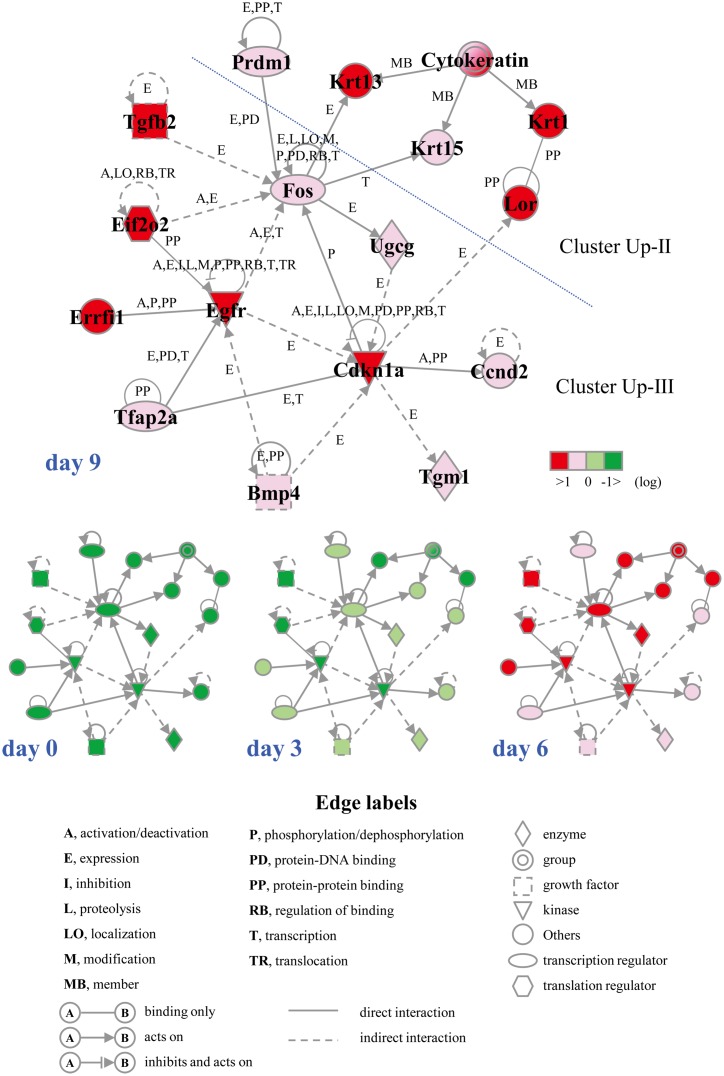
We have developed an immortalized oral epithelial cell line, ROE2, from fetal transgenic rats harboring temperature-sensitive simian virus 40 large T-antigen gene. The cells grew continuously at either a permissive temperature of 33°C or an intermediate temperature of 37°C. At the nonpermissive temperature of 39°C, on the other hand, growth decreased significantly, and the Sub-G1 phase of the cell cycle increased, indicating that the cells undergo apoptosis at a nonpermissive temperature. Histological and immunocytochemical analyses revealed that ROE2 cells at 37°C had a stratified epithelial-like morphology and expressed cytokeratins Krt4 and Krt13, marker proteins for oral nonkeratinized epithelial cells. Global-scale comprehensive microarray analysis, coupled with bioinformatics tools, demonstrated a significant gene network that was obtained from the upregulated genes. The gene network contained 16 genes, including Cdkn1a, Fos, Krt13, and Prdm1, and was associated mainly with the biological process of skin development in the category of biological functions, organ development. These four genes were validated by quantitative real-time polymerase chain reaction, and the results were nearly consistent with the microarray data. It is therefore anticipated that this cell line will be useful as an in vitro model for studies such as physiological functions, as well as for gene expression in oral epithelial cells.
我们从携带温度敏感型猿猴病毒 40 大 T 抗原基因的转基因胎儿大鼠中开发了一种永生化的口腔上皮细胞系 ROE2。这些细胞在允许的温度 33°C 或中间温度 37°C 下可连续生长。另一方面,在不允许的温度 39°C 下,细胞生长显著减少,细胞周期的 Sub-G1 期增加,表明细胞在非允许温度下经历凋亡。组织学和免疫细胞化学分析表明,37°C 下的 ROE2 细胞具有分层上皮样形态,并表达细胞角蛋白 Krt4 和 Krt13,这是口腔非角化上皮细胞的标志物蛋白。全基因组综合微阵列分析,加上生物信息学工具,表明从上调基因中获得了一个显著的基因网络。该基因网络包含 16 个基因,包括 Cdkn1a、Fos、Krt13 和 Prdm1,主要与生物功能类别中的皮肤发育的生物学过程和器官发育相关。这四个基因通过定量实时聚合酶链反应进行了验证,结果与微阵列数据几乎一致。因此,预计该细胞系将可用于研究口腔上皮细胞的生理功能以及基因表达等体外模型。