Department of Chemical and Systems Biology, Stanford University School of Medicine, Stanford, California, United States of America ; Department of Biochemistry, Stanford University School of Medicine, Stanford, California, United States of America ; Howard Hughes Medical Institute, Stanford University School of Medicine, Stanford, California, United States of America.
Department of Biochemistry, Stanford University School of Medicine, Stanford, California, United States of America ; Howard Hughes Medical Institute, Stanford University School of Medicine, Stanford, California, United States of America.
PLoS Biol. 2014 Feb 11;12(2):e1001788. doi: 10.1371/journal.pbio.1001788. eCollection 2014 Feb.
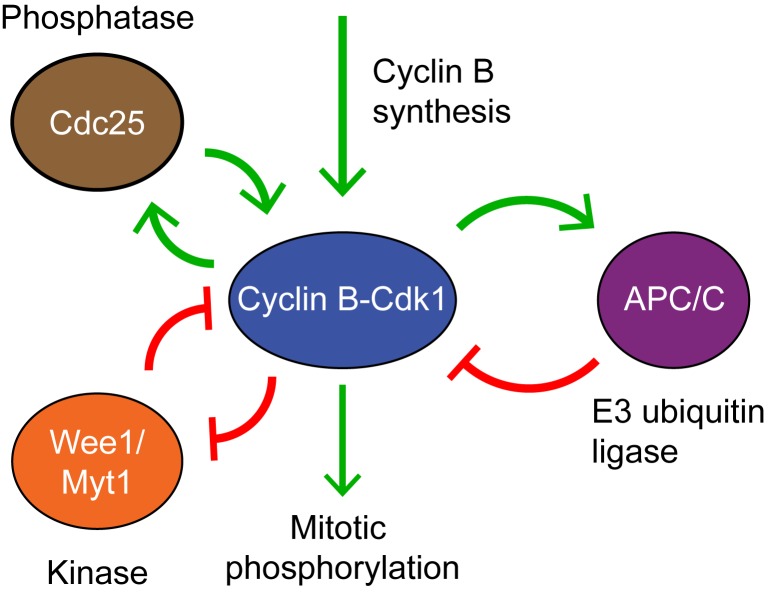
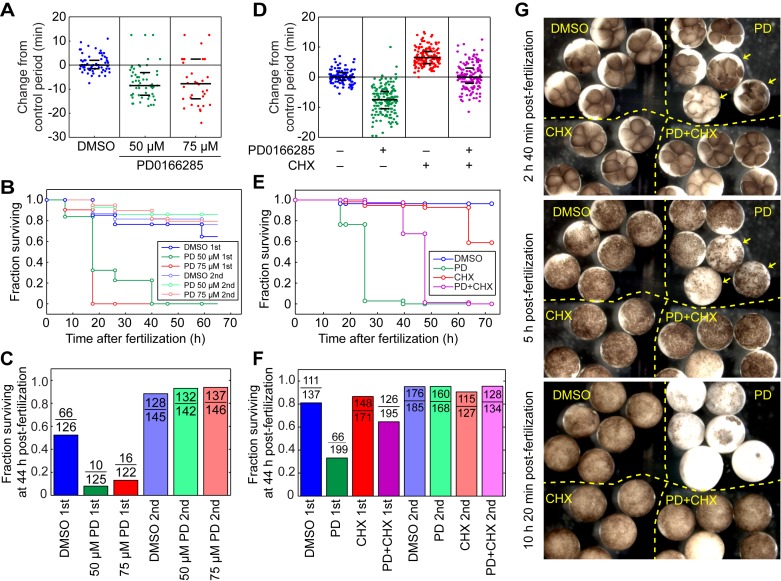
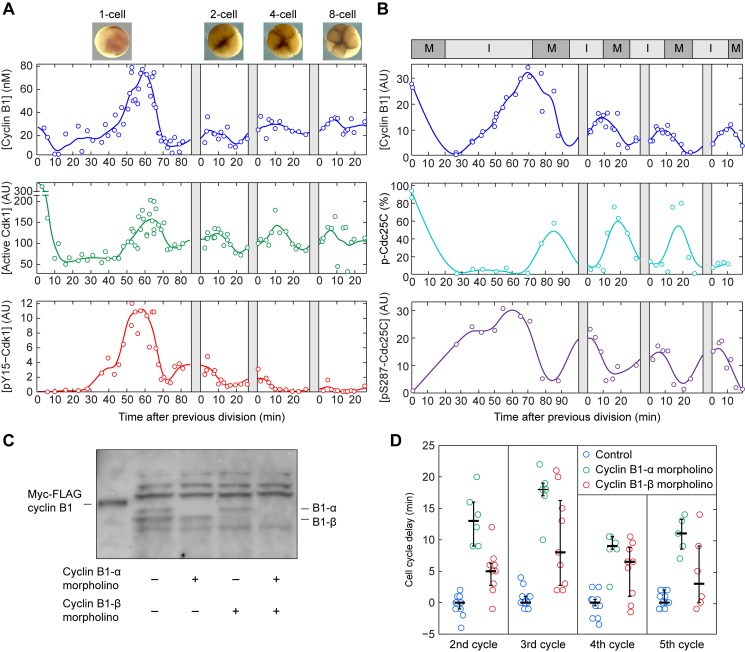
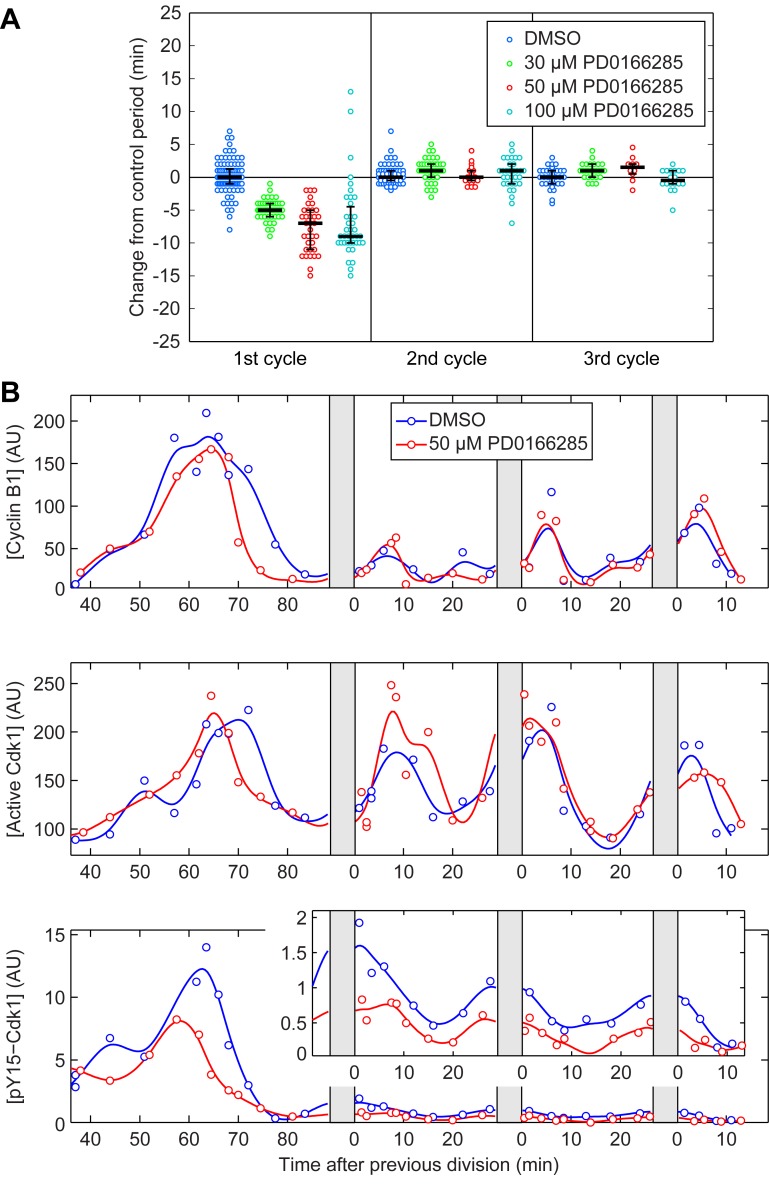
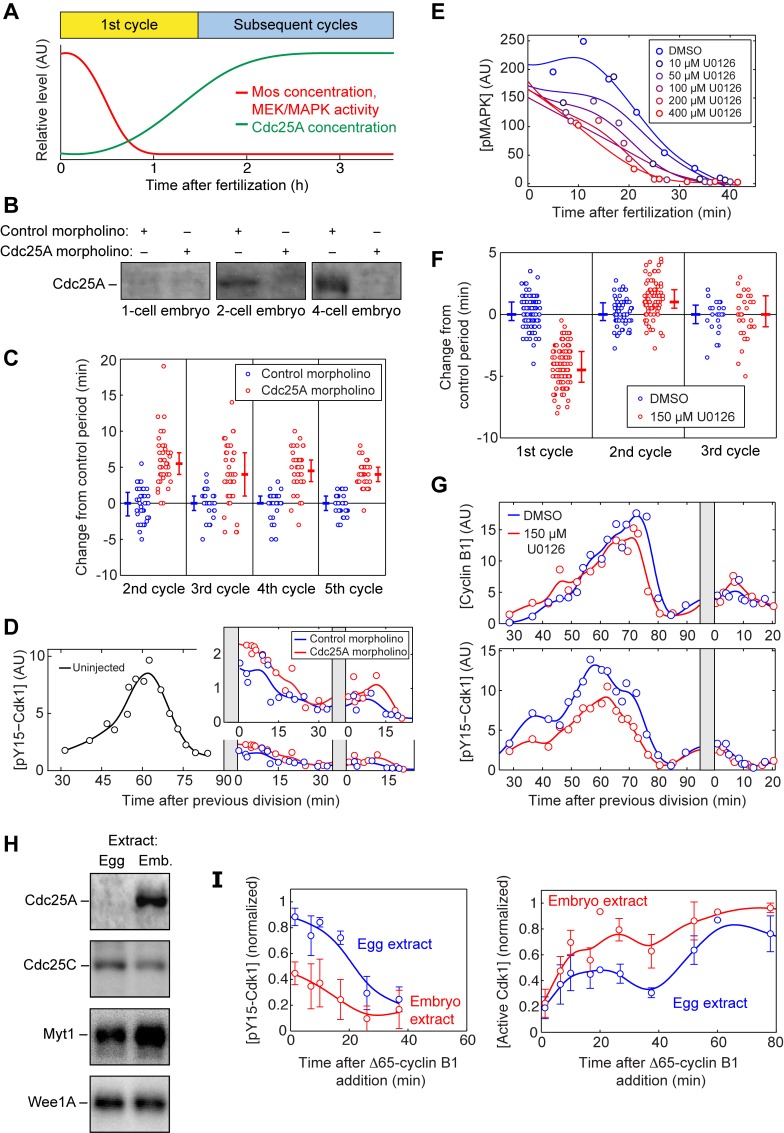
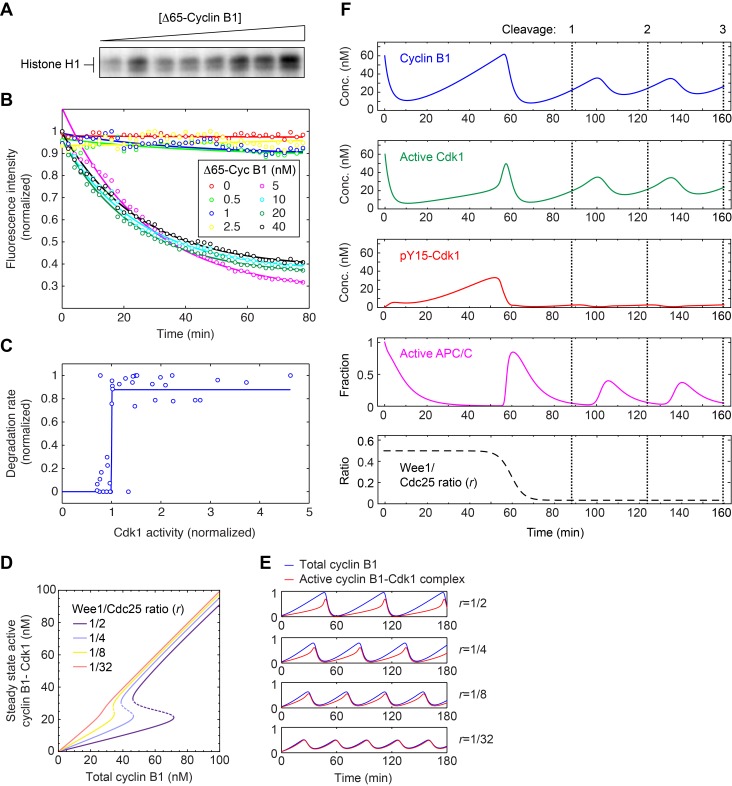
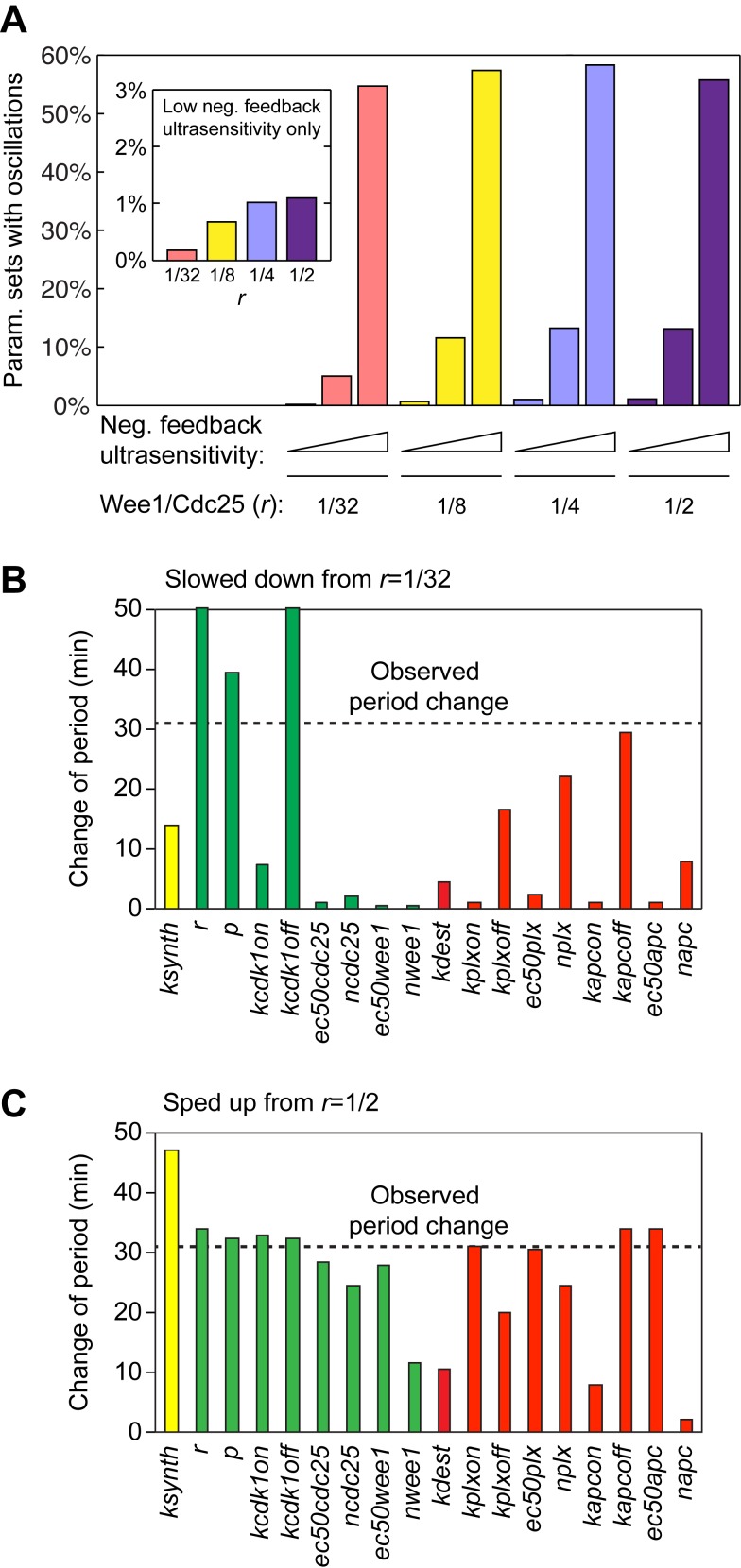
During the early development of Xenopus laevis embryos, the first mitotic cell cycle is long (∼85 min) and the subsequent 11 cycles are short (∼30 min) and clock-like. Here we address the question of how the Cdk1 cell cycle oscillator changes between these two modes of operation. We found that the change can be attributed to an alteration in the balance between Wee1/Myt1 and Cdc25. The change in balance converts a circuit that acts like a positive-plus-negative feedback oscillator, with spikes of Cdk1 activation, to one that acts like a negative-feedback-only oscillator, with a shorter period and smoothly varying Cdk1 activity. Shortening the first cycle, by treating embryos with the Wee1A/Myt1 inhibitor PD0166285, resulted in a dramatic reduction in embryo viability, and restoring the length of the first cycle in inhibitor-treated embryos with low doses of cycloheximide partially rescued viability. Computations with an experimentally parameterized mathematical model show that modest changes in the Wee1/Cdc25 ratio can account for the observed qualitative changes in the cell cycle. The high ratio in the first cycle allows the period to be long and tunable, and decreasing the ratio in the subsequent cycles allows the oscillator to run at a maximal speed. Thus, the embryo rewires its feedback regulation to meet two different developmental requirements during early development.
在非洲爪蟾胚胎的早期发育过程中,第一个有丝分裂细胞周期较长(约 85 分钟),随后的 11 个周期较短(约 30 分钟)且呈时钟状。在这里,我们探讨了 Cdk1 细胞周期振荡器在这两种工作模式之间如何发生变化。我们发现,这种变化可归因于 Wee1/Myt1 和 Cdc25 之间平衡的改变。平衡的改变将一个类似于正反馈加负反馈振荡器的电路转换为一个仅具有负反馈的振荡器,其具有较短的周期和平滑变化的 Cdk1 活性。通过用 Wee1A/Myt1 抑制剂 PD0166285 处理胚胎来缩短第一个周期,导致胚胎活力显著降低,而用低剂量环己酰亚胺将抑制剂处理的胚胎中的第一个周期的长度恢复到正常水平,部分挽救了胚胎的活力。用经过实验参数化的数学模型进行计算表明,Wee1/Cdc25 比值的适度变化可以解释细胞周期中观察到的定性变化。第一个周期中较高的比值允许周期变得较长且可调,随后降低比值允许振荡器以最大速度运行。因此,胚胎在早期发育过程中重新调整其反馈调节以满足两个不同的发育要求。