Department of Life Sciences, Ben-Gurion University of the Negev Beer Sheva, Israel ; National Institute for Biotechnology in the Negev, Ben-Gurion University of the Negev Beer Sheva, Israel.
Front Microbiol. 2014 Jan 29;5:9. doi: 10.3389/fmicb.2014.00009. eCollection 2014.
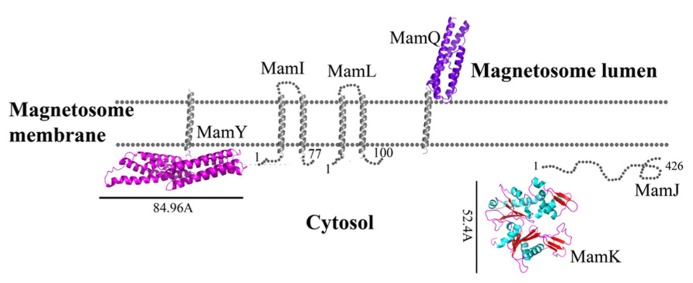
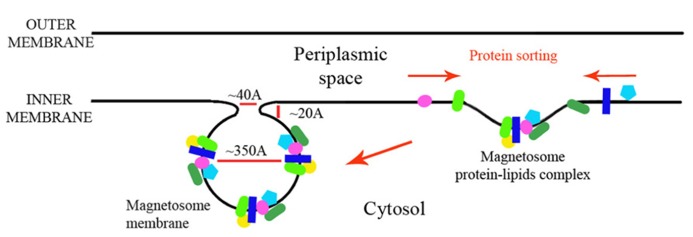
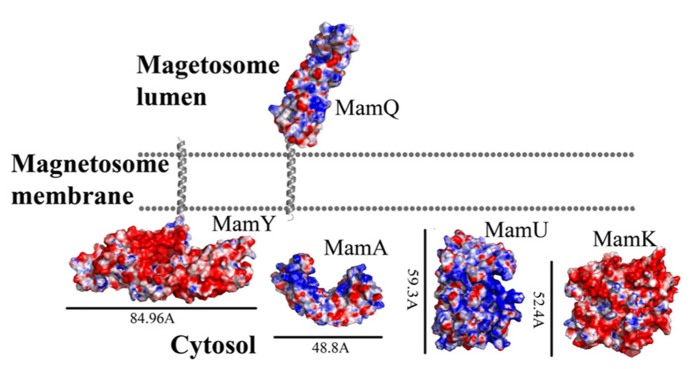
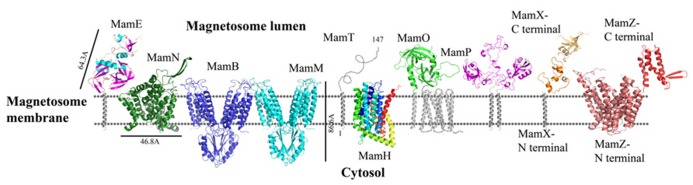
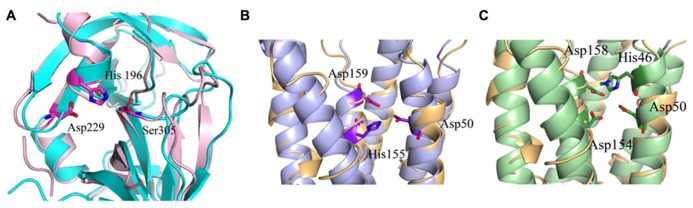
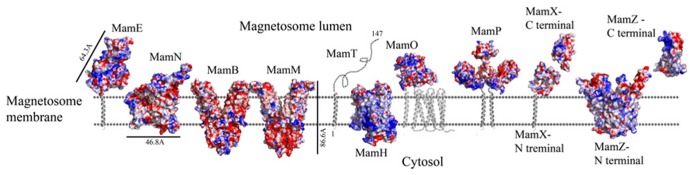
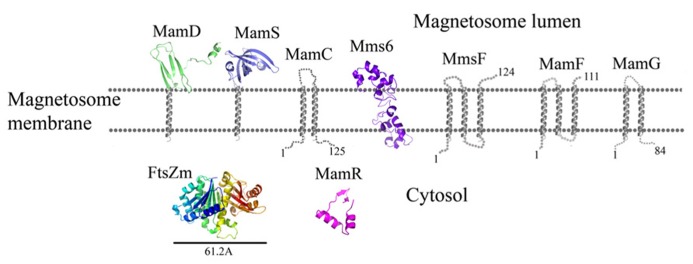
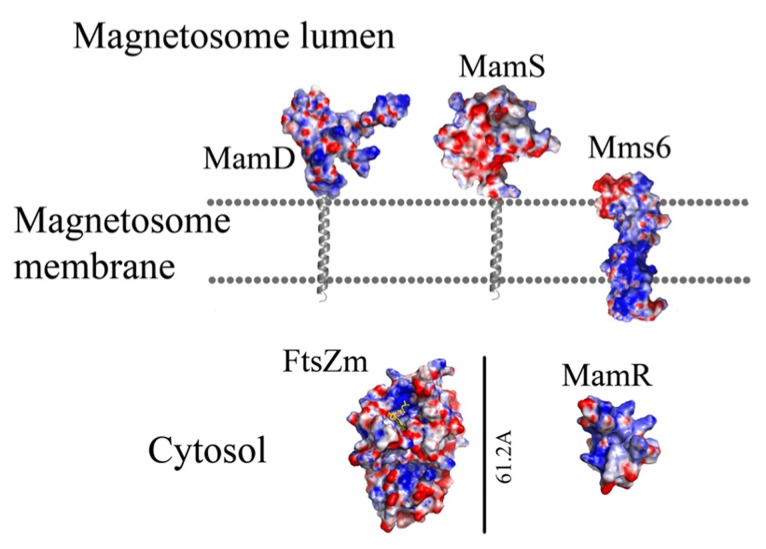
Magnetotactic bacteria (MTB) are Gram-negative bacteria that can navigate along geomagnetic fields. This ability is a result of a unique intracellular organelle, the magnetosome. These organelles are composed of membrane-enclosed magnetite (Fe3O4) or greigite (Fe3S4) crystals ordered into chains along the cell. Magnetosome formation, assembly, and magnetic nano-crystal biomineralization are controlled by magnetosome-associated proteins (MAPs). Most MAP-encoding genes are located in a conserved genomic region - the magnetosome island (MAI). The MAI appears to be conserved in all MTB that were analyzed so far, although the MAI size and organization differs between species. It was shown that MAI deletion leads to a non-magnetic phenotype, further highlighting its important role in magnetosome formation. Today, about 28 proteins are known to be involved in magnetosome formation, but the structures and functions of most MAPs are unknown. To reveal the structure-function relationship of MAPs we used bioinformatics tools in order to build homology models as a way to understand their possible role in magnetosome formation. Here we present a predicted 3D structural models' overview for all known Magnetospirillum gryphiswaldense strain MSR-1 MAPs.
趋磁细菌(MTB)是能够沿着地磁场导航的革兰氏阴性细菌。这种能力是一种独特的细胞内细胞器——磁小体的结果。这些细胞器由膜包裹的磁铁矿(Fe3O4)或陨铁矿(Fe3S4)晶体组成,沿着细胞排列成链。磁小体的形成、组装和磁性纳米晶体生物矿化由磁小体相关蛋白(MAPs)控制。大多数 MAP 编码基因位于一个保守的基因组区域——磁小体岛(MAI)。到目前为止,分析的所有趋磁细菌似乎都保守了 MAI,尽管种间 MAI 的大小和组织有所不同。研究表明,MAI 缺失会导致非磁性表型,进一步强调了其在磁小体形成中的重要作用。如今,已知约有 28 种蛋白质参与磁小体的形成,但大多数 MAP 的结构和功能尚不清楚。为了揭示 MAP 的结构-功能关系,我们使用了生物信息学工具来构建同源模型,以了解它们在磁小体形成中的可能作用。在这里,我们展示了所有已知的嗜甲基螺旋菌(Magnetospirillum gryphiswaldense)菌株 MSR-1 MAP 的预测 3D 结构模型概述。