Bellasio Chandra, Fini Alessio, Ferrini Francesco
Department of Animal and Plant Sciences, University of Sheffield, Sheffield, United Kingdom ; Department of Plant Sciences, University of Cambridge, Cambridge, United Kingdom.
Department of Agri-Food Production and Environmental Sciences - section Woody Plants, University of Florence, Sesto Fiorentino (Florence), Italy.
PLoS One. 2014 Feb 11;9(2):e86645. doi: 10.1371/journal.pone.0086645. eCollection 2014.
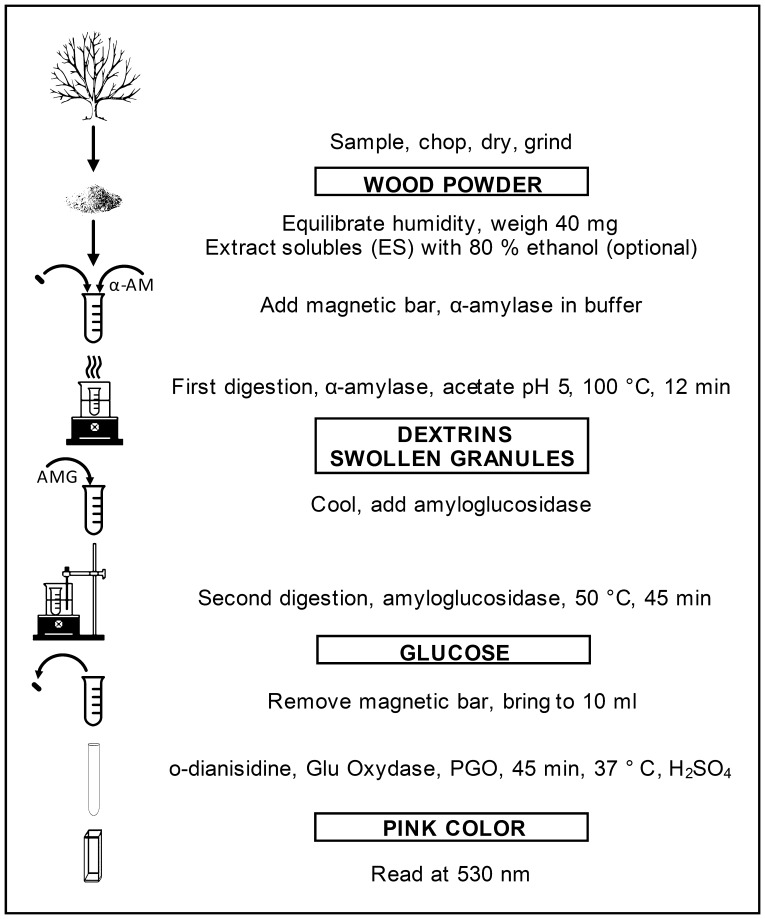
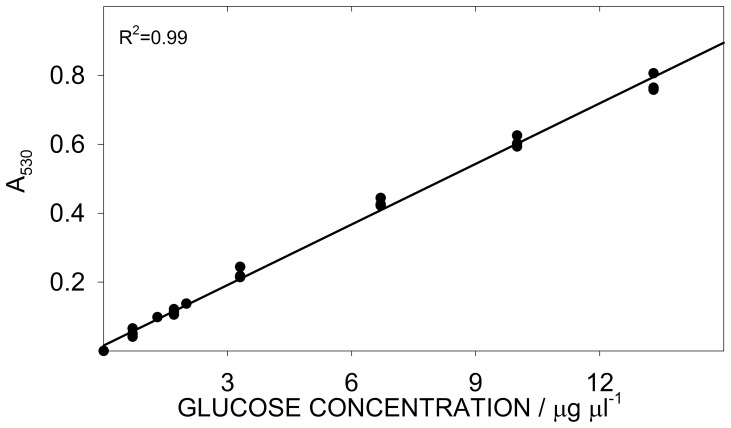
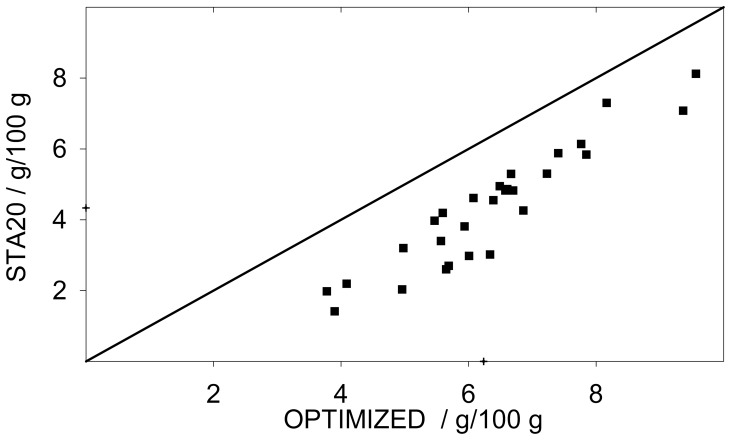
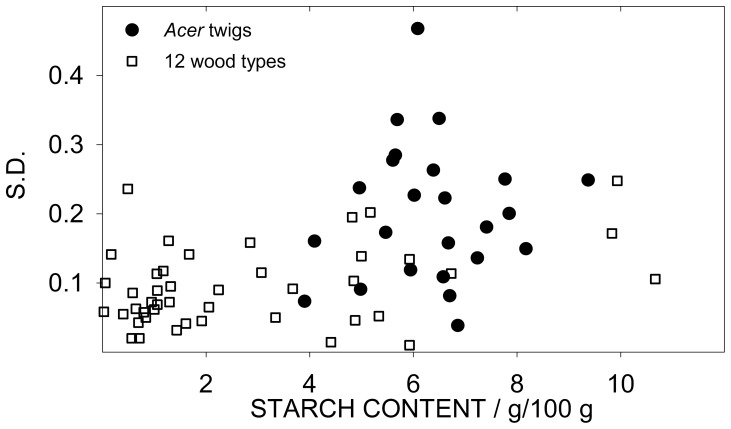
Starch is the most important long-term reserve in trees, and the analysis of starch is therefore useful source of physiological information. Currently published protocols for wood starch analysis impose several limitations, such as long procedures and a neutralization step. The high-throughput standard protocols for starch analysis in food and feed represent a valuable alternative. However, they have not been optimised or tested with woody samples. These have particular chemical and structural characteristics, including the presence of interfering secondary metabolites, low reactivity of starch, and low starch content. In this study, a standard method for starch analysis used for food and feed (AOAC standard method 996.11) was optimised to improve precision and accuracy for the analysis of starch in wood. Key modifications were introduced in the digestion conditions and in the glucose assay. The optimised protocol was then evaluated through 430 starch analyses of standards at known starch content, matrix polysaccharides, and wood collected from three organs (roots, twigs, mature wood) of four species (coniferous and flowering plants). The optimised protocol proved to be remarkably precise and accurate (3%), suitable for a high throughput routine analysis (35 samples a day) of specimens with a starch content between 40 mg and 21 µg. Samples may include lignified organs of coniferous and flowering plants and non-lignified organs, such as leaves, fruits and rhizomes.
淀粉是树木中最重要的长期储备物质,因此淀粉分析是获取生理信息的有用来源。目前已发表的木材淀粉分析方法存在一些局限性,如步骤繁琐且需要中和步骤。食品和饲料中淀粉分析的高通量标准方法是一种有价值的替代方法。然而,这些方法尚未针对木质样本进行优化或测试。木质样本具有特殊的化学和结构特征,包括存在干扰性次生代谢物、淀粉反应性低以及淀粉含量低。在本研究中,对用于食品和饲料的淀粉分析标准方法(AOAC标准方法996.11)进行了优化,以提高木材中淀粉分析的精密度和准确性。在消化条件和葡萄糖测定中引入了关键修改。然后通过对已知淀粉含量的标准品、基质多糖以及从四种植物(针叶树和开花植物)的三个器官(根、嫩枝、成熟木材)采集的木材进行430次淀粉分析,对优化后的方法进行了评估。优化后的方法被证明具有极高的精密度和准确性(3%),适用于对淀粉含量在40毫克至21微克之间的样本进行高通量常规分析(每天35个样本)。样本可能包括针叶树和开花植物的木质化器官以及非木质化器官,如叶子、果实和根茎。