Joe Yun Haeng, Yoon Ki Young, Hwang Jungho
School of Mechanical Engineering, Yonsei University, Seoul, Republic of Korea.
Exhaust Emission Engineering Team, Hyundai Motor Company, Hwaseong, Republic of Korea.
PLoS One. 2014 Feb 11;9(2):e88514. doi: 10.1371/journal.pone.0088514. eCollection 2014.
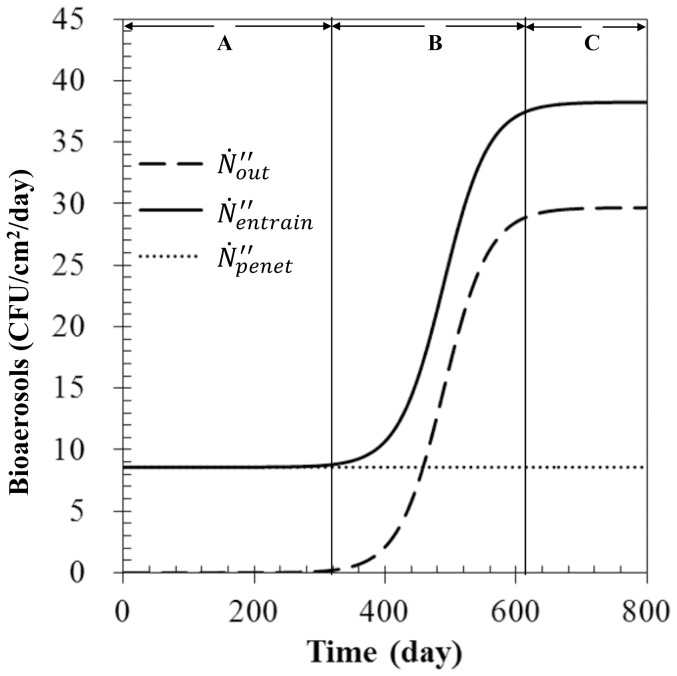
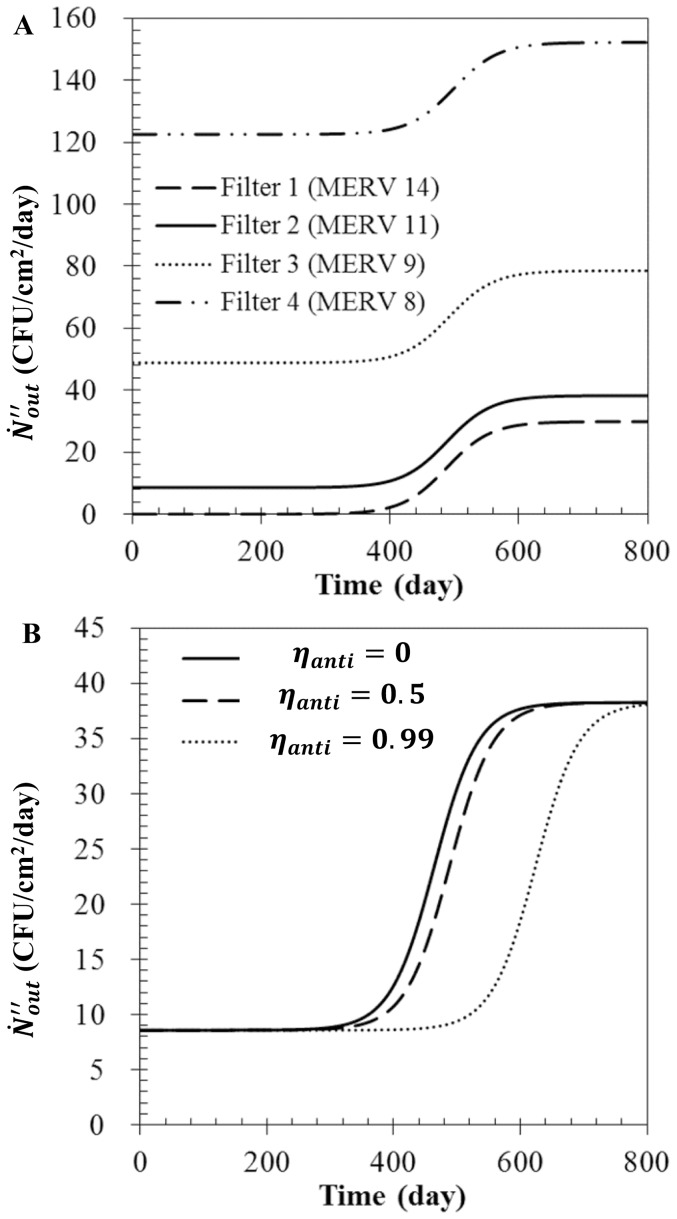
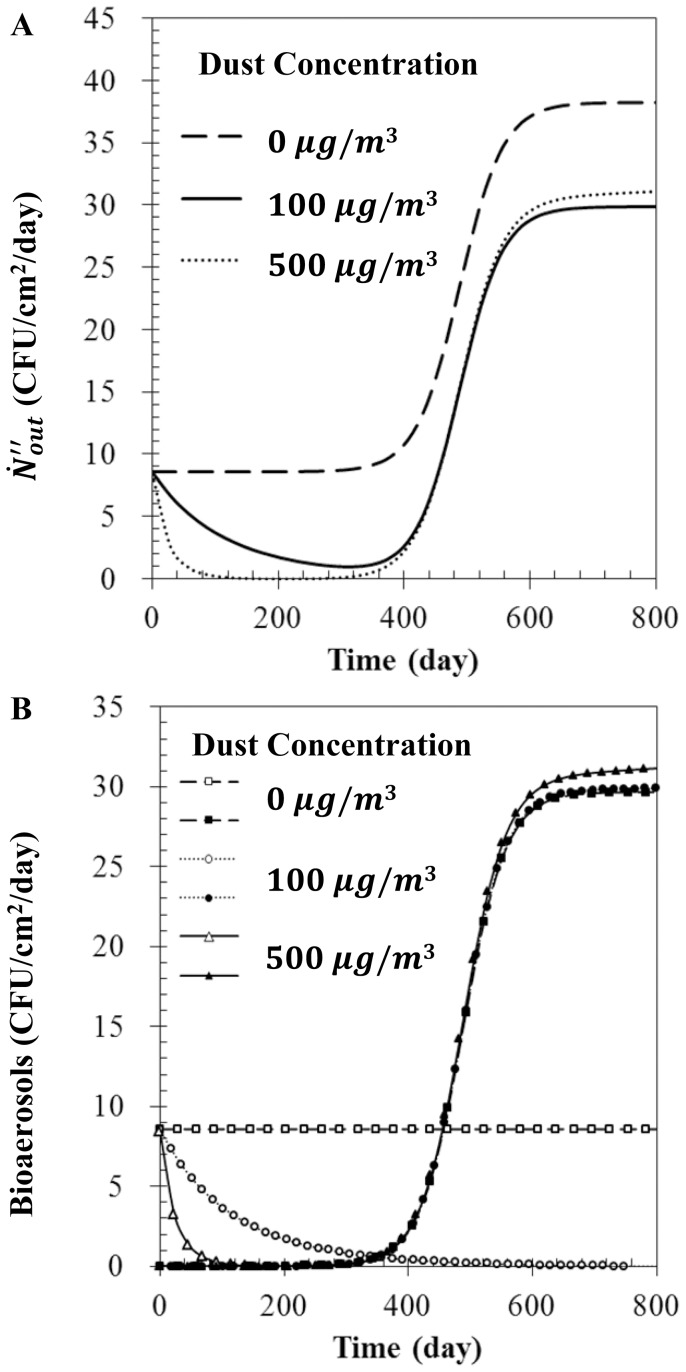
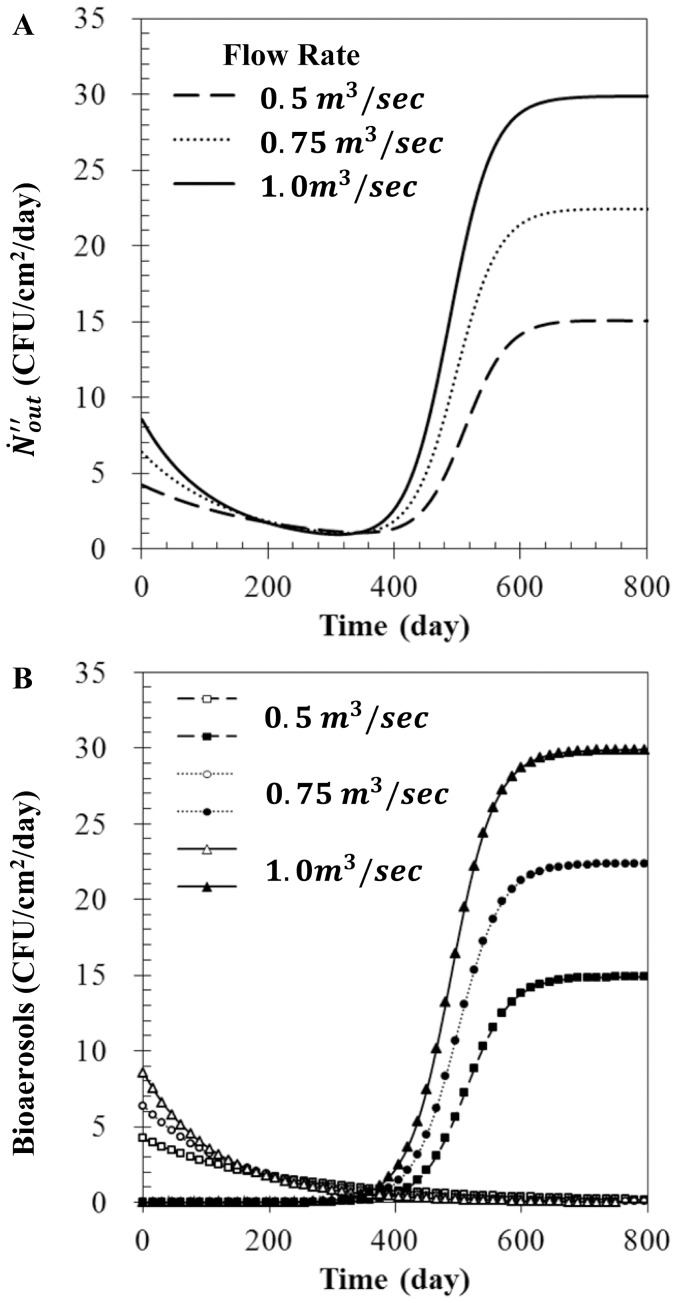
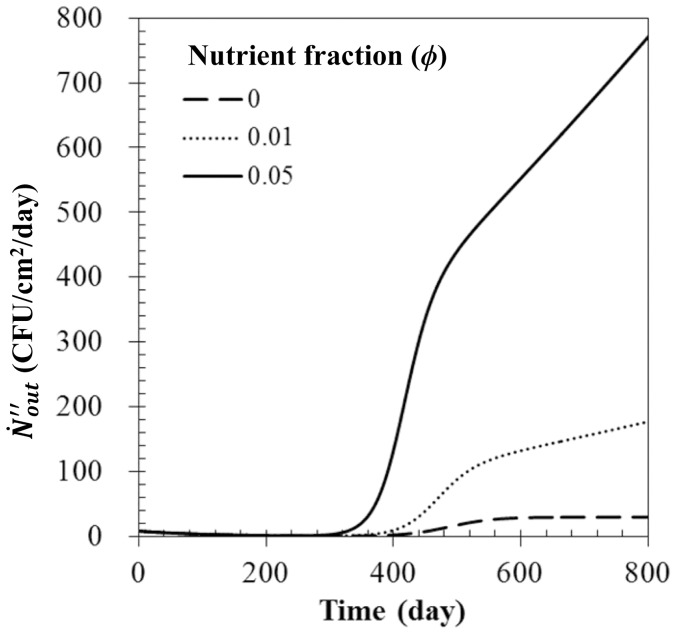
In this paper, we propose a theoretical model to simulate microbial growth on contaminated air filters and entrainment of bioaerosols from the filters to an indoor environment. Air filter filtration and antimicrobial efficiencies, and effects of dust particles on these efficiencies, were evaluated. The number of bioaerosols downstream of the filter could be characterized according to three phases: initial, transitional, and stationary. In the initial phase, the number was determined by filtration efficiency, the concentration of dust particles entering the filter, and the flow rate. During the transitional phase, the number of bioaerosols gradually increased up to the stationary phase, at which point no further increase was observed. The antimicrobial efficiency and flow rate were the dominant parameters affecting the number of bioaerosols downstream of the filter in the transitional and stationary phase, respectively. It was found that the nutrient fraction of dust particles entering the filter caused a significant change in the number of bioaerosols in both the transitional and stationary phases. The proposed model would be a solution for predicting the air filter life cycle in terms of microbiological activity by simulating the microbial contamination of the filter.
在本文中,我们提出了一个理论模型,用于模拟污染空气过滤器上的微生物生长以及生物气溶胶从过滤器夹带至室内环境的过程。评估了空气过滤器的过滤效率和抗菌效率,以及灰尘颗粒对这些效率的影响。过滤器下游的生物气溶胶数量可根据三个阶段进行表征:初始阶段、过渡阶段和稳定阶段。在初始阶段,数量由过滤效率、进入过滤器的灰尘颗粒浓度和流速决定。在过渡阶段,生物气溶胶数量逐渐增加直至稳定阶段,此时不再观察到进一步增加。抗菌效率和流速分别是影响过渡阶段和稳定阶段过滤器下游生物气溶胶数量的主要参数。研究发现,进入过滤器的灰尘颗粒的营养成分在过渡阶段和稳定阶段均导致生物气溶胶数量发生显著变化。通过模拟过滤器的微生物污染,所提出的模型将成为预测空气过滤器微生物活性生命周期的一种解决方案。