Thiraphatthanavong Paphaphat, Wattanathorn Jintanaporn, Muchimapura Supaporn, Wipawee Thukham-mee, Wannanon Panakaporn, Terdthai Tong-un, Suriharn Bhalang, Lertrat Kamol
Department of Physiology and Graduate School (Neuroscience Program), Faculty of Medicine, Khon Kaen University, Khon Kaen 40002, Thailand ; Integrative Complementary Alternative Medicine Research and Development Center, Khon Kaen University, Khon Kaen 40002, Thailand.
Integrative Complementary Alternative Medicine Research and Development Center, Khon Kaen University, Khon Kaen 40002, Thailand ; Department of Physiology, Faculty of Medicine, Khon Kaen University, Khon Kaen 40002, Thailand.
Biomed Res Int. 2014;2014:507435. doi: 10.1155/2014/507435. Epub 2014 Jan 16.
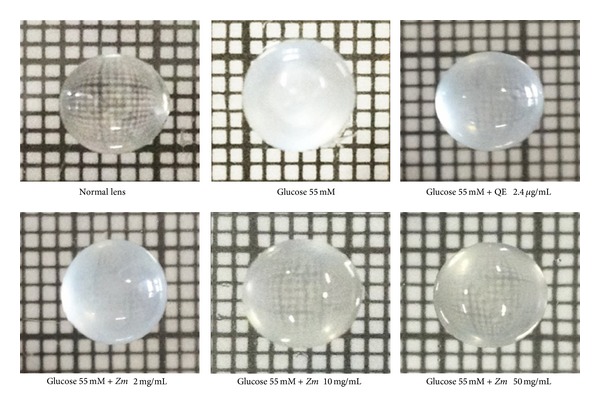
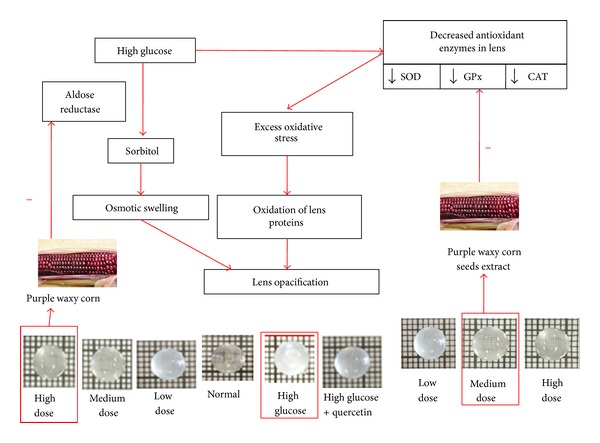
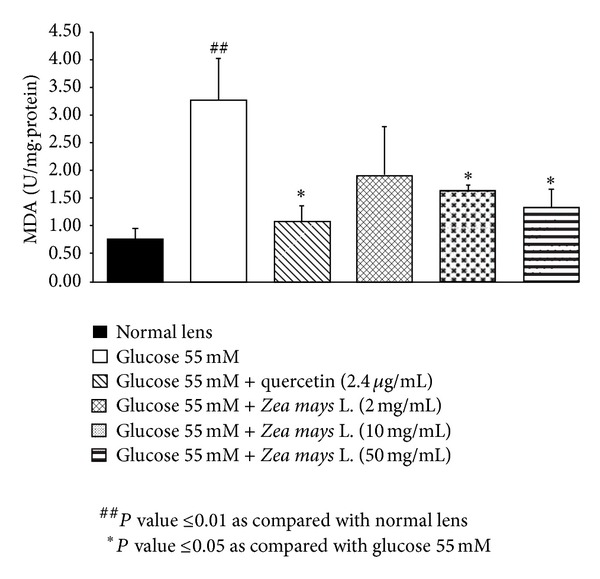
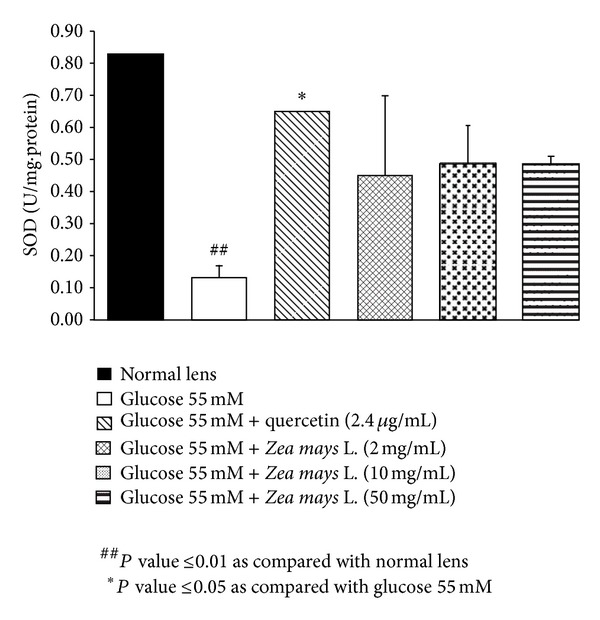
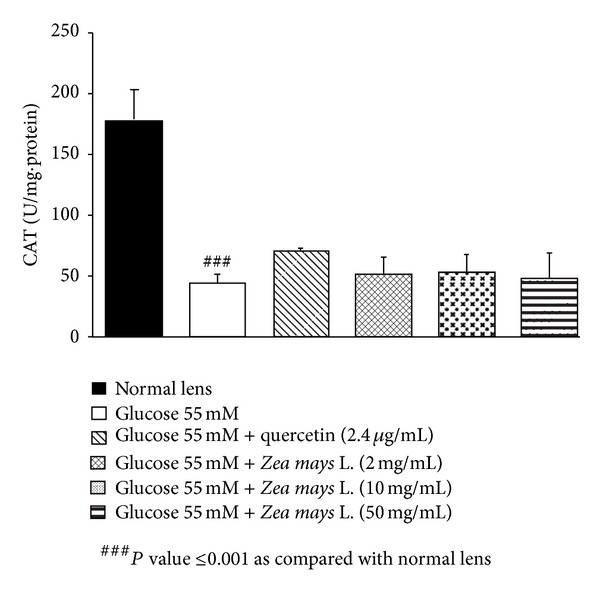
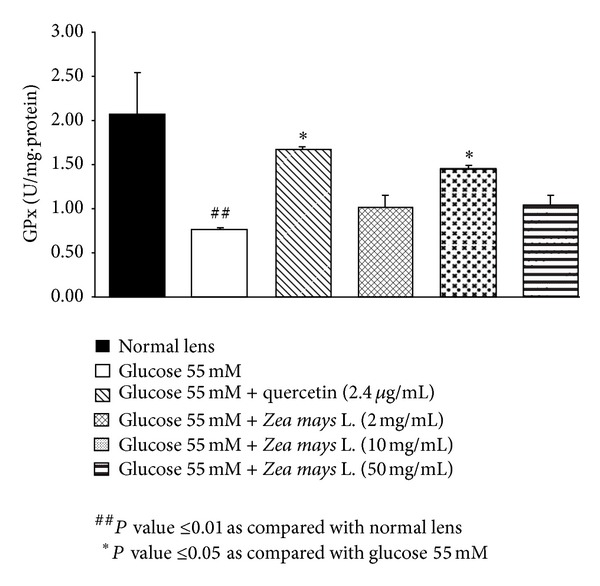
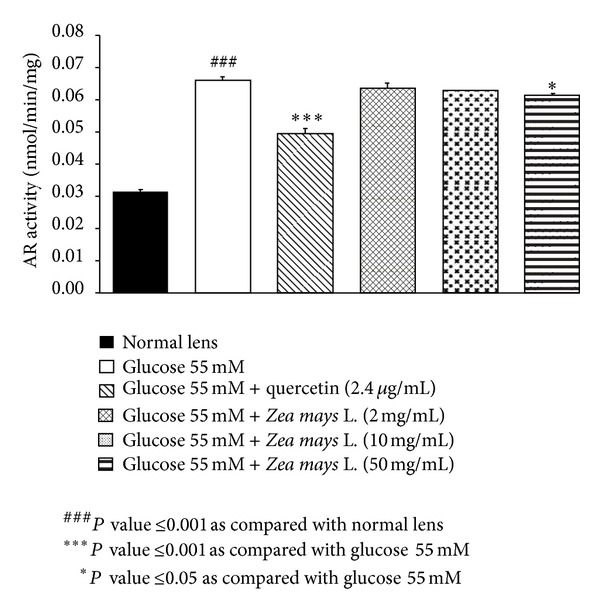
Recently, substances possessing antioxidant can prevent cataractogenesis of diabetic cataract. Therefore, this study was carried out to determine the anticataract effect of Zea mays L. (purple waxy corn), a flavonoids rich plant, in experimental diabetic cataract. Enucleated rat lenses were incubated in artificial aqueous humor containing 55 mM glucose with various concentrations of Zea mays L. (purple waxy corn) ranging between 2, 10, and 50 mg/mL at room temperature for 72 h. At the end of the incubation period, the evaluation of lens opacification, MDA level, and the activities of SOD, CAT, GPx, and AR in lens were performed. The results showed that both medium and high doses of extract decreased lens opacity together with the decreased MDA level. In addition, medium dose of extract increased GPx activity while the high dose decreased AR activity. No other significant changes were observed. The purple waxy corn seeds extract is the potential candidate to protect against diabetic cataract. The mechanism of action may occur via the decreased oxidative stress and the suppression of AR. However, further research in vivo is still essential.
最近,具有抗氧化作用的物质可以预防糖尿病性白内障的发生。因此,本研究旨在确定富含黄酮类化合物的植物——玉米(紫糯玉米)在实验性糖尿病性白内障中的抗白内障作用。将摘除的大鼠晶状体在含有55 mM葡萄糖和浓度分别为2、10和50 mg/mL的不同浓度紫糯玉米的人工房水中于室温孵育72小时。孵育期结束时,对晶状体的浑浊度、丙二醛(MDA)水平以及晶状体中超氧化物歧化酶(SOD)、过氧化氢酶(CAT)、谷胱甘肽过氧化物酶(GPx)和醛糖还原酶(AR)的活性进行评估。结果表明,中剂量和高剂量提取物均降低了晶状体浑浊度以及MDA水平。此外,中剂量提取物增加了GPx活性,而高剂量降低了AR活性。未观察到其他显著变化。紫糯玉米种子提取物是预防糖尿病性白内障的潜在候选物。其作用机制可能是通过降低氧化应激和抑制AR来实现的。然而,仍有必要进行进一步的体内研究。