Iyer Shrivats Mohan, Montgomery Kate L, Towne Chris, Lee Soo Yeun, Ramakrishnan Charu, Deisseroth Karl, Delp Scott L
1] Department of Bioengineering, Stanford University, Stanford, California, USA. [2].
Department of Bioengineering, Stanford University, Stanford, California, USA.
Nat Biotechnol. 2014 Mar;32(3):274-8. doi: 10.1038/nbt.2834. Epub 2014 Feb 16.
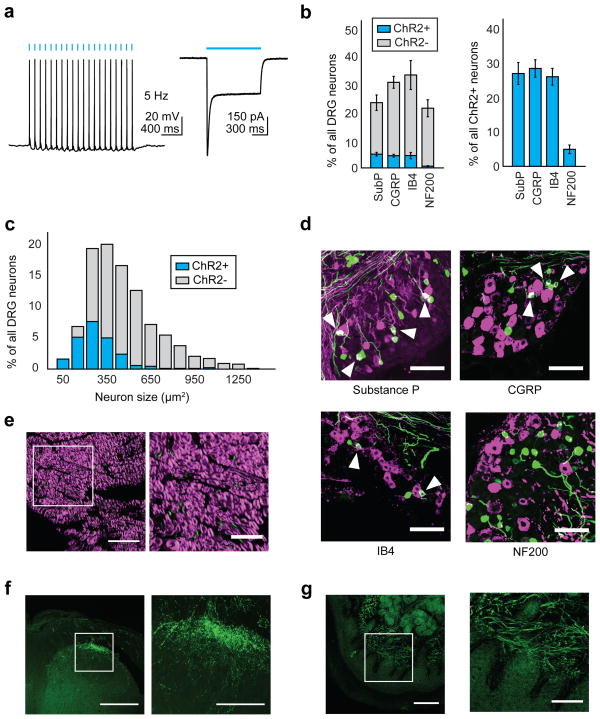
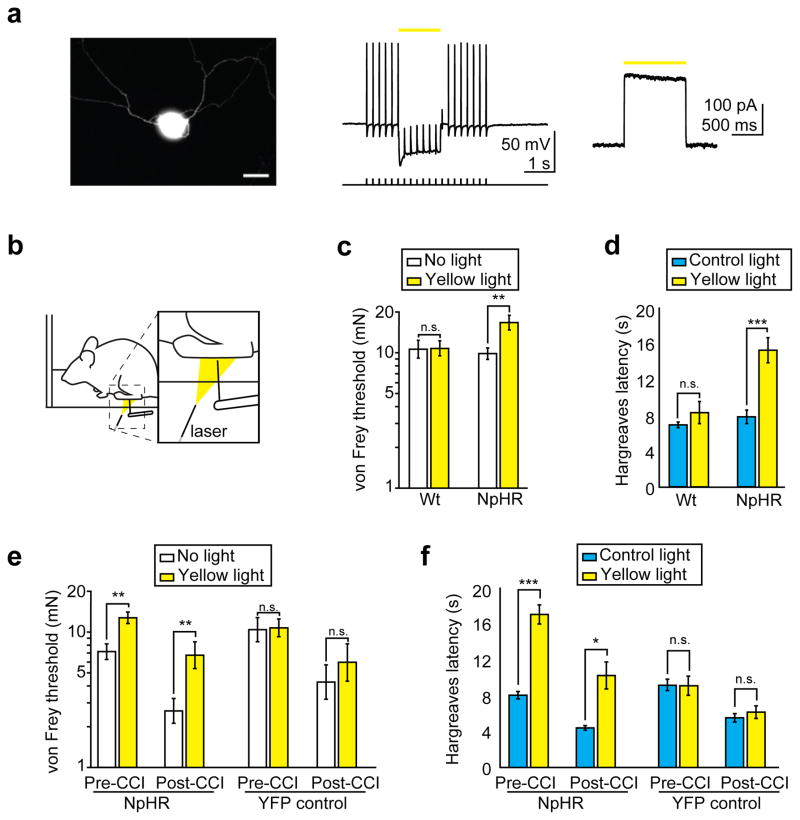
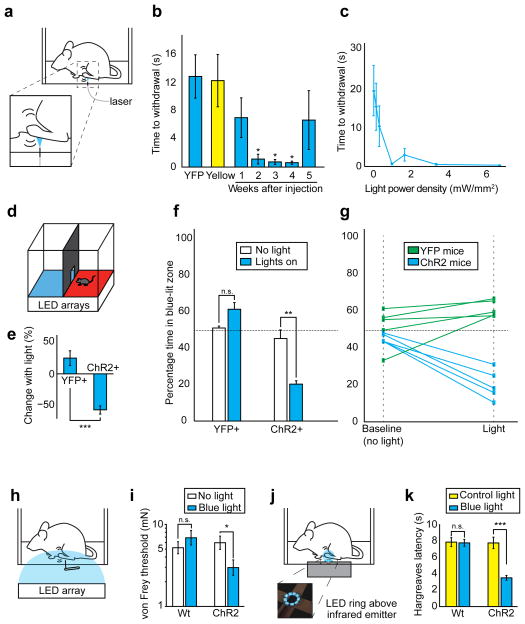
Primary nociceptors are the first neurons involved in the complex processing system that regulates normal and pathological pain. Because of constraints on pharmacological and electrical stimulation, noninvasive excitation and inhibition of these neurons in freely moving nontransgenic animals has not been possible. Here we use an optogenetic strategy to bidirectionally control nociceptors of nontransgenic mice. Intrasciatic nerve injection of adeno-associated viruses encoding an excitatory opsin enabled light-inducible stimulation of acute pain, place aversion and optogenetically mediated reductions in withdrawal thresholds to mechanical and thermal stimuli. In contrast, viral delivery of an inhibitory opsin enabled light-inducible inhibition of acute pain perception, and reversed mechanical allodynia and thermal hyperalgesia in a model of neuropathic pain. Light was delivered transdermally, allowing these behaviors to be induced in freely moving animals. This approach may have utility in basic and translational pain research, and enable rapid drug screening and testing of newly engineered opsins.
初级伤害感受器是参与调节正常和病理性疼痛的复杂处理系统的首批神经元。由于药理学和电刺激方面的限制,在自由活动的非转基因动物中对这些神经元进行非侵入性兴奋和抑制一直无法实现。在此,我们采用光遗传学策略对非转基因小鼠的伤害感受器进行双向控制。向坐骨神经内注射编码兴奋性视蛋白的腺相关病毒,能够实现光诱导的急性疼痛刺激、位置厌恶以及光遗传学介导的对机械和热刺激的撤阈值降低。相反,病毒递送抑制性视蛋白能够实现光诱导的急性疼痛感知抑制,并在神经性疼痛模型中逆转机械性异常性疼痛和热痛觉过敏。通过经皮递送光,可在自由活动的动物中诱导出这些行为。这种方法可能在基础和转化性疼痛研究中具有实用价值,并能够实现快速药物筛选以及对新设计视蛋白的测试。