Wojewoda Marta, Kmiecik Katarzyna, Ventura-Clapier Renée, Fortin Dominique, Onopiuk Marta, Jakubczyk Justyna, Sitek Barbara, Fedorowicz Andrzej, Majerczak Joanna, Kaminski Karol, Chlopicki Stefan, Zoladz Jerzy Andrzej
Jagiellonian Centre for Experimental Therapeutics (JCET), Jagiellonian University, Krakow, Poland.
U-769, INSERM, Université Paris-Sud, Châtenay-Malabry, France.
PLoS One. 2014 Feb 12;9(2):e88333. doi: 10.1371/journal.pone.0088333. eCollection 2014.
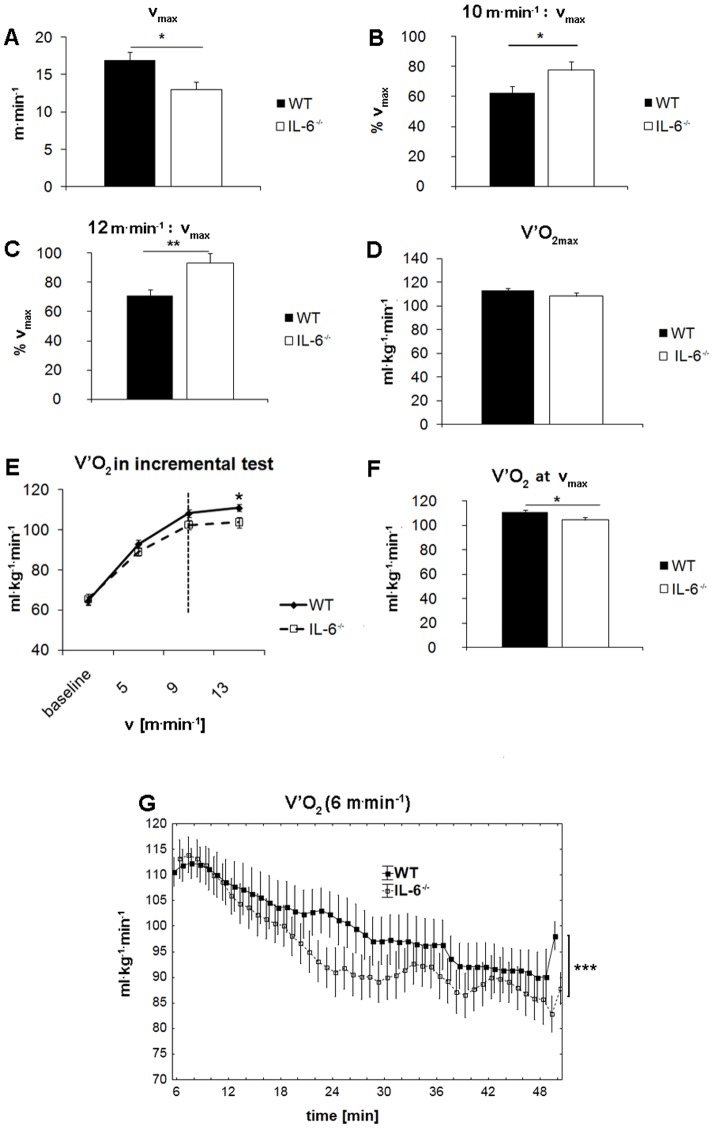
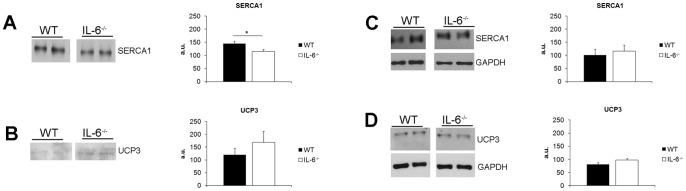
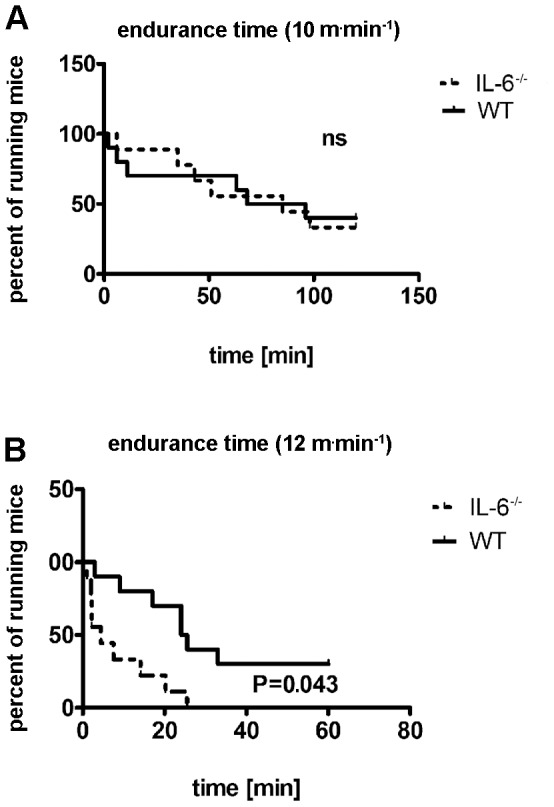
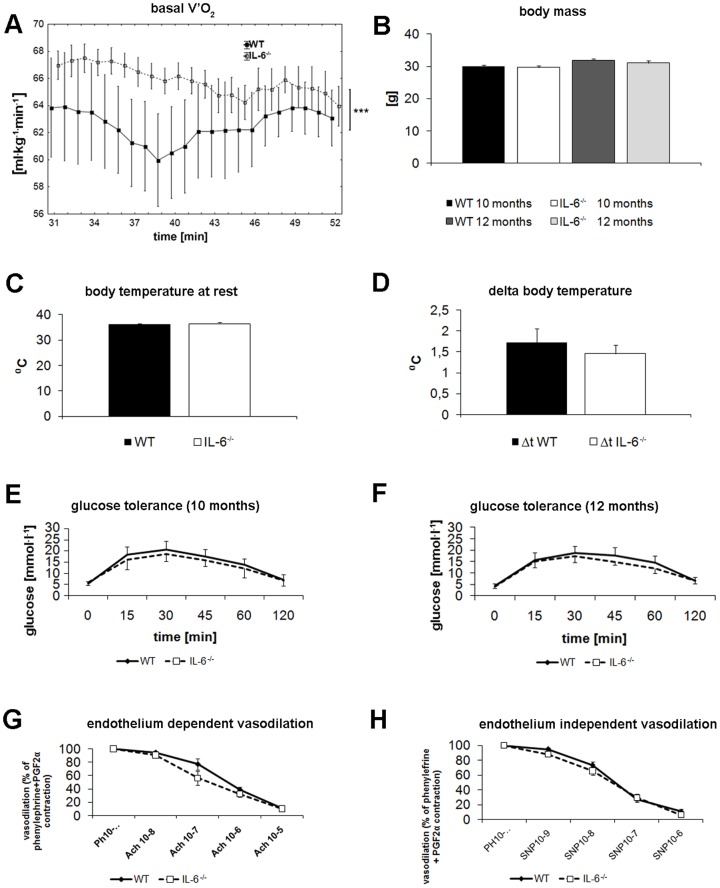
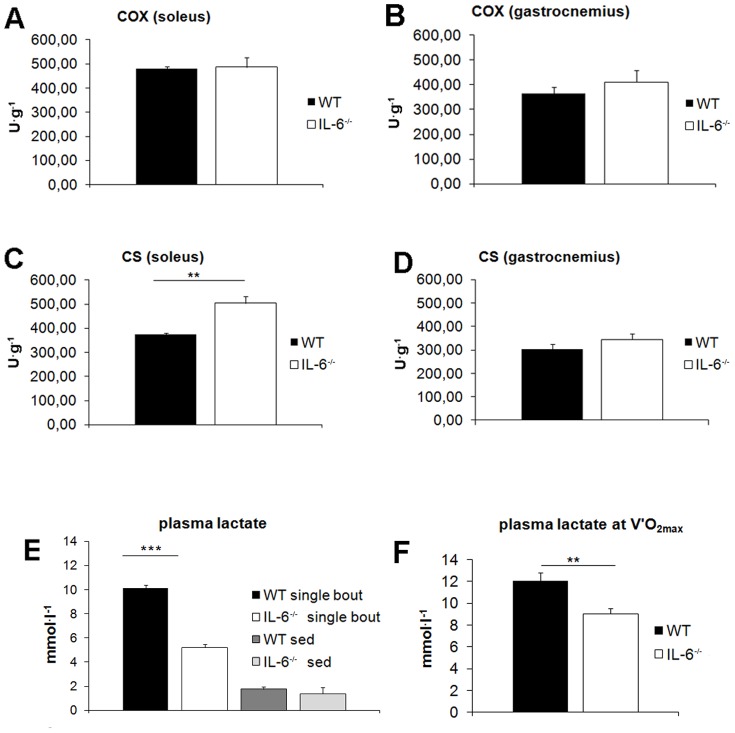
It has been reported that IL-6 knockout mice (IL-6⁻/⁻) possess lower endurance capacity than wild type mice (WT), however the underlying mechanism is poorly understood. The aim of the present work was to examine whether reduced endurance running capacity in IL-6⁻/⁻ mice is linked to impaired maximal oxygen uptake (V'O(₂max)), decreased glucose tolerance, endothelial dysfunction or other mechanisms. Maximal running velocity during incremental running to exhaustion was significantly lower in IL-6⁻/⁻ mice than in WT mice (13.00±0.97 m·min⁻¹ vs. 16.89±1.15 m·min⁻¹, P<0.02, respectively). Moreover, the time to exhaustion during running at 12 m·min⁻¹ in IL-6⁻/⁻ mice was significantly shorter (P<0.05) than in WT mice. V'O(₂max) in IL-6⁻/⁻ (n = 20) amounting to 108.3±2.8 ml·kg⁻¹·min⁻¹ was similar as in WT mice (n = 22) amounting to 113.0±1.8 ml·kg⁻¹·min⁻¹, (P = 0.16). No difference in maximal COX activity between the IL-6⁻/⁻ and WT mice in m. soleus and m. gastrocnemius was found. Moreover, no impairment of peripheral endothelial function or glucose tolerance was found in IL-6⁻/⁻ mice. Surprisingly, plasma lactate concentration during running at 8 m·min⁻¹ as well at maximal running velocity in IL-6⁻/⁻ mice was significantly lower (P<0.01) than in WT mice. Interestingly, IL-6⁻/⁻ mice displayed important adaptive mechanisms including significantly lower oxygen cost of running at a given speed accompanied by lower expression of sarcoplasmic reticulum Ca²⁺-ATPase and lower plasma lactate concentrations during running at submaximal and maximal running velocities. In conclusion, impaired endurance running capacity in IL-6⁻/⁻ mice could not be explained by reduced V'O(₂max), endothelial dysfunction or impaired muscle oxidative capacity. Therefore, our results indicate that IL-6 cannot be regarded as a major regulator of exercise capacity but rather as a modulator of endurance performance. Furthermore, we identified important compensatory mechanism limiting reduced exercise performance in IL-6⁻/⁻ mice.
据报道,白细胞介素-6基因敲除小鼠(IL-6⁻/⁻)的耐力能力低于野生型小鼠(WT),但其潜在机制尚不清楚。本研究的目的是探讨IL-6⁻/⁻小鼠耐力跑能力下降是否与最大摄氧量(V'O₂max)受损、葡萄糖耐量降低、内皮功能障碍或其他机制有关。IL-6⁻/⁻小鼠在递增跑至 exhaustion 时的最大跑步速度显著低于WT小鼠(分别为13.00±0.97 m·min⁻¹和16.89±1.15 m·min⁻¹,P<0.02)。此外,IL-6⁻/⁻小鼠在12 m·min⁻¹速度下跑步至 exhaustion 的时间显著短于WT小鼠(P<0.05)。IL-6⁻/⁻小鼠(n = 20)的V'O₂max为108.3±2.8 ml·kg⁻¹·min⁻¹,与WT小鼠(n = 22)的113.0±1.8 ml·kg⁻¹·min⁻¹相似(P = 0.16)。在比目鱼肌和腓肠肌中,IL-6⁻/⁻小鼠与WT小鼠的最大COX活性没有差异。此外,未发现IL-6⁻/⁻小鼠存在外周内皮功能或葡萄糖耐量受损。令人惊讶的是,IL-6⁻/⁻小鼠在8 m·min⁻¹速度跑步以及最大跑步速度时的血浆乳酸浓度显著低于WT小鼠(P<0.01)。有趣的是,IL-6⁻/⁻小鼠表现出重要的适应性机制,包括在给定速度下跑步的氧气消耗显著降低,同时肌浆网Ca²⁺-ATP酶表达降低,以及在次最大和最大跑步速度下跑步时血浆乳酸浓度降低。总之,IL-6⁻/⁻小鼠耐力跑能力受损不能用V'O₂max降低、内皮功能障碍或肌肉氧化能力受损来解释。因此,我们的结果表明,IL-6不能被视为运动能力的主要调节因子,而应被视为耐力表现的调节因子。此外,我们确定了限制IL-6⁻/⁻小鼠运动表现降低的重要代偿机制。