Laboratório de Parasitologia Celular e Molecular, Centro de Pesquisas René Rachou - CPqRR/FIOCRUZ, Belo Horizonte 30190-002, Minas Gerais, Brazil.
Departamento de Fisiologia e Biofísica, Instituto de Ciências Biológicas, Universidade Federal de Minas Gerais, Belo Horizonte 31270-901, Minas Gerais, Brazil ; Centre de Recherche en Infectiologie, CHUL, Québec G1V 4G2, QC, Canada.
Int J Parasitol Drugs Drug Resist. 2013 Sep 5;3:143-53. doi: 10.1016/j.ijpddr.2013.08.001. eCollection 2013 Dec.
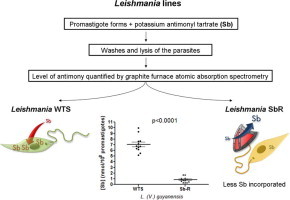
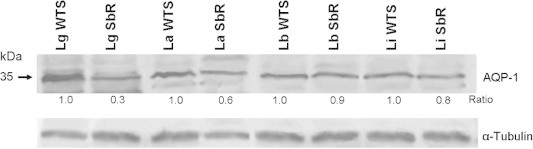
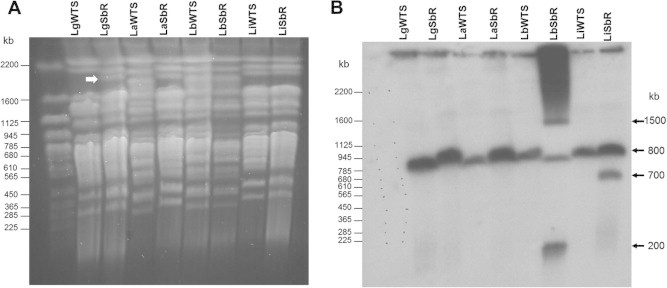
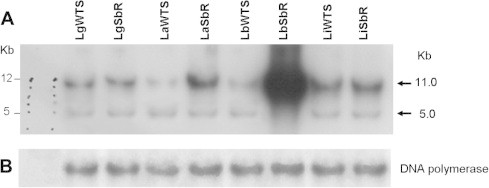
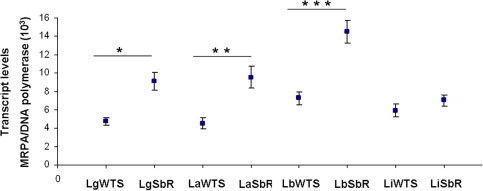
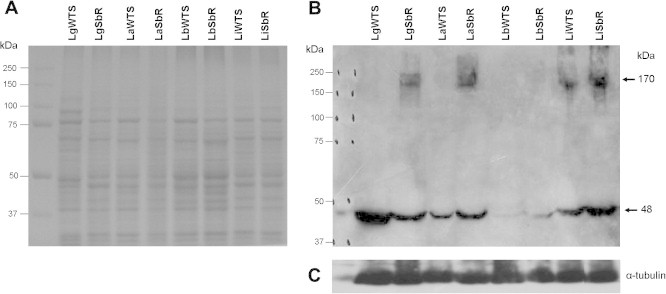
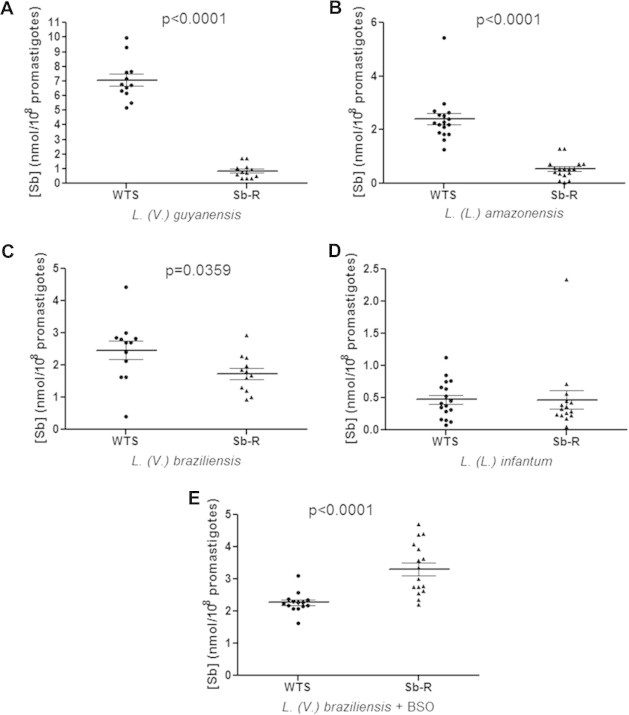
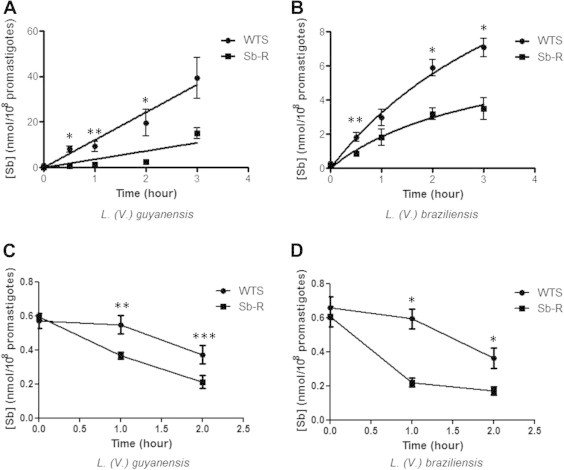
ATP-binding cassette (ABC) transporters have been associated with drug resistance in various diseases. The MRPA gene, a transporter of ABCC subfamily, is involved in the resistance by sequestering metal-thiol conjugates in intracellular vesicles of Leishmania parasite. In this study, we performed the molecular characterization of the MRPA transporter, analysis of P-glycoprotein (Pgp) and aquaglyceroporin-1 (AQP1) expression, and determination of antimony level in antimony-susceptible and -resistant lines of L. (V.) guyanensis, L. (L.) amazonensis, L. (V.) braziliensis and L. (L.) infantum. PFGE analysis revealed an association of chromosomal amplification of MRPA gene with the drug resistance phenotype in all SbIII-resistant Leishmania lines analyzed. Levels of mRNA from MRPA gene determined by real-time quantitative RT-PCR showed an increased expression of two fold in SbIII-resistant lines of Leishmania guyanensis, Leishmania amazonensis and Leishmania braziliensis. Western blot analysis revealed that Pgp is increased in the SbIII-resistant L. guyanensis and L. amazonensis lines. The intracellular level of antimony quantified by graphite furnace atomic absorption spectrometry showed a reduction in the accumulation of this element in SbIII-resistant L. guyanensis, L. amazonensis and L. braziliensis lines when compared to their susceptible counterparts. Interestingly, a down-regulation of AQP1 protein was observed in the SbIII-resistant L. guyanensis and L. amazonensis lines, contributing for decreasing of SbIII entry in these lines. In addition, efflux experiments revealed that the rates of SbIII efflux are higher in the SbIII-resistant lines of L. guyanensis and L. braziliensis, that may explain also the low SbIII concentration within of these parasites. The BSO, an inhibitor of γ-glutamylcysteine synthetase enzyme, reversed the SbIII-resistance phenotype of L. braziliensis and caused an increasing in the Sb intracellular level in the LbSbR line. Our data indicate that the mechanisms of antimony-resistance are different among species of Leishmania analyzed in this study.
三磷酸腺苷结合盒(ABC)转运蛋白与各种疾病的耐药性有关。MRPA 基因是 ABCC 亚家族的转运蛋白,它通过将金属-硫醇缀合物隔离在利什曼原虫寄生虫的细胞内囊泡中来参与耐药性。在这项研究中,我们对 MRPA 转运蛋白进行了分子特征分析,分析了 P-糖蛋白(Pgp)和水通道蛋白 1(AQP1)的表达,并测定了对利什曼原虫敏感和耐药株中锑水平。PFGE 分析显示,MRPA 基因的染色体扩增与所有分析的 SbIII 耐药利什曼原虫株的耐药表型相关。实时定量 RT-PCR 测定的 MRPA 基因的 mRNA 水平显示,利什曼原虫圭亚那株、利什曼原虫亚马逊株和利什曼原虫巴西利什曼原虫的 SbIII 耐药株的表达增加了两倍。Western blot 分析显示,Pgp 在 SbIII 耐药的 L. 圭亚那株和 L. 亚马逊株中增加。石墨炉原子吸收光谱法定量测定的细胞内锑水平显示,与敏感株相比,SbIII 耐药的 L. 圭亚那株、L. 亚马逊株和 L. 巴西利什曼原虫株对该元素的积累减少。有趣的是,在 SbIII 耐药的 L. 圭亚那株和 L. 亚马逊株中观察到 AQP1 蛋白下调,导致这些株中 SbIII 进入减少。此外,流出实验表明,在 SbIII 耐药的 L. 圭亚那株和 L. 巴西利什曼原虫株中,SbIII 流出率较高,这也可能解释了这些寄生虫内 SbIII 浓度较低的原因。BSO,一种γ-谷氨酰半胱氨酸合成酶抑制剂,逆转了 L. 巴西利什曼原虫的 SbIII 耐药表型,并导致 LbSbR 株细胞内 Sb 含量增加。我们的数据表明,在所分析的利什曼原虫种中,锑耐药机制不同。