Gough Sheryl M, Lee Fan, Yang Fan, Walker Robert L, Zhu Yeulin J, Pineda Marbin, Onozawa Masahiro, Chung Yang Jo, Bilke Sven, Wagner Elise K, Denu John M, Ning Yi, Xu Bowen, Wang Gang Greg, Meltzer Paul S, Aplan Peter D
1Genetics Branch, Center for Cancer Research, National Cancer Institute, NIH, Bethesda; 2Department of Pathology, Johns Hopkins University, Baltimore, Maryland; 3Department of Biomolecular Chemistry, University of Wisconsin, Madison, Wisconsin; and 4Lineberger Comprehensive Cancer Center, University of North Carolina at Chapel Hill School of Medicine, Chapel Hill, North Carolina.
Cancer Discov. 2014 May;4(5):564-77. doi: 10.1158/2159-8290.CD-13-0419. Epub 2014 Feb 17.
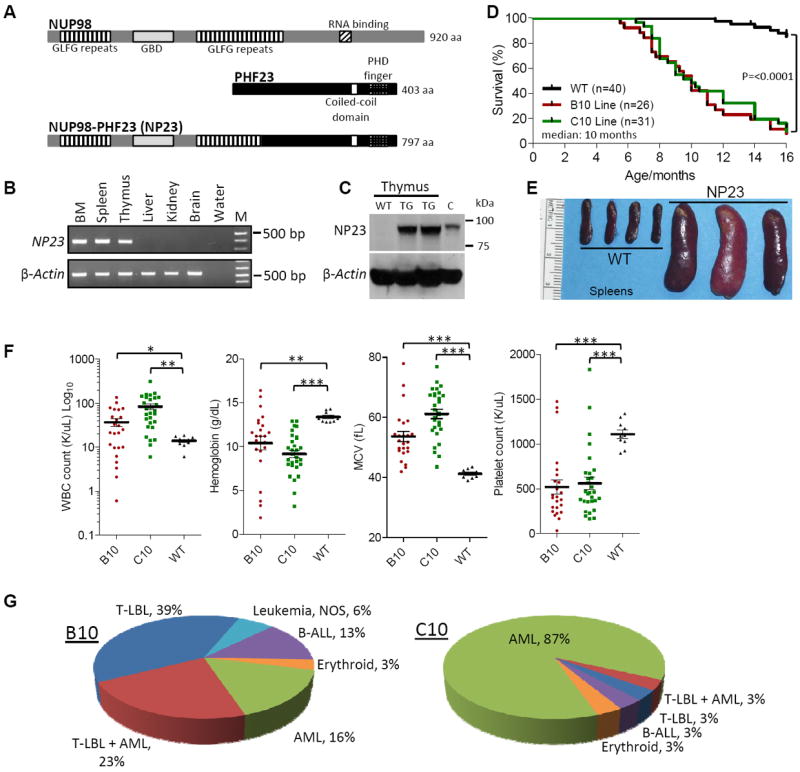
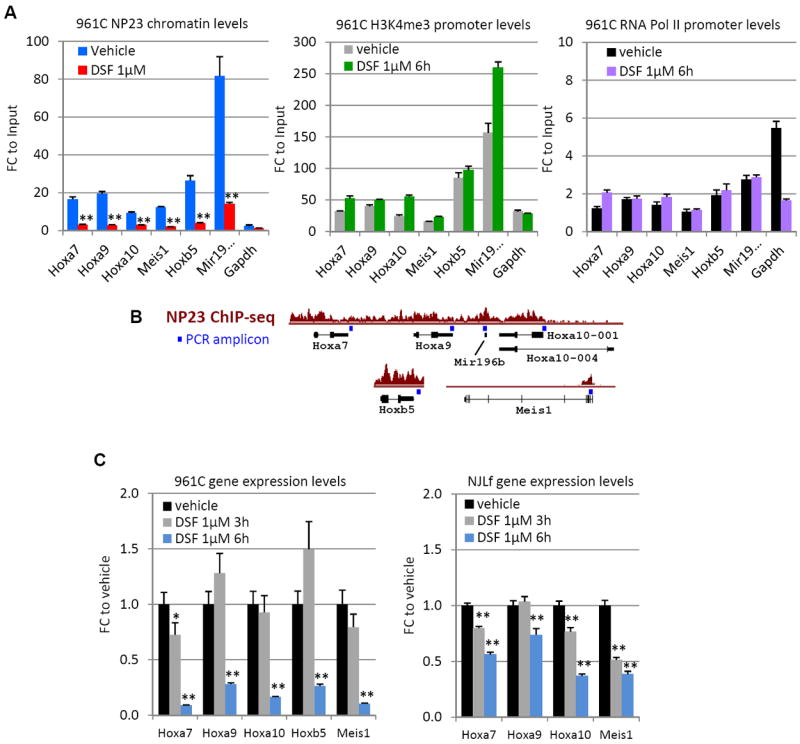
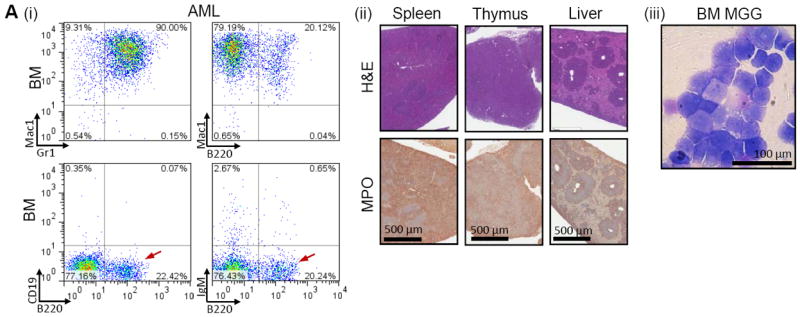
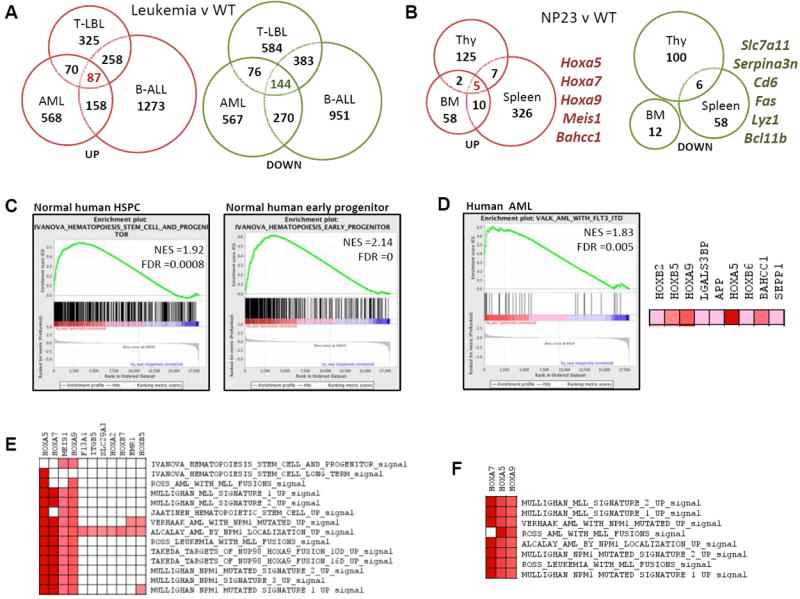
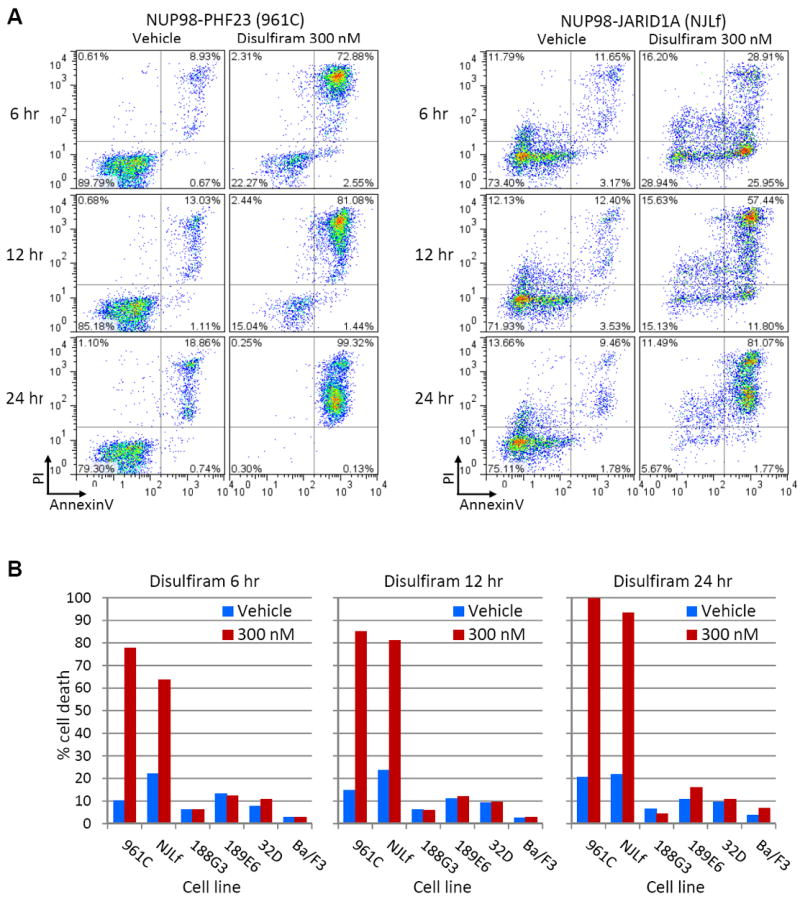
In this report, we show that expression of a NUP98-PHF23 (NP23) fusion, associated with acute myeloid leukemia (AML) in humans, leads to myeloid, erythroid, T-cell, and B-cell leukemia in mice. The leukemic and preleukemic tissues display a stem cell-like expression signature, including Hoxa, Hoxb, and Meis1 genes. The PHF23 plant homeodomain (PHD) motif is known to bind to H3K4me3 residues, and chromatin immunoprecipitation experiments demonstrated that the NP23 protein binds to chromatin at a specific subset of H3K4me3 sites, including at Hoxa, Hoxb, and Meis1. Treatment of NP23 cells with disulfiram, which inhibits the binding of PHD motifs to H3K4me3, rapidly and selectively killed NP23-expressing myeloblasts; cell death was preceded by decreased expression of Hoxa, Hoxb, and Meis1. Furthermore, AML driven by a related fusion gene, NUP98-JARID1A (NJL), was also sensitive to disulfiram. Thus, the NP23 mouse provides a platform to evaluate compounds that disrupt binding of oncogenic PHD proteins to H3K4me3.
在本报告中,我们表明,与人类急性髓系白血病(AML)相关的NUP98 - PHF23(NP23)融合蛋白的表达会导致小鼠发生髓系、红系、T细胞和B细胞白血病。白血病和白血病前期组织呈现出一种干细胞样的表达特征,包括Hoxa、Hoxb和Meis1基因。已知PHF23植物同源结构域(PHD)基序可与H3K4me3残基结合,染色质免疫沉淀实验表明,NP23蛋白在特定的H3K4me3位点亚群处与染色质结合,包括Hoxa、Hoxb和Meis1位点。用双硫仑处理NP23细胞,双硫仑可抑制PHD基序与H3K4me3的结合,能快速且选择性地杀死表达NP23的成髓细胞;细胞死亡之前,Hoxa、Hoxb和Meis1的表达会降低。此外,由相关融合基因NUP98 - JARID1A(NJL)驱动的AML对双硫仑也敏感。因此,NP23小鼠为评估破坏致癌性PHD蛋白与H3K4me3结合的化合物提供了一个平台。