Department of Biomolecular Chemistry, University of Wisconsin, Madison, WI 53706, USA.
Biochemistry. 2012 Oct 16;51(41):8293-306. doi: 10.1021/bi3009278. Epub 2012 Oct 2.
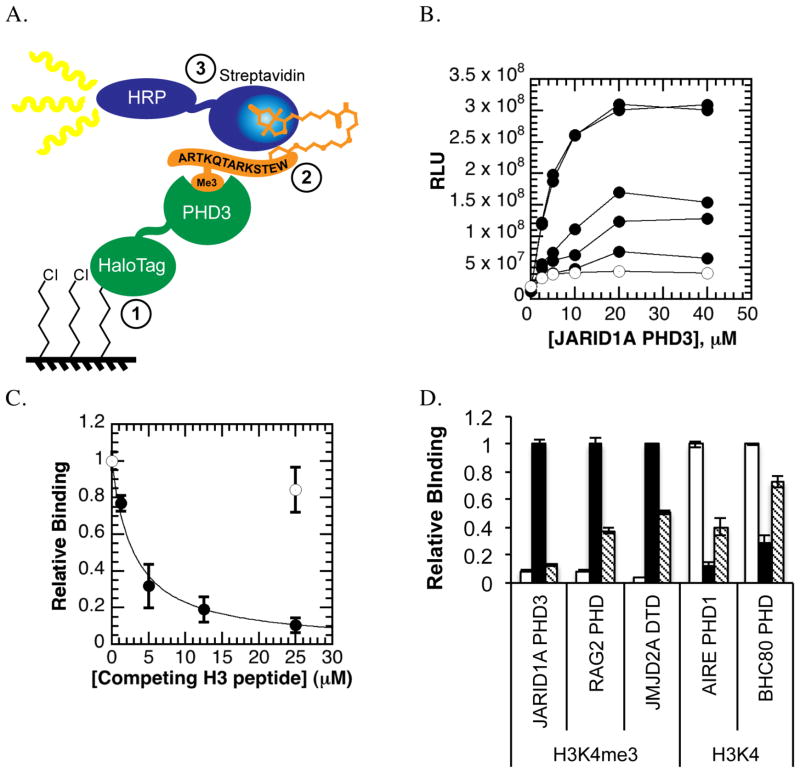
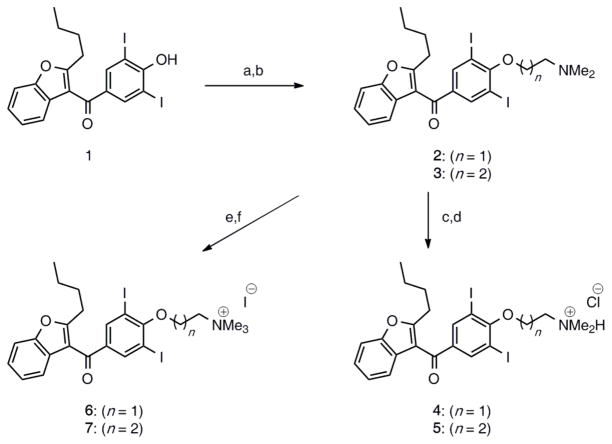
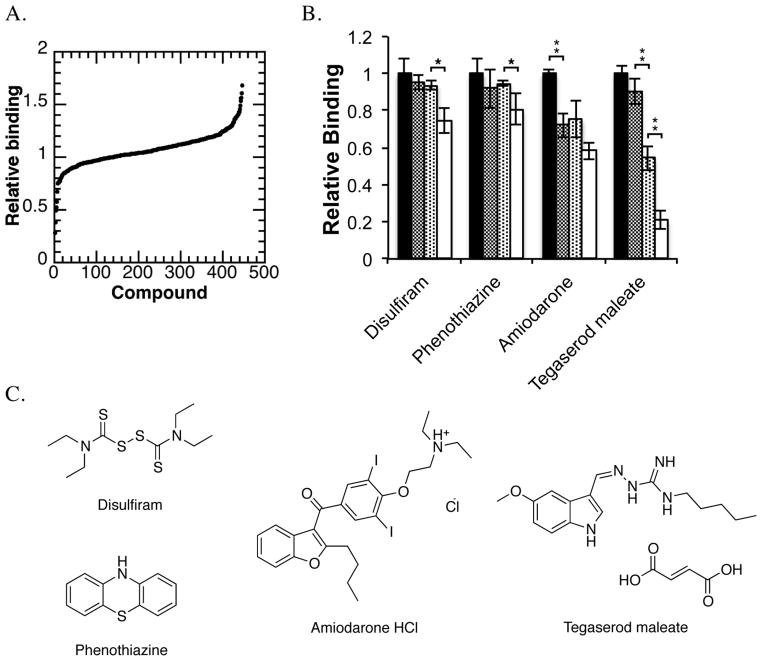
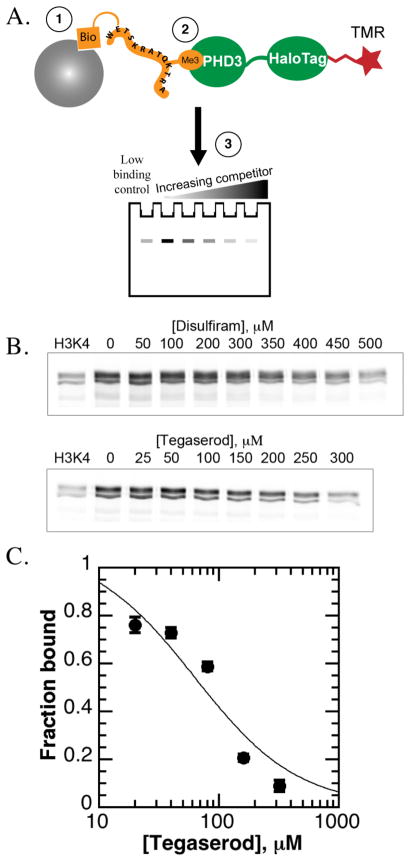
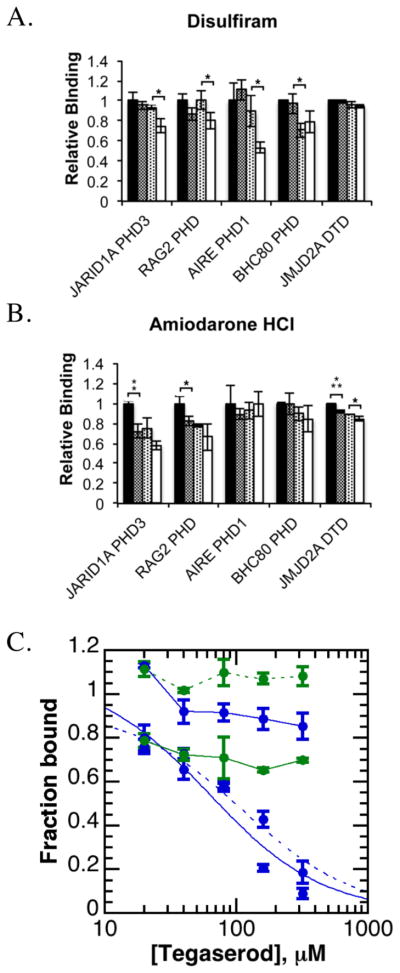
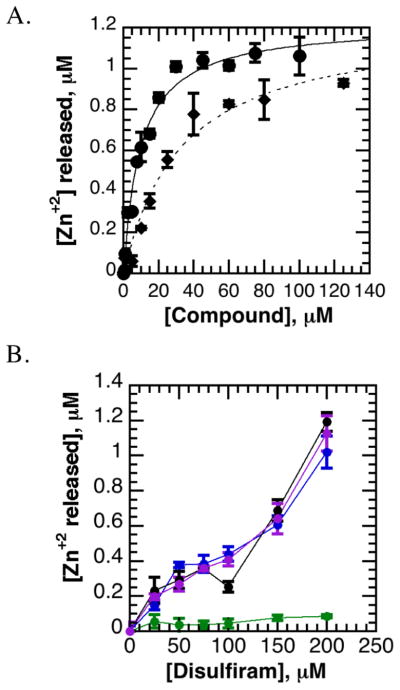
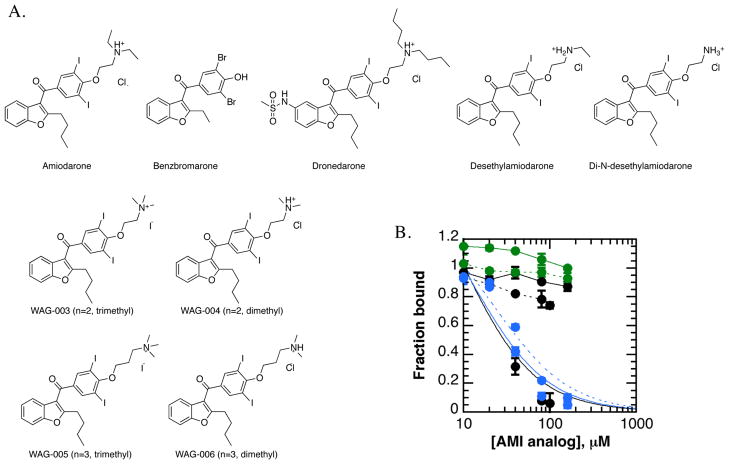
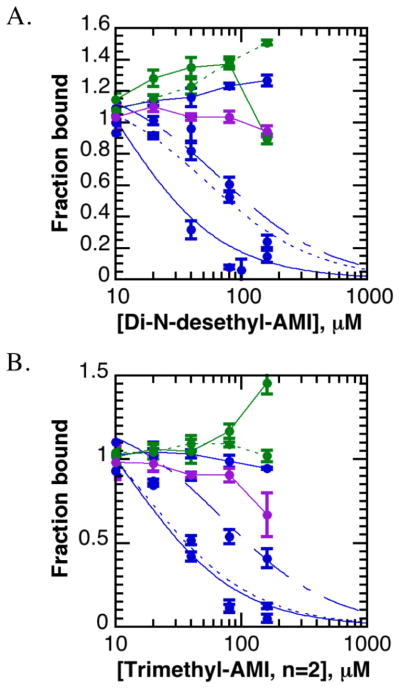
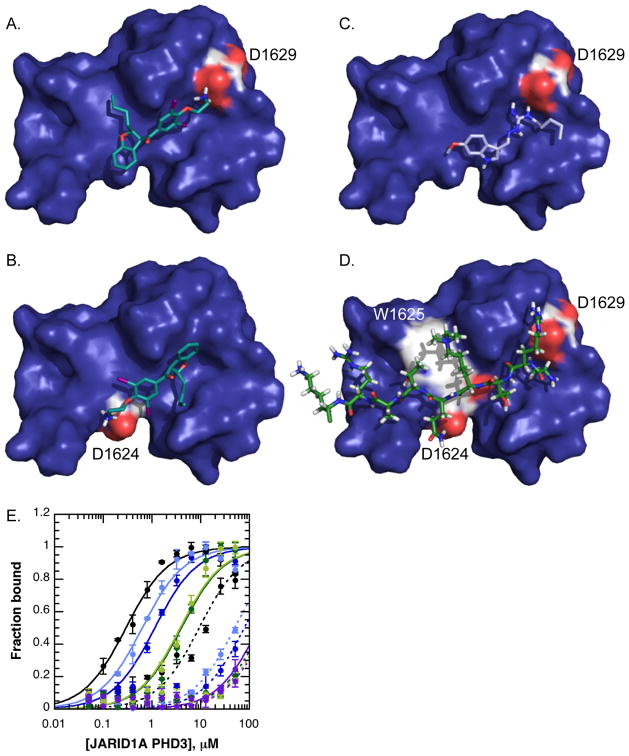
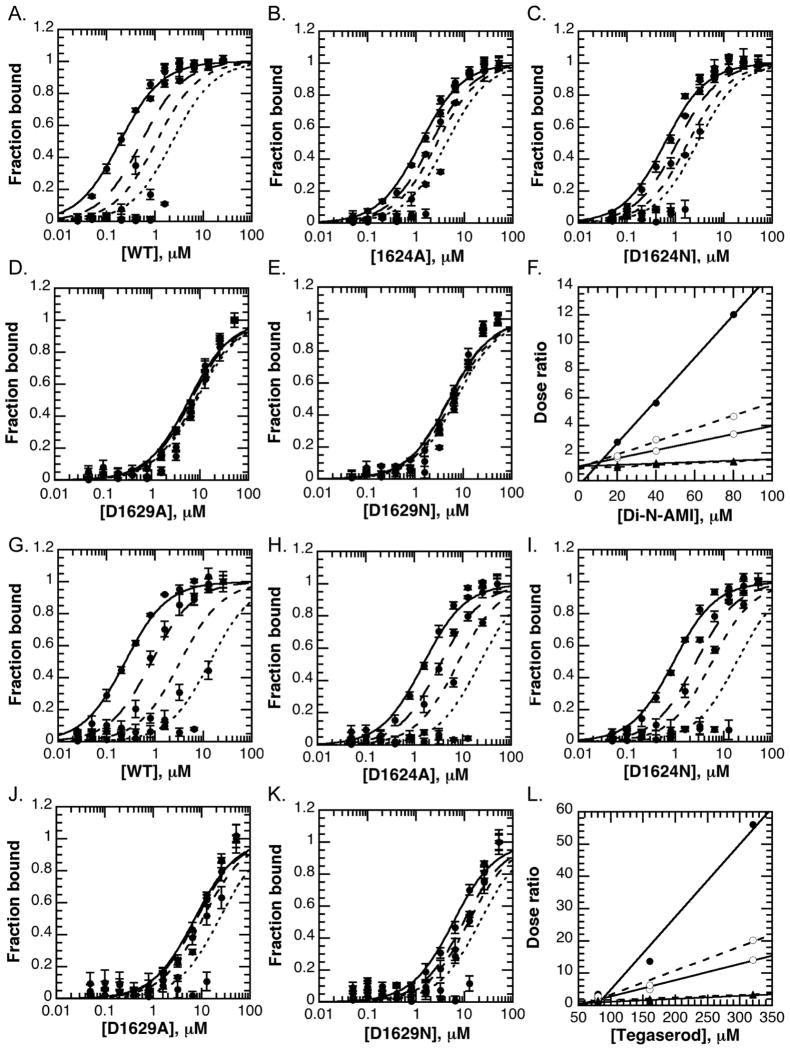
A number of histone-binding domains are implicated in cancer through improper binding of chromatin. In a clinically reported case of acute myeloid leukemia (AML), a genetic fusion protein between nucleoporin 98 and the third plant homeodomain (PHD) finger of JARID1A drives an oncogenic transcriptional program that is dependent on histone binding by the PHD finger. By exploiting the requirement for chromatin binding in oncogenesis, therapeutics targeting histone readers may represent a new paradigm in drug development. In this study, we developed a novel small molecule screening strategy that utilizes HaloTag technology to identify several small molecules that disrupt binding of the JARID1A PHD finger to histone peptides. Small molecule inhibitors were validated biochemically through affinity pull downs, fluorescence polarization, and histone reader specificity studies. One compound was modified through medicinal chemistry to improve its potency while retaining histone reader selectivity. Molecular modeling and site-directed mutagenesis of JARID1A PHD3 provided insights into the biochemical basis of competitive inhibition.
许多组蛋白结合域通过染色质的异常结合而与癌症有关。在一份临床报告的急性髓系白血病(AML)病例中,核孔蛋白 98 和 JARID1A 的第三个植物同源结构域(PHD)手指之间的基因融合蛋白驱动依赖于 PHD 手指与组蛋白结合的致癌转录程序。通过利用致癌作用中对染色质结合的需求,针对组蛋白读取器的治疗方法可能代表药物开发的新模式。在这项研究中,我们开发了一种新的小分子筛选策略,该策略利用 HaloTag 技术来鉴定几种破坏 JARID1A PHD 手指与组蛋白肽结合的小分子。通过亲和下拉、荧光偏振和组蛋白读取器特异性研究对小分子抑制剂进行了生化验证。一种化合物通过药物化学进行修饰,以提高其效力,同时保留组蛋白读取器的选择性。JARID1A PHD3 的分子建模和定点突变提供了对竞争抑制的生化基础的深入了解。