Hou Chien-Wei, Chen Yi-Ling, Chuang Shih-Hsien, Wang Jen-Shu, Jeng Kee-Ching
Department of Medical Research, Tungs' Taichung MetroHarbor Hospital, 699 Taiwan Boulevard, Sec,8, Taichung 43503, Taiwan.
J Biomed Sci. 2014 Feb 18;21(1):15. doi: 10.1186/1423-0127-21-15.
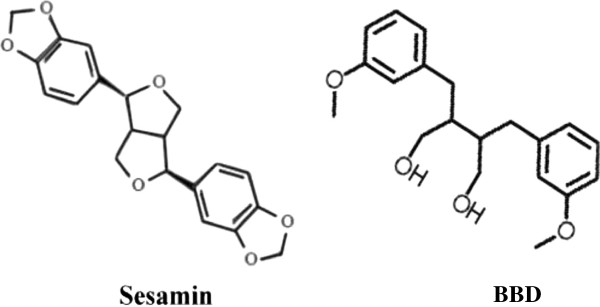
Stroke is one of the leading causes of neuronal death. Sesamin is known for neuroprotection by its antioxidant and anti-inflammatory properties but it lacks blood-brain barrier (BBB) activity. A panel of sesamin derivatives was screened and 3-bis (3-methoxybenzyl) butane-1,4-diol (BBD) was selected for high BBB activity and tested for its neuroprotective effect.
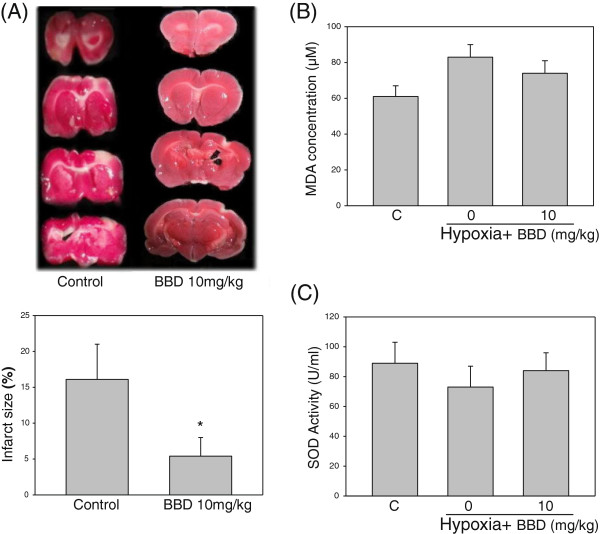
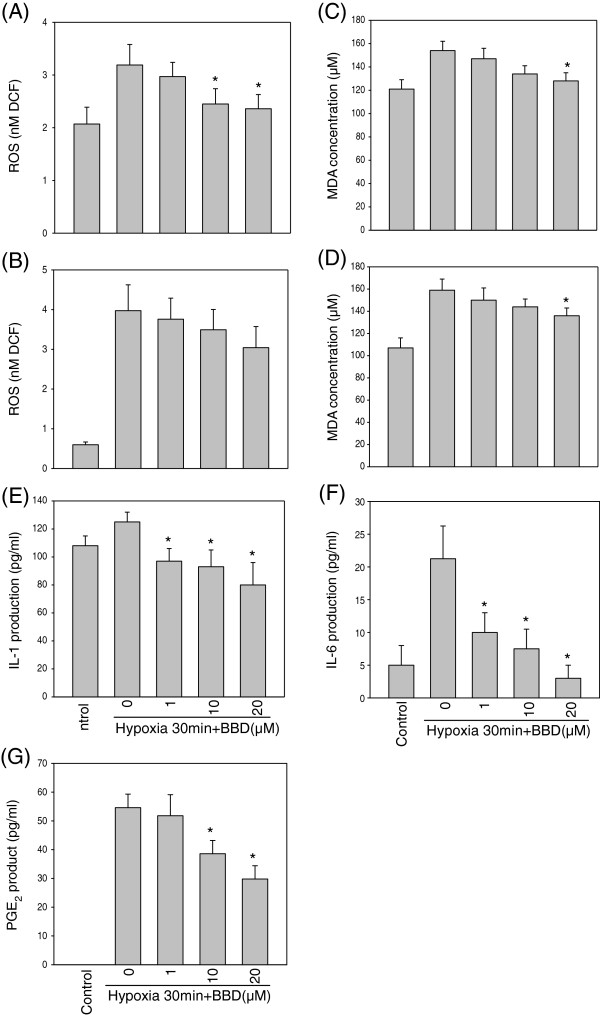
The focal cerebral ischemia of Sprague-Dawley rats and hypoxia models of murine BV-2 microglia or PC12 cells under oxygen/glucose deprivation were used for in vivo and in vitro test, respectively. Lipid peroxidation and superoxide dismutase (SOD) activity from the ischemic brain were tested and reactive oxygen species (ROS), cytokine production, prostaglandin (PGE2) and related signaling pathways from hypoxic cells were examined by ELISA or Western blot assay, respectively.
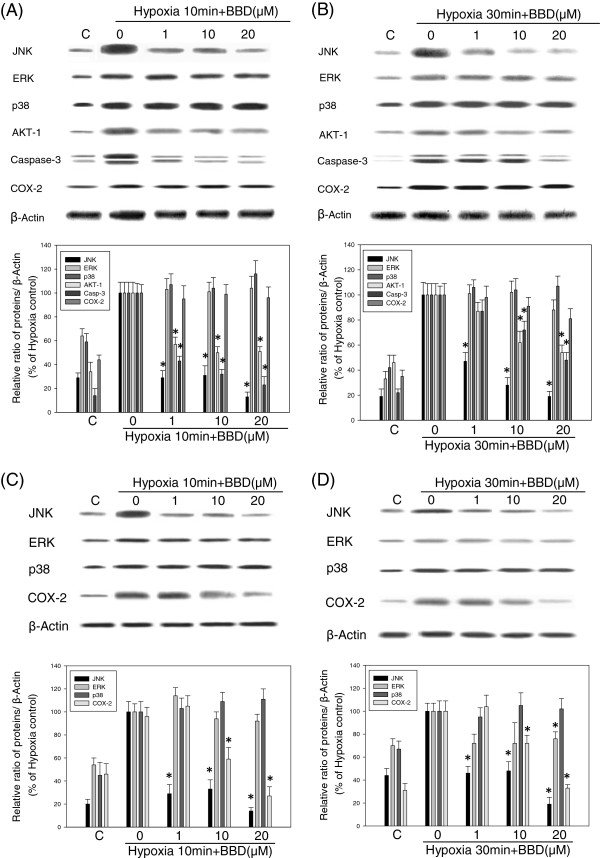
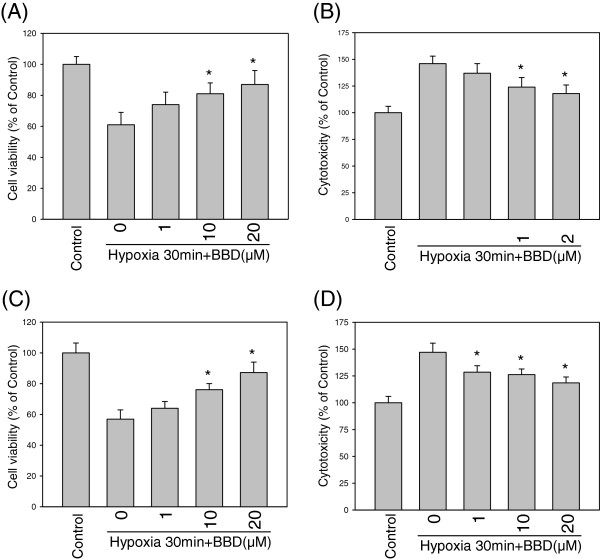
BBD showed a protective effect when given 90 min after the focal cerebral ischemia. It also reduced lipid peroxidation and preserved SOD activity from the ischemic brain. The mechanism of BBD was further confirmed by attenuating ROS, cytokine production, and PGE2 release from hypoxic BV-2 or PC12 cells. BBD significantly reduced hypoxia-induced c-Jun N-terminal kinases (JNK) and modulated AKT-1 and caspase-3 (survival and apoptotic pathways) in BV-2 cells, and inhibited hypoxia-induced JNK and cyclooxygenase-2 activation in PC12 cells.
The neuroprotective effect of BBD on ischemia/hypoxia models was involved with antioxidant and anti-inflammatory effects. The result would help the development of new CNS drug for protection of ischemia/hypoxia injury.
中风是导致神经元死亡的主要原因之一。芝麻素因其抗氧化和抗炎特性而具有神经保护作用,但它缺乏血脑屏障(BBB)活性。我们筛选了一组芝麻素衍生物,选择了3-双(3-甲氧基苄基)丁烷-1,4-二醇(BBD),因其具有高BBB活性,并对其神经保护作用进行了测试。
分别采用Sprague-Dawley大鼠局灶性脑缺血模型以及小鼠BV-2小胶质细胞或PC12细胞在氧/葡萄糖剥夺条件下的缺氧模型进行体内和体外试验。检测缺血脑组织的脂质过氧化和超氧化物歧化酶(SOD)活性,并分别通过ELISA或蛋白质印迹法检测缺氧细胞中的活性氧(ROS)、细胞因子产生、前列腺素(PGE2)及相关信号通路。
在局灶性脑缺血90分钟后给予BBD具有保护作用。它还减少了缺血脑组织的脂质过氧化并保留了SOD活性。通过减弱缺氧BV-2或PC12细胞中的ROS、细胞因子产生和PGE2释放,进一步证实了BBD的作用机制。BBD显著降低了缺氧诱导的BV-2细胞中c-Jun氨基末端激酶(JNK)的活性,并调节了AKT-1和半胱天冬酶-3(生存和凋亡通路),并抑制了缺氧诱导的PC12细胞中JNK和环氧化酶-2的激活。
BBD对缺血/缺氧模型的神经保护作用与抗氧化和抗炎作用有关。该结果将有助于开发用于保护缺血/缺氧损伤的新型中枢神经系统药物。