Chamling Xitiz, Seo Seongjin, Searby Charles C, Kim Gunhee, Slusarski Diane C, Sheffield Val C
Department of Pediatrics, University of Iowa Interdisciplinary program of genetics, Iowa City, Iowa, United States of America.
Department of Ophthalmology and Visual Sciences, University of Iowa Carver College of Medicine, Iowa City, Iowa, United States of America.
PLoS Genet. 2014 Feb 13;10(2):e1004083. doi: 10.1371/journal.pgen.1004083. eCollection 2014 Feb.
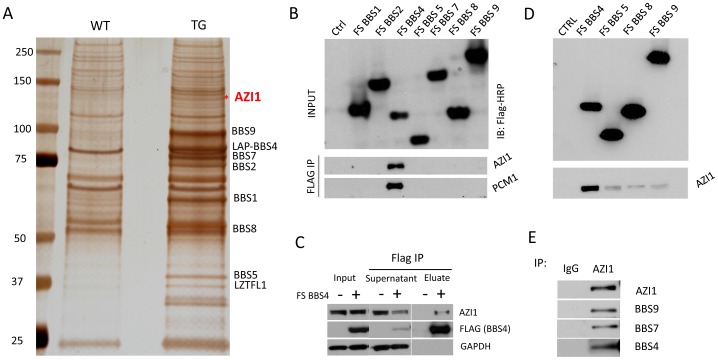
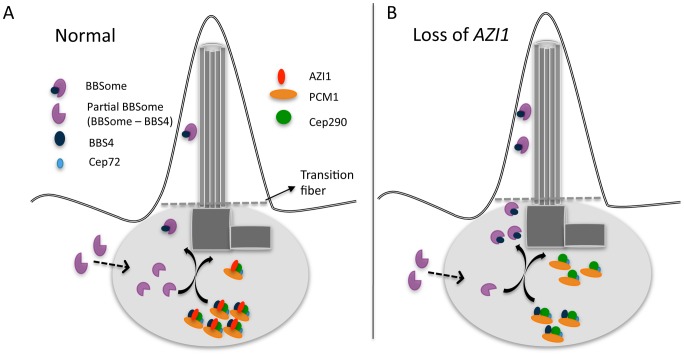
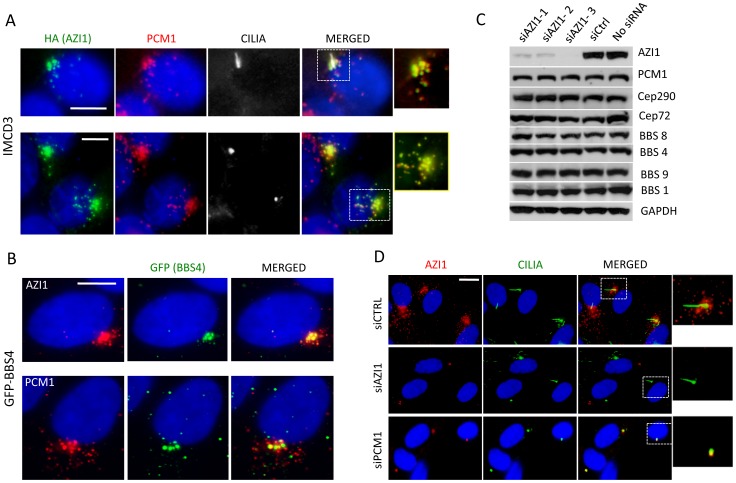
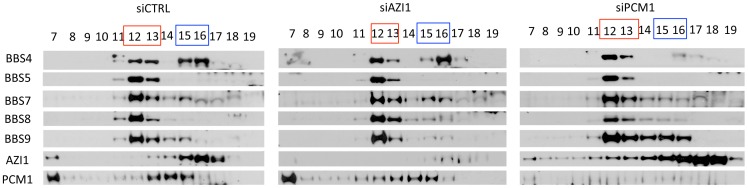
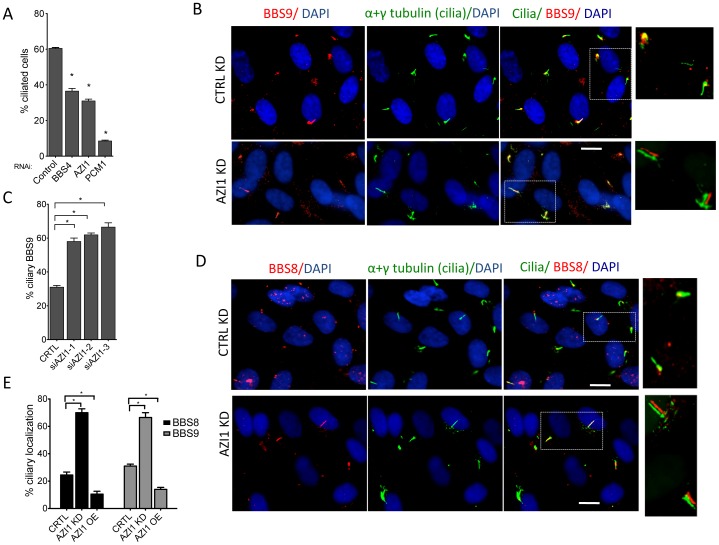
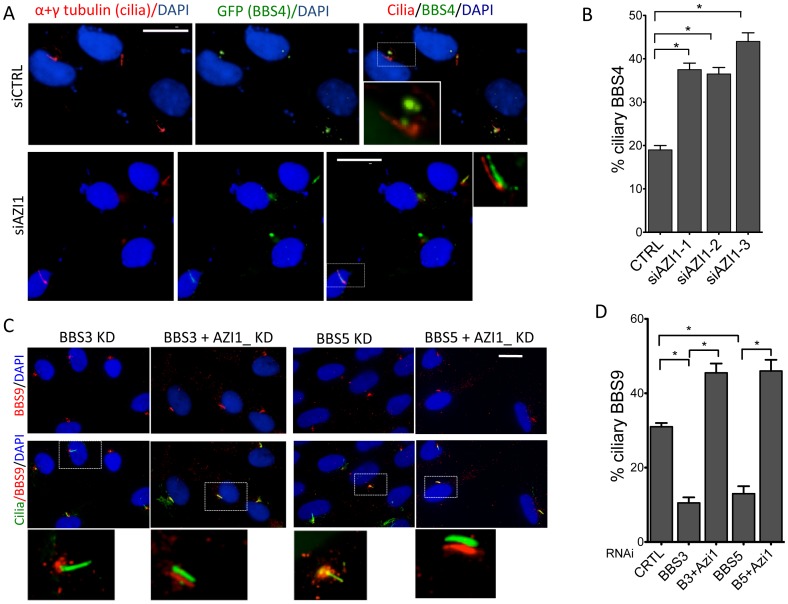
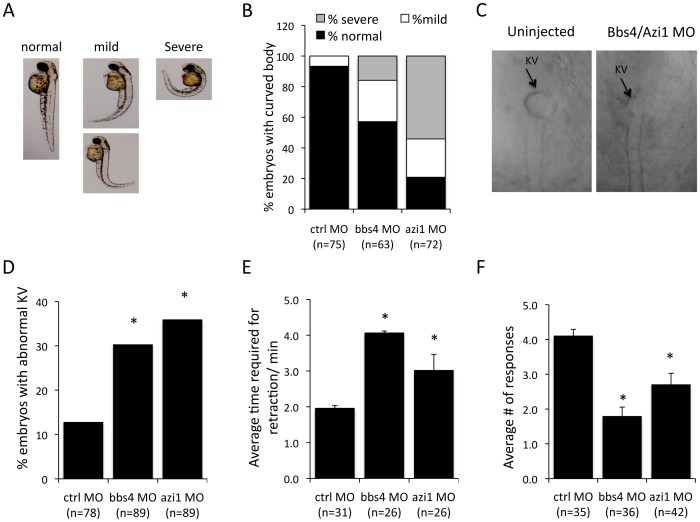
Bardet-Biedl syndrome (BBS) is a well-known ciliopathy with mutations reported in 18 different genes. Most of the protein products of the BBS genes localize at or near the primary cilium and the centrosome. Near the centrosome, BBS proteins interact with centriolar satellite proteins, and the BBSome (a complex of seven BBS proteins) is believed to play a role in transporting ciliary membrane proteins. However, the precise mechanism by which BBSome ciliary trafficking activity is regulated is not fully understood. Here, we show that a centriolar satellite protein, AZI1 (also known as CEP131), interacts with the BBSome and regulates BBSome ciliary trafficking activity. Furthermore, we show that AZI1 interacts with the BBSome through BBS4. AZI1 is not involved in BBSome assembly, but accumulation of the BBSome in cilia is enhanced upon AZI1 depletion. Under conditions in which the BBSome does not normally enter cilia, such as in BBS3 or BBS5 depleted cells, knock down of AZI1 with siRNA restores BBSome trafficking to cilia. Finally, we show that azi1 knockdown in zebrafish embryos results in typical BBS phenotypes including Kupffer's vesicle abnormalities and melanosome transport delay. These findings associate AZI1 with the BBS pathway. Our findings provide further insight into the regulation of BBSome ciliary trafficking and identify AZI1 as a novel BBS candidate gene.
巴德-比埃尔综合征(BBS)是一种著名的纤毛病,已在18个不同基因中报道了相关突变。BBS基因的大多数蛋白质产物定位于初级纤毛和中心体或其附近。在中心体附近,BBS蛋白与中心粒卫星蛋白相互作用,并且BBSome(一种由七种BBS蛋白组成的复合物)被认为在转运纤毛膜蛋白中起作用。然而,BBSome纤毛运输活性的精确调节机制尚未完全了解。在这里,我们表明一种中心粒卫星蛋白AZI1(也称为CEP131)与BBSome相互作用并调节BBSome纤毛运输活性。此外,我们表明AZI1通过BBS4与BBSome相互作用。AZI1不参与BBSome的组装,但在AZI1缺失时,BBSome在纤毛中的积累会增强。在BBSome通常不进入纤毛的条件下,例如在BBS3或BBS5缺失的细胞中,用siRNA敲低AZI1可恢复BBSome向纤毛的运输。最后,我们表明在斑马鱼胚胎中敲低azi1会导致典型的BBS表型,包括库普弗小泡异常和黑素体运输延迟。这些发现将AZI1与BBS途径联系起来。我们的发现为BBSome纤毛运输的调节提供了进一步的见解,并将AZI1鉴定为一个新的BBS候选基因。