Tsai Sheng-Feng, Huang Tung-Yi, Chang Chia-Yuan, Hsu Yuan-Chang, Chen Shean-Jen, Yu Lung, Kuo Yu-Min, Jen Chauying J
Department of Physiology, National Cheng Kung University Tainan, Taiwan ; Institute of Basic Medical Sciences, National Cheng Kung University Tainan, Taiwan.
Department of Physiology, National Cheng Kung University Tainan, Taiwan.
Front Behav Neurosci. 2014 Feb 3;8:27. doi: 10.3389/fnbeh.2014.00027. eCollection 2014.
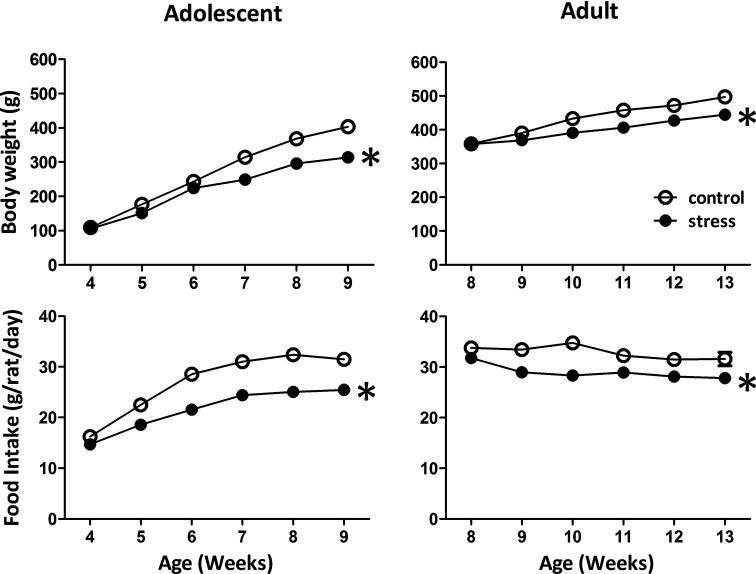
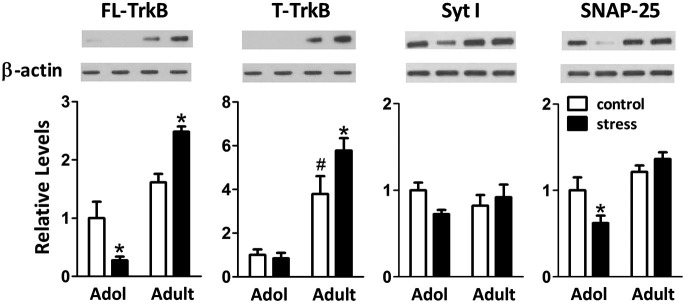
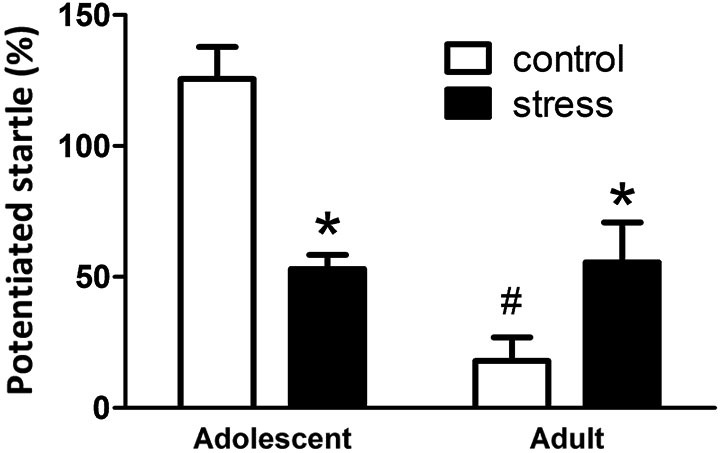
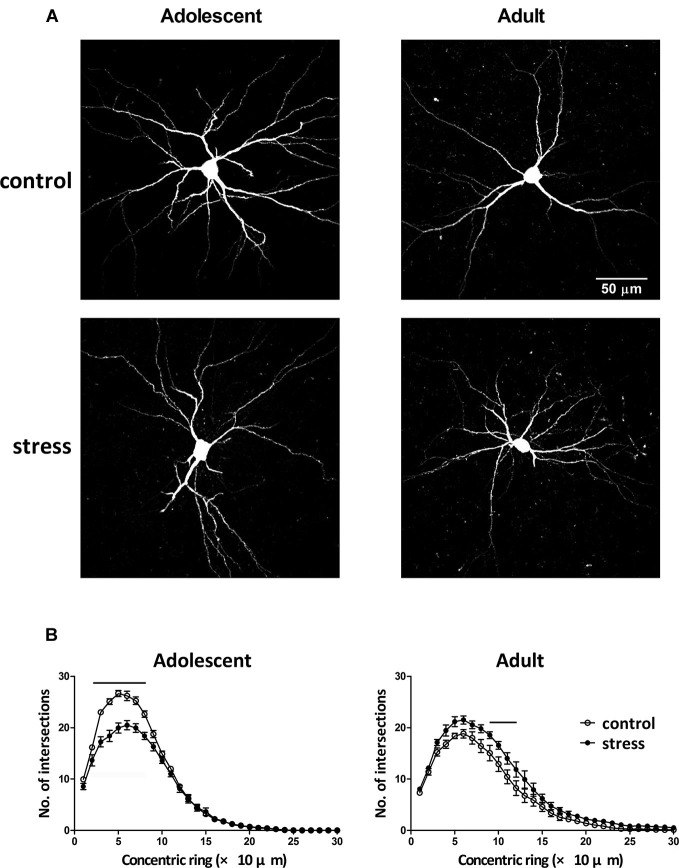
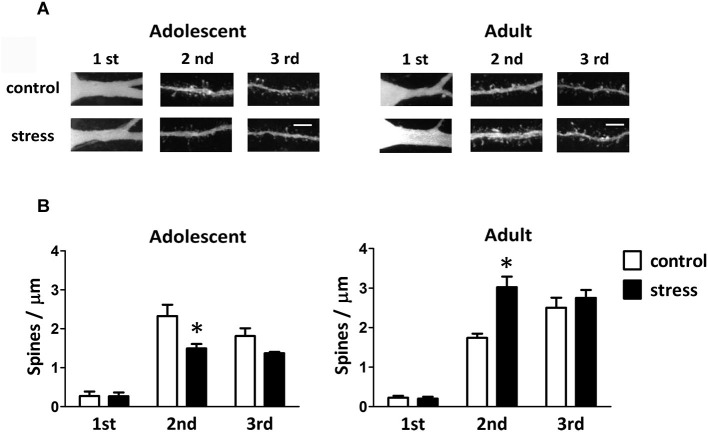
Adolescence is a time of developmental changes and reorganization in the brain. It has been hypothesized that stress has a greater neurological impact on adolescents than on adults. However, scientific evidence in support of this hypothesis is still limited. We treated adolescent (4-week-old) and adult (8-week-old) rats with social instability stress for 5 weeks and compared the subsequent structural and functional changes to amygdala neurons. In the stress-free control condition, the adolescent group showed higher fear-potentiated startle responses, larger dendritic arborization, more proximal dendritic spine distribution and lower levels of truncated TrkB than the adult rats. Social instability stress exerted opposite effects on fear-potentiated startle responses in these two groups, i.e., the stress period appeared to hamper the performance in adolescents but improved it in adult rats. Furthermore, whilst the chronic social stress applied to adolescent rats reduced their dendritic field and spine density in basal and lateral amygdala neurons, the opposite stress effects on neuron morphology were observed in the adult rats. Moreover, stress in adolescence suppressed the amygdala expression of synaptic proteins, i.e., full-length TrkB and SNAP-25, whereas, in the adult rats, chronic stress enhanced full-length and truncated TrkB expressions in the amygdala. In summary, chronic social instability stress hinders amygdala neuron development in the adolescent brain, while mature neurons in the amygdala are capable of adapting to the stress. The stress induced age-dependent effects on the fear-potentiated memory may occur by altering the brain-derived neurotrophic factor (BDNF)-TrkB signaling and neuroplasticity in the amygdala.
青春期是大脑发生发育变化和重组的时期。据推测,压力对青少年的神经学影响比对成年人更大。然而,支持这一假设的科学证据仍然有限。我们对青春期(4周龄)和成年(8周龄)大鼠进行了5周的社会不稳定应激处理,并比较了随后杏仁核神经元的结构和功能变化。在无应激对照条件下,青春期组比成年大鼠表现出更高的恐惧增强惊吓反应、更大的树突分支、更多的近端树突棘分布以及更低水平的截短型TrkB。社会不稳定应激对这两组的恐惧增强惊吓反应产生了相反的影响,即应激期似乎阻碍了青少年的表现,但改善了成年大鼠的表现。此外,虽然施加于青春期大鼠的慢性社会应激降低了它们基底和外侧杏仁核神经元的树突野和棘密度,但在成年大鼠中观察到了相反的应激对神经元形态的影响。而且,青春期的应激抑制了杏仁核中突触蛋白即全长TrkB和SNAP - 25的表达,而在成年大鼠中,慢性应激增强了杏仁核中全长和截短型TrkB的表达。总之,慢性社会不稳定应激阻碍了青少年大脑中杏仁核神经元的发育,而杏仁核中的成熟神经元能够适应这种应激。应激诱导的对恐惧增强记忆的年龄依赖性影响可能是通过改变杏仁核中脑源性神经营养因子(BDNF)-TrkB信号传导和神经可塑性而发生的。