Šantrůčková Eva, Doležal Vladimír, El-Fakahany Esam E, Jakubík Jan
Department of Experimental and Clinical Pharmacology, University of Minnesota College of Pharmacy, Minneapolis, United States of America.
Institute of Physiology Academy of Sciences of the Czech Republic, Prague, Czech Republic.
PLoS One. 2014 Feb 18;9(2):e88910. doi: 10.1371/journal.pone.0088910. eCollection 2014.
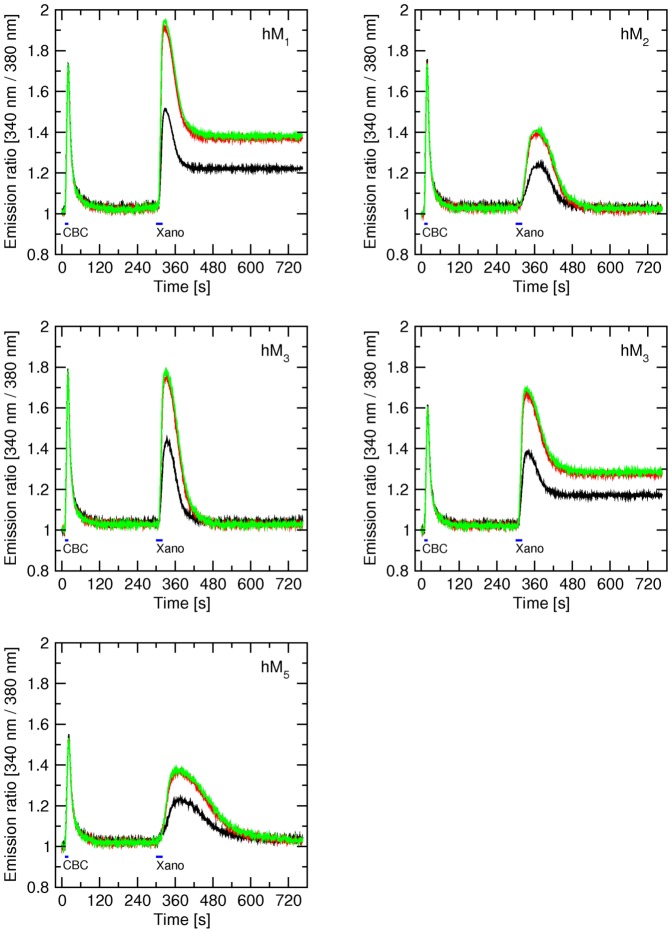
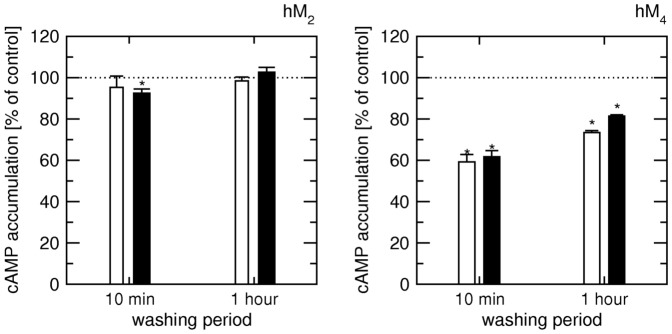
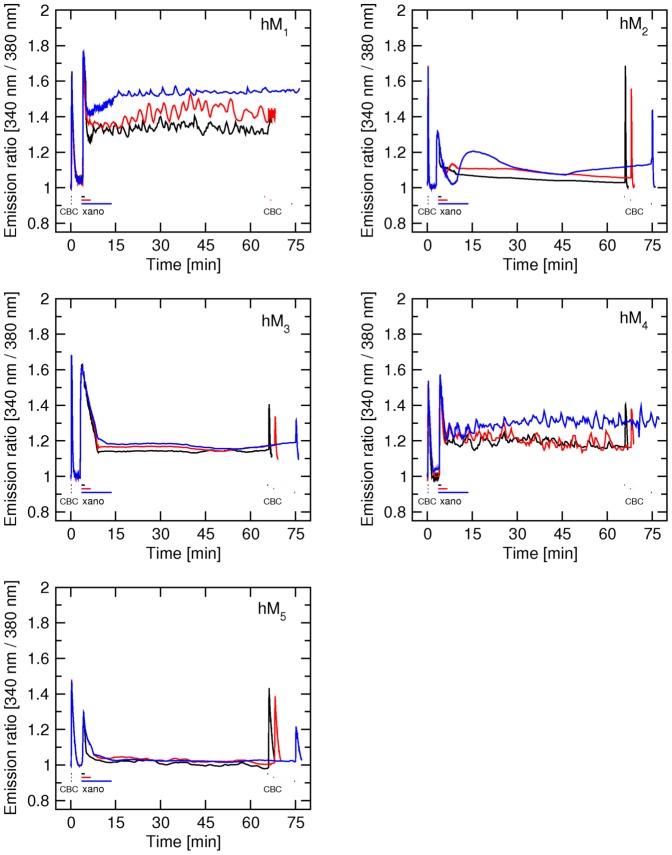
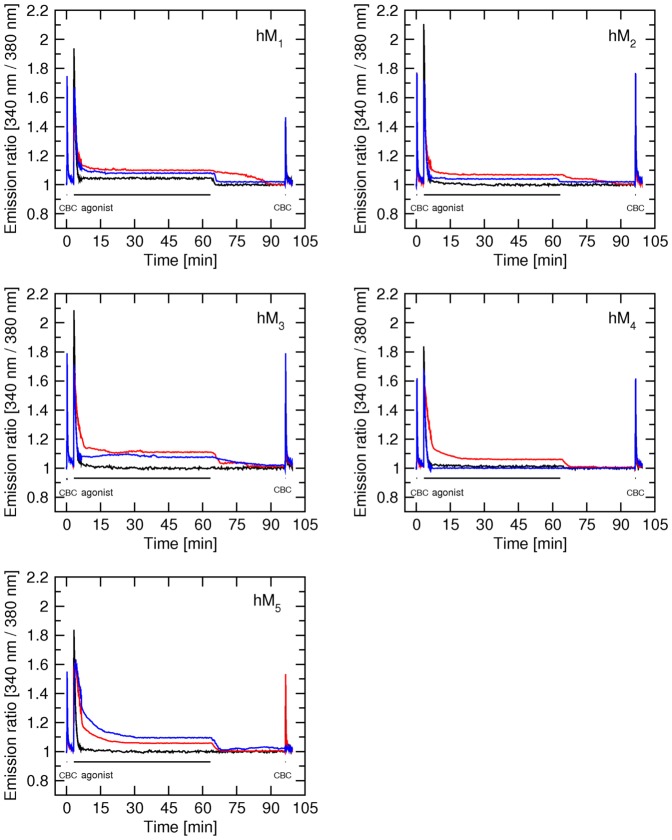
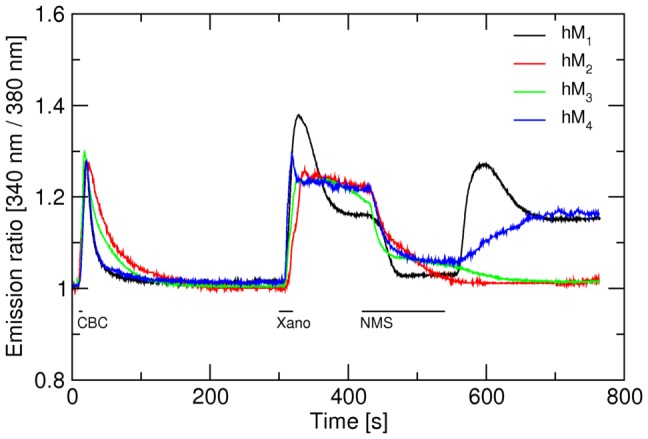
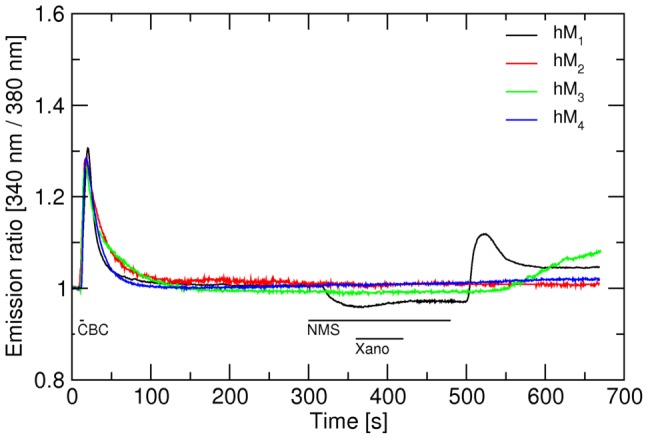
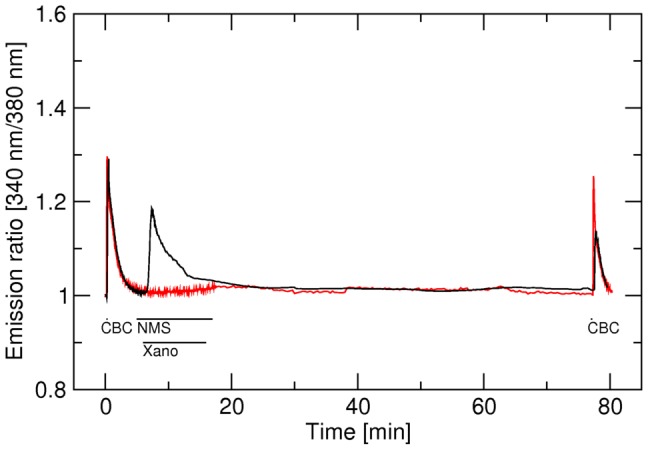
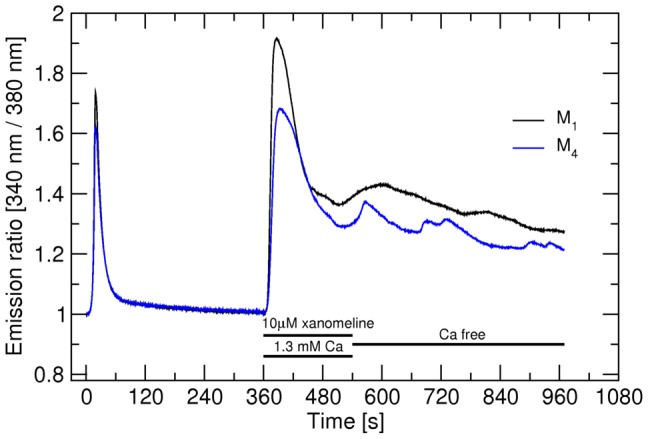
Xanomeline is an agonist endowed with functional preference for M1/M4 muscarinic acetylcholine receptors. It also exhibits both reversible and wash-resistant binding to and activation of these receptors. So far the mechanisms of xanomeline selectivity remain unknown. To address this question we employed microfluorometric measurements of intracellular calcium levels and radioligand binding to investigate differences in the short- and long-term effects of xanomeline among muscarinic receptors expressed individually in Chinese hamster ovary cells. 1/One-min exposure of cells to xanomeline markedly increased intracellular calcium at hM1 and hM4, and to a lesser extent at hM2 and hM3 muscarinic receptors for more than 1 hour. 2/Unlike the classic agonists carbachol, oxotremorine, and pilocarpine 10-min exposure to xanomeline did not cause internalization of any receptor subtype. 3/Wash-resistant xanomeline selectively prevented further increase in intracellular calcium by carbachol at hM1 and hM4 receptors. 4/After transient activation xanomeline behaved as a long-term antagonist at hM5 receptors. 5/The antagonist N-methylscopolamine (NMS) reversibly blocked activation of hM1 through hM4 receptors by xanomeline. 6/NMS prevented formation of xanomeline wash-resistant binding and activation at hM2 and hM4 receptors and slowed them at hM1, hM3 and hM5 receptors. Our results show commonalities of xanomeline reversible and wash-resistant binding and short-time activation among the five muscarinic receptor subtypes. However long-term receptor activation takes place in full only at hM1 and hM4 receptors. Moreover xanomeline displays higher efficacy at hM1 and hM4 receptors in primary phasic intracellular calcium release. These findings suggest the existence of particular activation mechanisms specific to these two receptors.
占诺美林是一种对M1/M4毒蕈碱型乙酰胆碱受体具有功能选择性的激动剂。它对这些受体的结合和激活还表现出可逆性和洗脱抗性。到目前为止,占诺美林选择性的机制仍不清楚。为了解决这个问题,我们采用细胞内钙水平的微量荧光测量和放射性配体结合实验,来研究占诺美林对单独在中国仓鼠卵巢细胞中表达的毒蕈碱受体的短期和长期作用的差异。1/细胞暴露于占诺美林1分钟后,hM1和hM4受体处的细胞内钙显著增加,hM2和hM3受体处的增加程度较小,且持续1小时以上。2/与经典激动剂卡巴胆碱、氧化震颤素和毛果芸香碱不同,暴露于占诺美林10分钟不会导致任何受体亚型的内化。3/具有洗脱抗性的占诺美林在hM1和hM4受体处选择性地阻止了卡巴胆碱引起的细胞内钙进一步增加。4/短暂激活后,占诺美林在hM5受体处表现为长期拮抗剂。5/拮抗剂N-甲基东莨菪碱(NMS)可逆地阻断了占诺美林对hM1至hM4受体的激活。6/NMS阻止了占诺美林在hM2和hM4受体处形成洗脱抗性结合和激活,并减缓了其在hM1、hM3和hM5受体处的作用。我们的结果表明,占诺美林在五种毒蕈碱受体亚型中的可逆性和洗脱抗性结合以及短期激活具有共性。然而,长期受体激活仅在hM1和hM4受体处完全发生。此外,占诺美林在初级相细胞内钙释放中对hM1和hM4受体显示出更高的效力。这些发现表明存在特定于这两种受体的特殊激活机制。