Gröndahl-Yli-Hannuksela Kirsi, Vuononvirta Juho, Peltola Ville, Mertsola Jussi, He Qiushui
Department of Infectious Disease Surveillance and Control, National Institute for Health and Welfare (THL), Turku, Finland.
Department of Pediatrics, Turku University Hospital, Turku, Finland.
PLoS One. 2014 Feb 18;9(2):e88919. doi: 10.1371/journal.pone.0088919. eCollection 2014.
Mannose-binding lectin (MBL) is one of the key molecules in innate immunity and its role in human vaccine responses is poorly known. This study aimed to investigate the possible association of MBL polymorphisms with antibody production after primary and booster vaccinations with acellular pertussis vaccines in infants and adolescents.
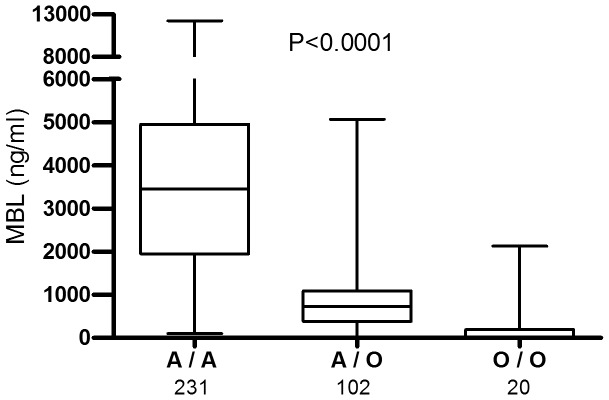
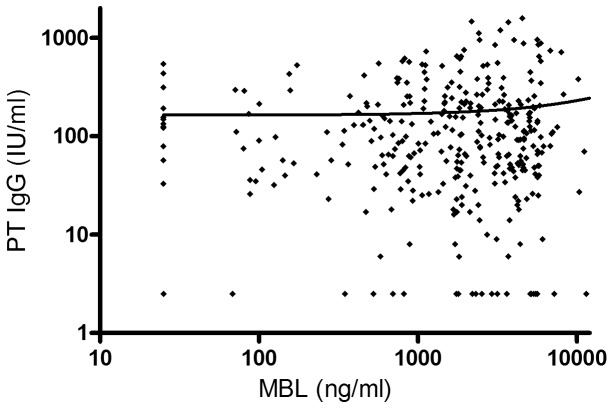
METHODOLOGY/PRINCIPAL FINDINGS: Five hundred and sixty eight subjects were included in this study. In the adolescent cohort 355 subjects received a dose of diphtheria and tetanus toxoids and acellular pertussis (dTpa) vaccine ten years previously. Follow-up was performed at 3, 5 and 10 years. Infant cohort consisted of 213 subjects, who had received three primary doses of DTaP vaccine at 3, 5, and 12 months of age according to Finnish immunization program. Blood samples were collected before the vaccinations at 2,5 months of age and after the vaccinations at 13 months and 2 years of age. Concentrations of IgG antibodies to pertussis toxin, filamentous hemagglutinin, and pertactin and antibodies to diphtheria and tetanus toxoids were measured by standardized enzyme-linked immunosorbant assay. Single nucleotide polymorphisms of MBL2 gene exon1 (codons 52, 54, 57) were examined. MBL serum concentration was also measured from the adolescent cohort. No association was found with MBL2 exon 1 polymorphisms and antibody responses against vaccine antigens, after primary and booster dTpa vaccination.
This study indicates that MBL polymorphisms do not affect the production and persistence of antibodies after acellular pertussis vaccination. Our finding also suggests that MBL might not be involved in modulating antibody responses to the vaccines made of purified bacterial proteins.
甘露糖结合凝集素(MBL)是先天免疫中的关键分子之一,其在人类疫苗反应中的作用尚不清楚。本研究旨在调查婴儿和青少年接种无细胞百日咳疫苗进行初次和加强免疫后,MBL基因多态性与抗体产生之间的可能关联。
方法/主要发现:本研究纳入了568名受试者。在青少年队列中,355名受试者在十年前接种了一剂白喉破伤风类毒素和无细胞百日咳(dTpa)疫苗。在3年、5年和10年时进行随访。婴儿队列由213名受试者组成,他们根据芬兰免疫规划在3个月、5个月和12个月大时接种了三剂DTaP疫苗。在2个月、5个月大时接种疫苗前以及13个月和2岁时接种疫苗后采集血样。通过标准化酶联免疫吸附测定法测量针对百日咳毒素、丝状血凝素和百日咳杆菌黏附素的IgG抗体浓度以及针对白喉和破伤风类毒素的抗体浓度。检测了MBL2基因外显子1(密码子52、54、57)的单核苷酸多态性。还测量了青少年队列的MBL血清浓度。在初次和加强接种dTpa疫苗后,未发现MBL2外显子1多态性与针对疫苗抗原的抗体反应之间存在关联。
本研究表明,MBL基因多态性不影响无细胞百日咳疫苗接种后抗体的产生和持续存在。我们的发现还表明,MBL可能不参与调节对由纯化细菌蛋白制成的疫苗的抗体反应。