Centre for Neural Circuits and Behaviour, University of Oxford, Oxford, UK.
Janelia Farm Research Campus, Howard Hughes Medical Institute, Ashburn, Virginia, USA.
Nat Neurosci. 2014 Apr;17(4):559-68. doi: 10.1038/nn.3660. Epub 2014 Feb 23.
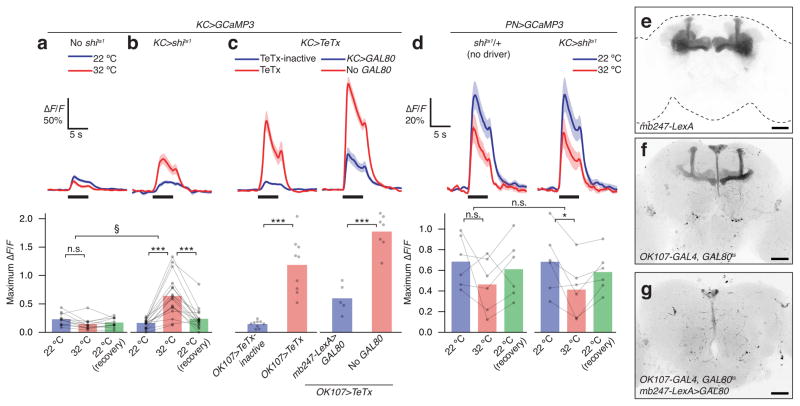
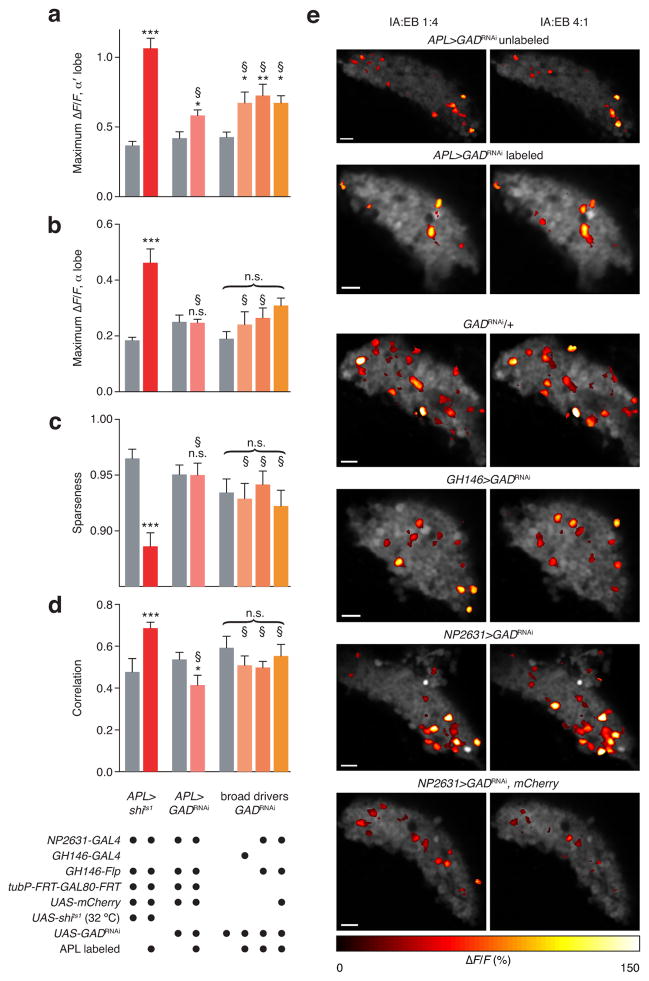
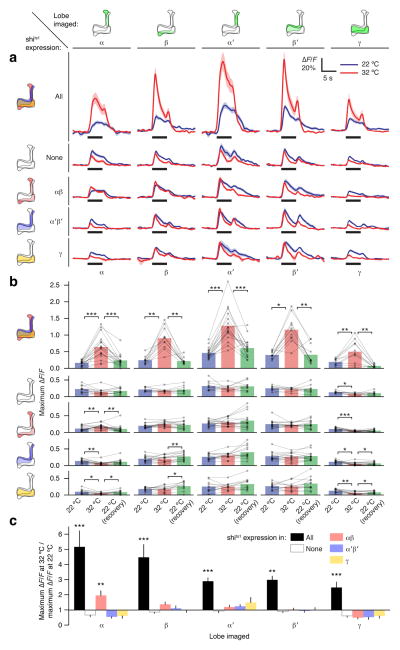
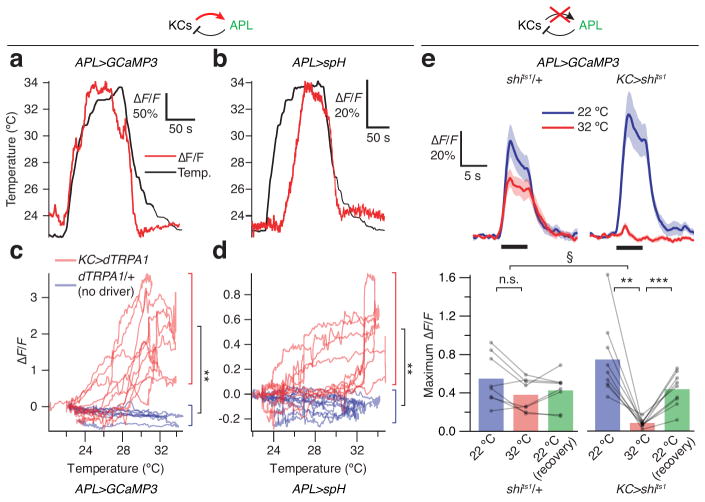
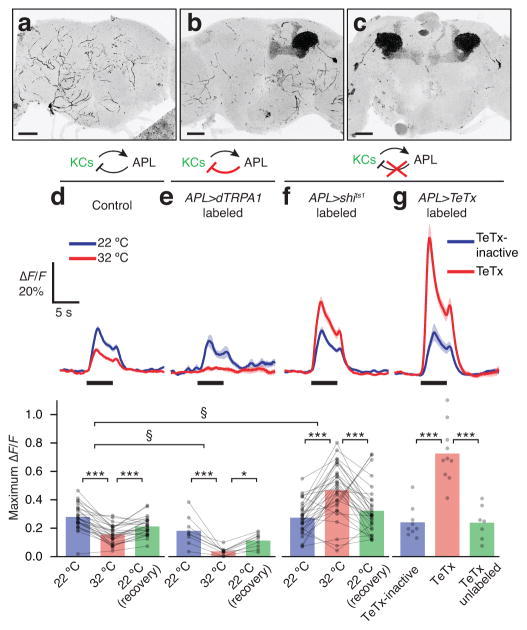
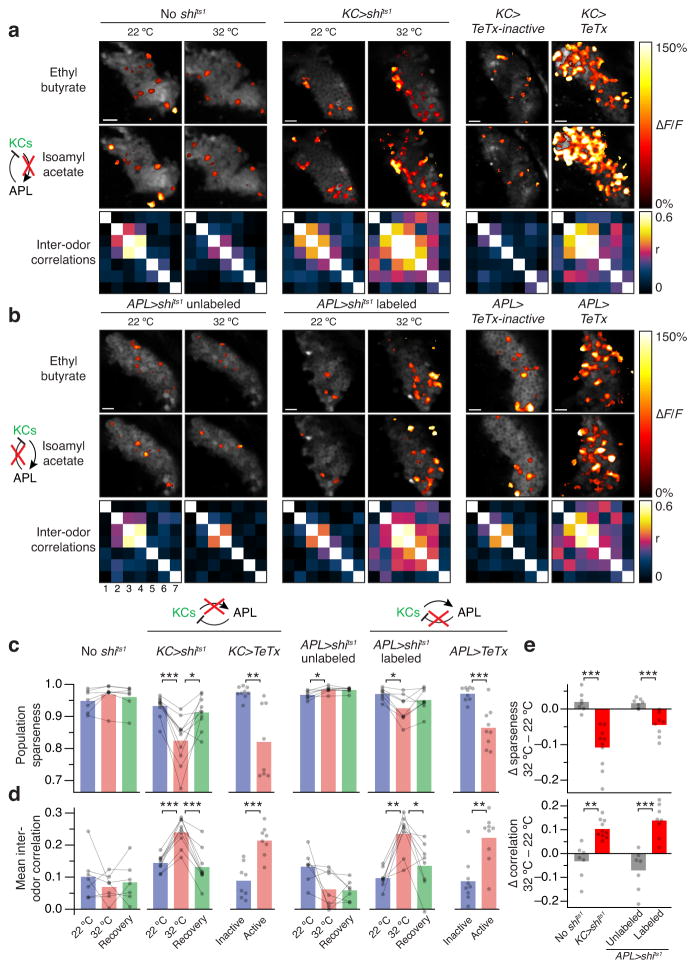
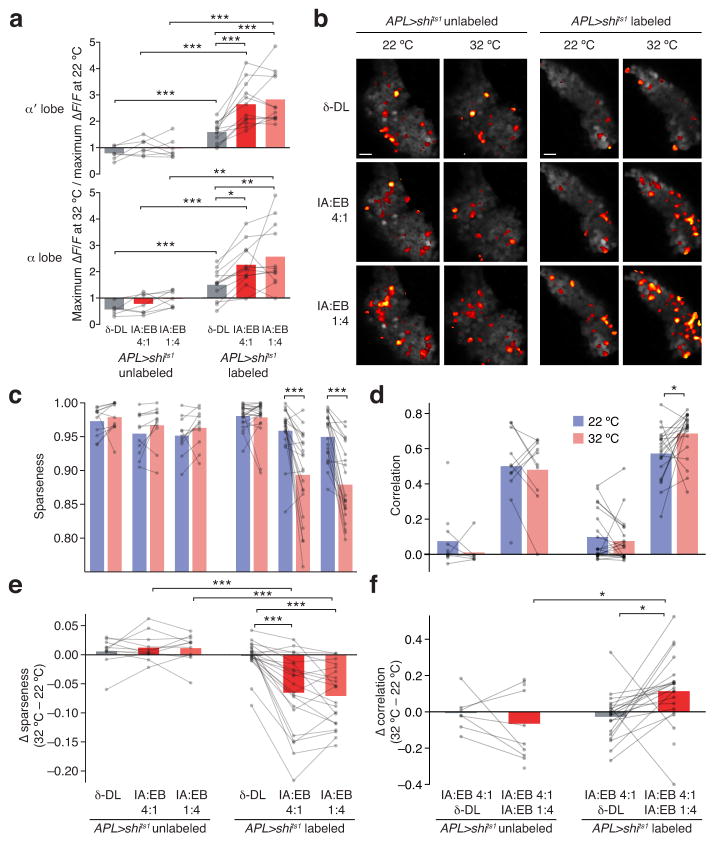
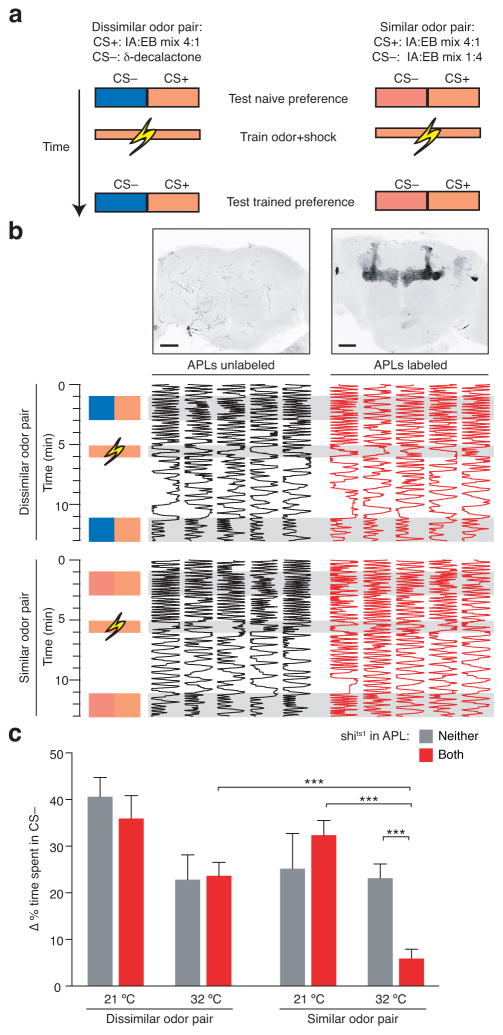
Sparse coding may be a general strategy of neural systems for augmenting memory capacity. In Drosophila melanogaster, sparse odor coding by the Kenyon cells of the mushroom body is thought to generate a large number of precisely addressable locations for the storage of odor-specific memories. However, it remains untested how sparse coding relates to behavioral performance. Here we demonstrate that sparseness is controlled by a negative feedback circuit between Kenyon cells and the GABAergic anterior paired lateral (APL) neuron. Systematic activation and blockade of each leg of this feedback circuit showed that Kenyon cells activated APL and APL inhibited Kenyon cells. Disrupting the Kenyon cell-APL feedback loop decreased the sparseness of Kenyon cell odor responses, increased inter-odor correlations and prevented flies from learning to discriminate similar, but not dissimilar, odors. These results suggest that feedback inhibition suppresses Kenyon cell activity to maintain sparse, decorrelated odor coding and thus the odor specificity of memories.
稀疏编码可能是神经系统增强记忆容量的一种通用策略。在黑腹果蝇中,蘑菇体的肯尼恩细胞的稀疏气味编码被认为产生了大量可精确定位的位置,用于存储特定气味的记忆。然而,稀疏编码与行为表现的关系仍未得到检验。在这里,我们证明稀疏性受肯尼恩细胞和 GABA 能的前配对侧(APL)神经元之间的负反馈回路控制。系统地激活和阻断该反馈回路的每一个环节表明,肯尼恩细胞激活 APL,而 APL 抑制肯尼恩细胞。破坏肯尼恩细胞-APL 反馈回路会降低肯尼恩细胞气味反应的稀疏性,增加气味之间的相关性,并阻止果蝇学习区分相似但不相似的气味。这些结果表明,反馈抑制抑制肯尼恩细胞的活动,以保持稀疏的、不相关的气味编码,从而保持记忆的气味特异性。