Christiansen Michael W, Gregersen Per L
Department of Molecular Biology and Genetics, AU-Flakkebjerg, Forsøgsvej 1, DK-4200 Slagelse, Denmark.
Department of Molecular Biology and Genetics, AU-Flakkebjerg, Forsøgsvej 1, DK-4200 Slagelse, Denmark
J Exp Bot. 2014 Jul;65(14):4009-22. doi: 10.1093/jxb/eru046. Epub 2014 Feb 24.
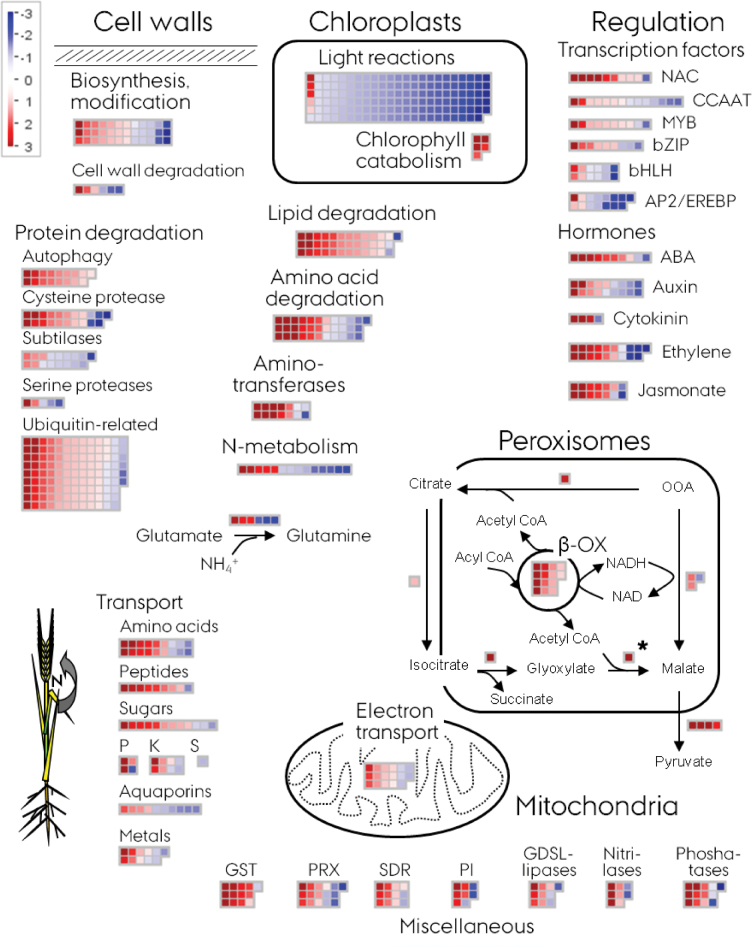
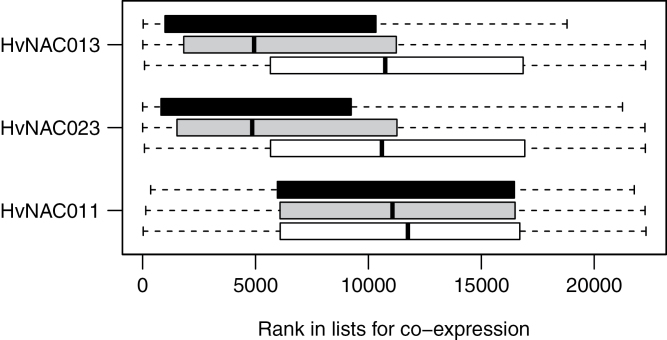
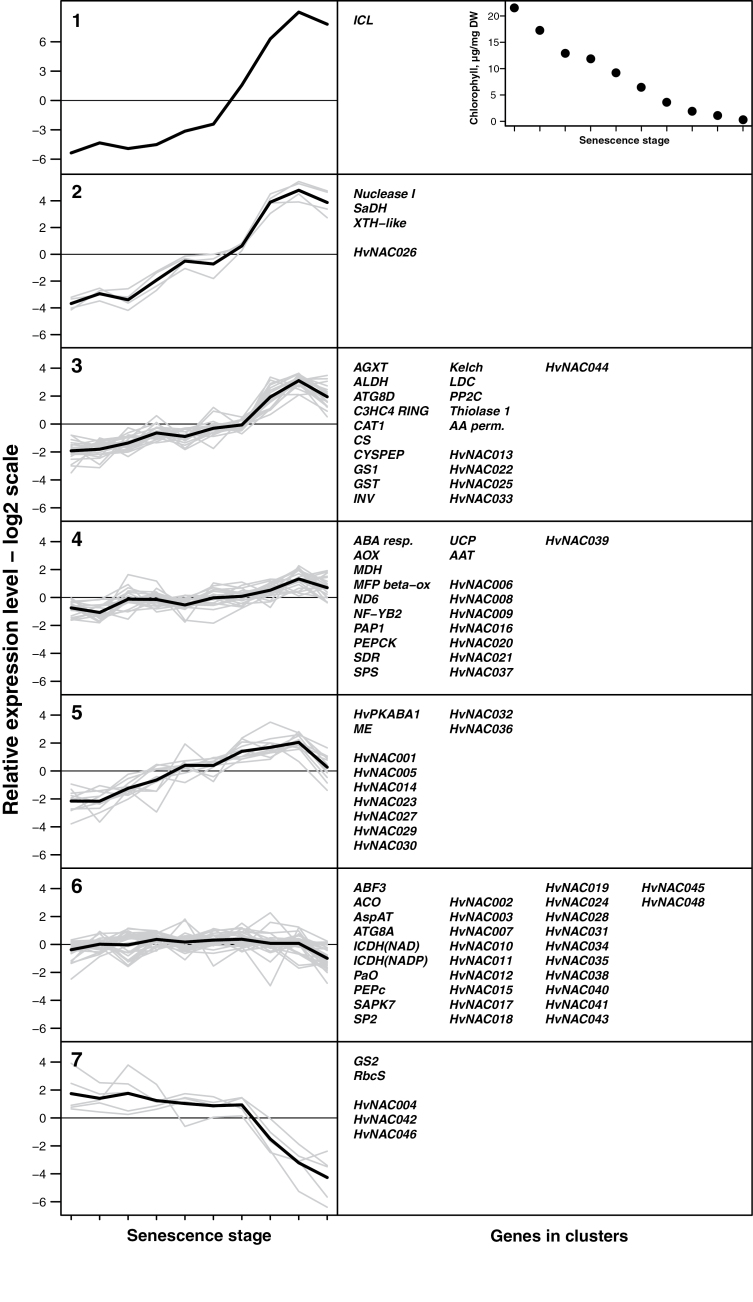
The senescence process of plants is important for the completion of their life cycle, particularly for crop plants, it is essential for efficient nutrient remobilization during seed filling. It is a highly regulated process, and in order to address the regulatory aspect, the role of genes in the NAC transcription factor family during senescence of barley flag leaves was studied. Several members of the NAC transcription factor gene family were up-regulated during senescence in a microarray experiment, together with a large range of senescence-associated genes, reflecting the coordinated activation of degradation processes in senescing barley leaf tissues. This picture was confirmed in a detailed quantitative reverse transcription-PCR (qRT-PCR) experiment, which also showed distinct gene expression patterns for different members of the NAC gene family, suggesting a group of ~15 out of the 47 studied NAC genes to be important for signalling processes and for the execution of degradation processes during leaf senescence in barley. Seven models for DNA-binding motifs for NAC transcription factors were designed based on published motifs, and available promoter sequences of barley genes were screened for the motifs. Genes up-regulated during senescence showed a significant over-representation of the motifs, suggesting regulation by the NAC transcription factors. Furthermore, co-regulation studies showed that genes possessing the motifs in the promoter in general were highly co-expressed with members of the NAC gene family. In conclusion, a list of up to 15 NAC genes from barley that are strong candidates for being regulatory factors of importance for senescence and biotic stress-related traits affecting the productivity of cereal crop plants has been generated. Furthermore, a list of 71 senescence-associated genes that are potential target genes for these NAC transcription factors is presented.
植物的衰老过程对于其生命周期的完成至关重要,特别是对于农作物而言,在种子灌浆期间进行有效的养分再分配是必不可少的。这是一个受到高度调控的过程,为了研究调控方面,我们对大麦旗叶衰老过程中NAC转录因子家族基因的作用进行了研究。在一项微阵列实验中,NAC转录因子基因家族的几个成员在衰老过程中上调,同时还有大量与衰老相关的基因,这反映了衰老大麦叶片组织中降解过程的协同激活。在一项详细的定量逆转录PCR(qRT-PCR)实验中证实了这一情况,该实验还显示了NAC基因家族不同成员独特的基因表达模式,表明在所研究的47个NAC基因中,约有15个对大麦叶片衰老过程中的信号传导过程和降解过程的执行很重要。基于已发表的基序设计了7种NAC转录因子的DNA结合基序模型,并对大麦基因的可用启动子序列进行了基序筛选。在衰老过程中上调的基因显示出这些基序的显著过度富集,表明受NAC转录因子调控。此外,共调控研究表明,启动子中具有这些基序的基因通常与NAC基因家族的成员高度共表达。总之,我们已经列出了一份来自大麦的多达15个NAC基因清单,这些基因很可能是对衰老和影响谷类作物生产力的生物胁迫相关性状具有重要调控作用的因子。此外,还列出了71个与衰老相关的基因清单,这些基因是这些NAC转录因子的潜在靶基因。