C/-Menzies School of Health Research, Institute of Advanced Studies, Charles Darwin University, PO Box 41096, Casuarina, NT 0810, Australia.
BMC Med Res Methodol. 2014 Feb 26;14:31. doi: 10.1186/1471-2288-14-31.
Longitudinal prospective birth cohort studies are pivotal to identifying fundamental causes and determinants of disease and health over the life course. There is limited information about the challenges, retention, and collection strategies in the study of Indigenous populations. The aim is to describe the follow-up rates of an Australian Aboriginal Birth Cohort study and how they were achieved.
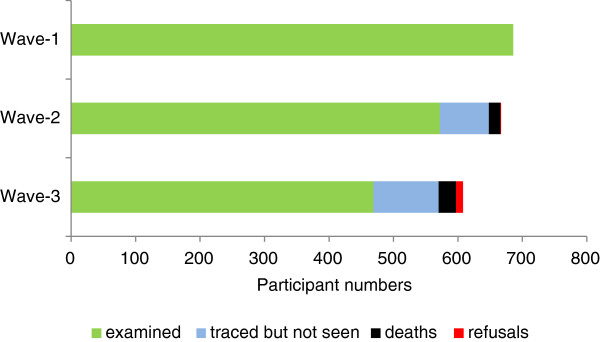
Participants were 686 babies enrolled between January 1987 and March 1990, born to a mother recorded in the Delivery Suite Register of the Royal Darwin Hospital (RDH) as a self-identified Aboriginal. The majority of the participants (70%) resided in Northern Territory within rural, remote and very remote Aboriginal communities that maintain traditional connections to their land and culture. The Aboriginal communities are within a sparsely populated (0.2 people/ km2) area of approximately 900,000 km² (347 sq miles), with poor communication and transport infrastructures. Follow-ups collecting biomedical and lifestyle data directly from participants in over 40 locations were conducted at 11.4 years (Wave-2) and 18.2 years (Wave-3), with Wave-4 follow-up currently underway.
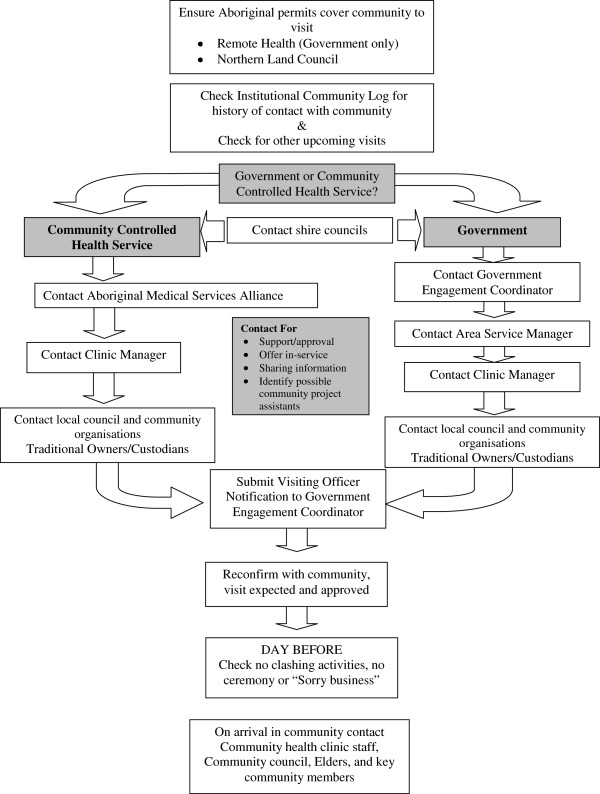
Follow-ups at 11 and 18 years of age successfully examined 86% and 72% of living participants respectively. Strategies addressing logistic, cultural and ethical challenges are documented.
Satisfactory follow-up rates of a prospective longitudinal Indigenous birth cohort with traditional characteristics are possible while maintaining scientific rigor in a challenging setting. Approaches included flexibility, respect, and transparent communication along with the adoption of culturally sensitive behaviours. This work should inform and assist researchers undertaking or planning similar studies in Indigenous and developing populations.
纵向前瞻性出生队列研究对于确定疾病和健康在整个生命过程中的根本原因和决定因素至关重要。关于在原住民人群中研究的挑战、保留率和收集策略的信息有限。本研究旨在描述澳大利亚原住民出生队列研究的随访率及其实现方式。
研究对象为 1987 年 1 月至 1990 年 3 月期间在皇家达尔文医院(RDH)分娩登记处记录为自我认定的原住民的 686 名婴儿。大多数参与者(70%)居住在北领地的农村、偏远和极偏远的原住民社区,他们与土地和文化保持着传统联系。这些原住民社区位于人口稀少(0.2 人/平方公里)的地区,面积约为 90 万平方公里(347 平方英里),通讯和交通基础设施较差。在 40 多个地点直接从参与者那里收集生物医学和生活方式数据的随访工作在 11.4 岁(Wave-2)和 18.2 岁(Wave-3)进行,目前正在进行 Wave-4 随访。
11 岁和 18 岁时的随访分别成功检查了 86%和 72%的在世参与者。记录了应对后勤、文化和伦理挑战的策略。
在具有挑战性的环境中,在保持科学严谨性的同时,对于具有传统特征的前瞻性纵向原住民出生队列,达到令人满意的随访率是可能的。方法包括灵活性、尊重和透明沟通,以及采用文化敏感的行为。这项工作应该为在原住民和发展中人群中进行或计划进行类似研究的研究人员提供信息和帮助。